1. They Can “Fly” or Glide Through the Air
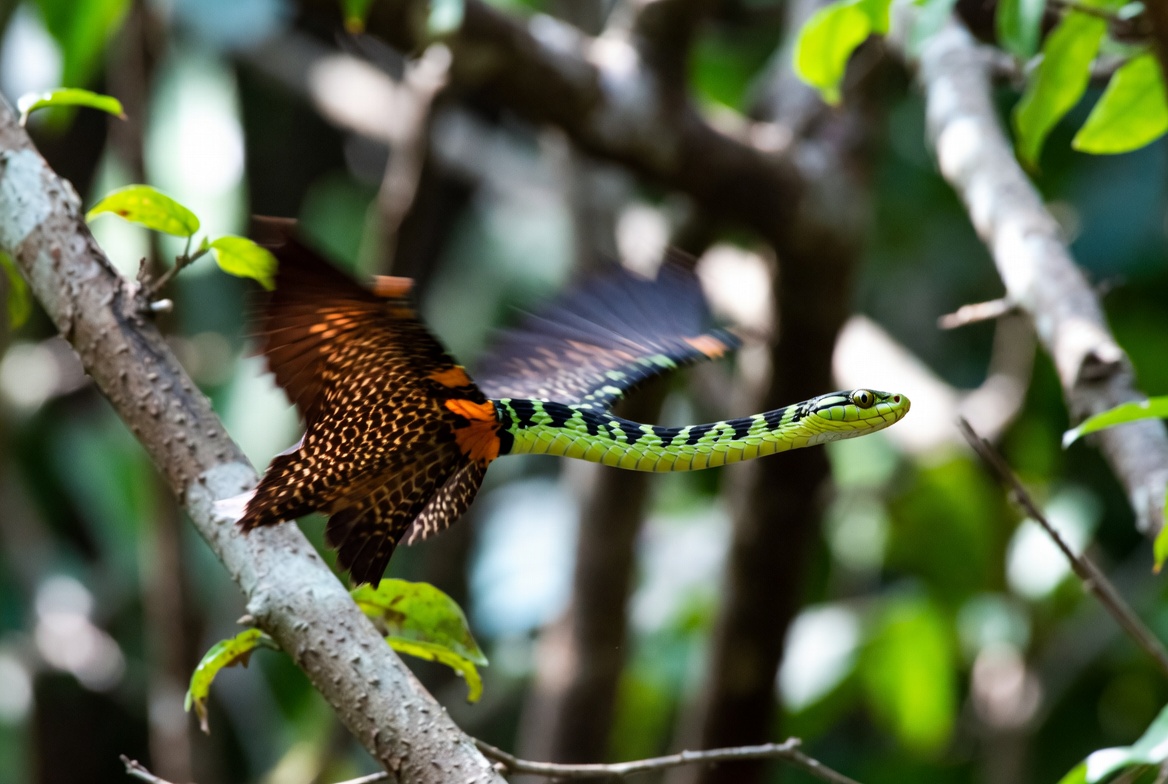
Certain snakes, like the paradise tree snake (Chrysopelea paradisi), don’t just slither—they launch themselves from trees and glide impressive distances (up to 100 meters or more). They flatten their bodies, spread their ribs, and undulate to steer and generate lift, turning a free fall into controlled flight. This helps them escape predators, hunt, or move between trees efficiently. They’re the only known limbless vertebrates capable of such gliding.
These arboreal acrobats turn the forest canopy into their playground.
2. They Can Reproduce Without Mating (Virgin Birth)
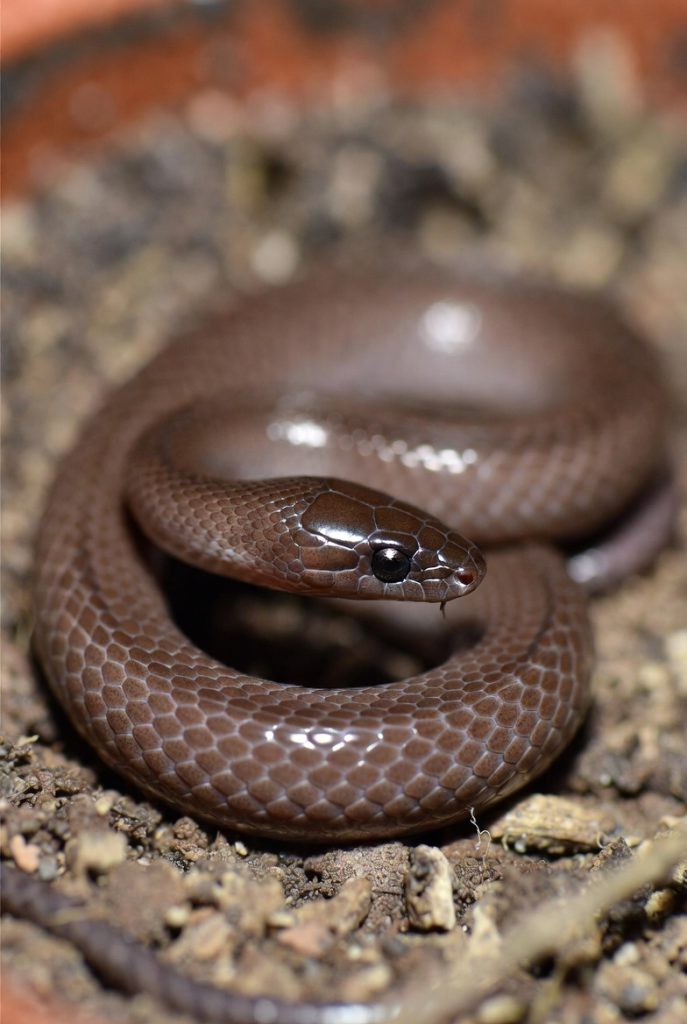
The Brahminy blind snake (Indotyphlops braminus) is the only known snake species that is entirely female and reproduces exclusively through parthenogenesis—producing offspring that are genetic clones without any males involved. These tiny, worm-like burrowers can establish entire populations from a single individual transported in soil or plants. All offspring are female triploids, making them highly successful colonizers worldwide.
Nature’s ultimate single moms—cloning themselves to spread across the globe.
3. They Grow Tentacles on Their Snout
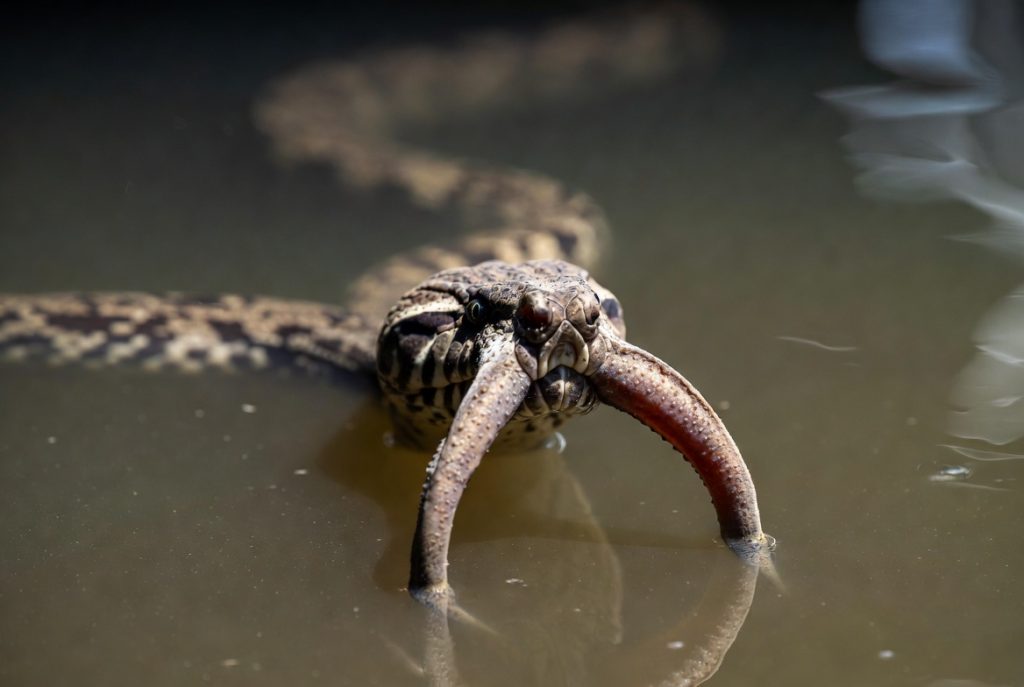
The tentacled snake (Erpeton tentaculatum), a fully aquatic species from Southeast Asia, sports two unique, scaly tentacles protruding from its snout. These appendages likely serve as mechanosensors to detect fish movements in murky water or possibly as lures. This snake uses an ingenious ambush tactic: it forms a J-shape and startles fish into striking range with body movements. It’s the only snake with such facial “tentacles.”
A snake that looks like it belongs in a sci-fi movie, perfectly adapted for underwater hunting.
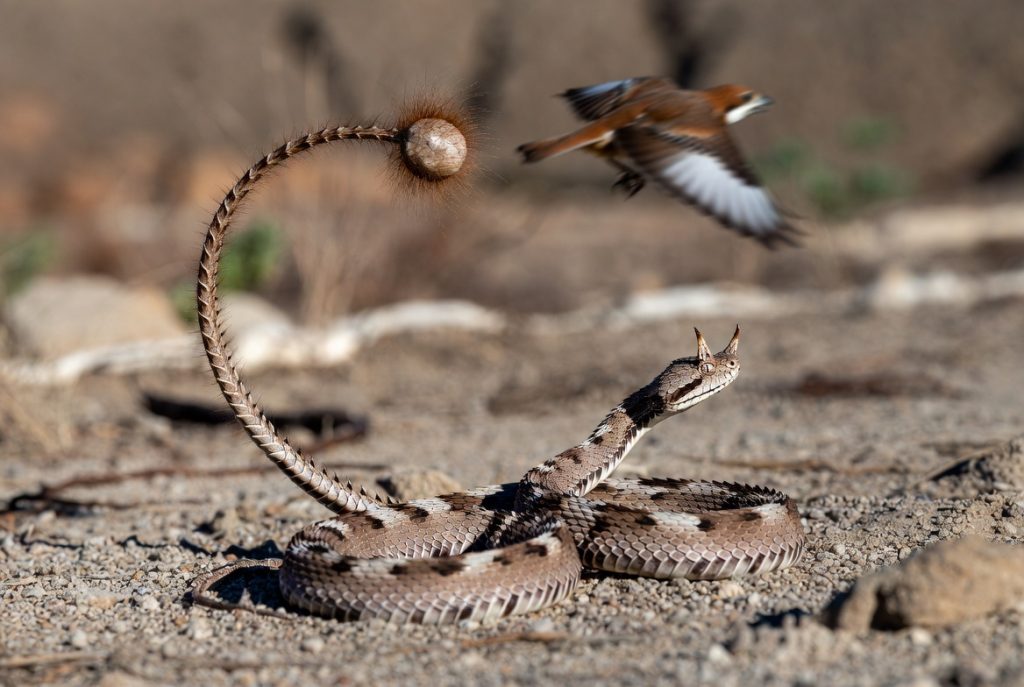
4. Their Tails Mimic Spiders to Lure Prey
The spider-tailed horned viper (Pseudocerastes urarachnoides) from Iran has a bizarre tail ending in a bulb surrounded by long, movable scales that perfectly imitate a spider. It wiggles this “spider” to attract insect-eating birds and lizards, which become the snake’s meal instead. Combined with its horns and excellent camouflage, it’s a master of aggressive mimicry.
One of evolution’s cleverest traps—using a fake arachnid as bait.
5. They Defend Themselves by “Farting” (Cloacal Popping)
Some small snakes, like the Sonoran coral snake and Chihuahuan hook-nosed snake, use cloacal popping as a defense. They forcefully expel air (and sometimes musk) from their cloaca, creating loud popping or fart-like sounds that startle predators. The snake may also jerk its body, making the pops seem even more explosive. It’s an effective, energy-efficient way for small, non-aggressive burrowers to buy time to escape.
When hissing isn’t enough, these snakes break wind to survive.
Snakes continue to surprise us with their incredible adaptations. From aerial maneuvers to asexual reproduction and bizarre body parts, these reptiles prove that “strange” is often just another word for “perfectly evolved.” If you’re fascinated by wildlife, observing or learning about snakes (from a safe distance!) highlights the diversity of life on Earth. Always respect local wildlife and avoid handling unknown species.