

Nature’s Most Unexpected Nannies: Seven Astonishing Animal Child-Rearing Stories You’ve Probably Never Heard
When people imagine wildlife parenting, they often picture a bird feeding chicks or a lioness protecting her cubs. Yet beyond these familiar scenes lies a world of parenting behaviors so unusual that they seem almost unbelievable.
Across deserts, oceans, forests, and frozen coastlines, animals have evolved extraordinary ways of caring for their young. Some transport water across vast distances. Others create living nurseries with their own bodies. Certain species rely on entire communities to raise a single generation.
These strange childcare strategies are not random quirks. They are survival solutions shaped by millions of years of evolution. Each behavior reflects a unique answer to one of nature’s most important challenges: ensuring that the next generation survives.
Here are seven remarkable stories that reveal just how inventive animal parenting can be.
Living Daycare Underground: The Cooperative World of Banded Mongooses
Figure 1
Alt Text: Adult banded mongooses guarding and caring for a group of young pups near a burrow.
In the grasslands of eastern and southern Africa, banded mongooses have developed a childcare system that resembles a community daycare center.
Instead of each mother raising her own pups separately, multiple females often give birth at nearly the same time. The newborns are placed together in a shared underground den where they form a giant nursery.
What makes this system extraordinary is the role of adult helpers. Older siblings and unrelated adults frequently assist with feeding, protection, and supervision.
As the pups grow, individual adults often become dedicated escorts, accompanying specific youngsters on daily adventures outside the den. These guardians teach foraging skills, protect against predators, and even share food.
Researchers have found that this cooperative system significantly improves survival rates. In essence, an entire social network contributes to raising the next generation.
A Bird That Delivers Water Instead of Food
Figure 2
Alt Text: Male sandgrouse flying across a desert carrying water in specialized belly feathers.
Most bird parents bring food to their chicks. Sandgrouse, however, perform an even more remarkable service.
These desert-dwelling birds inhabit some of the driest environments on Earth. Water sources may be dozens of kilometers away from nesting sites.
To solve this challenge, male sandgrouse fly long distances to watering holes. Their specially adapted belly feathers absorb and trap water like a sponge.
After soaking themselves, the birds return to the nest carrying precious liquid within their plumage.
When they arrive, thirsty chicks drink directly from the damp feathers.
This unusual transportation system allows young birds to survive in landscapes where water is extremely scarce.
The Frozen Nursery of Harp Seals
Figure 3
Alt Text: Harp seal mother nursing a white-coated newborn pup on Arctic sea ice.
Life begins under difficult circumstances for harp seals.
Each year, mothers gather on drifting sea ice in the North Atlantic and Arctic regions to give birth. The pups arrive with fluffy white coats that help camouflage them against snow and ice.
The most surprising aspect of harp seal parenting is its intensity.
For approximately twelve days, mothers focus almost entirely on nursing their offspring. Their milk is exceptionally rich in fat, allowing pups to gain weight at an astonishing rate.
By the end of this short period, the young seals have doubled or even tripled their body mass.
The mother then leaves, and the pup must begin an independent journey toward survival.
Although brief, this concentrated investment gives the youngster a crucial advantage in one of the planet’s harshest environments.
The Mammal Ruled by a Queen
Figure 4
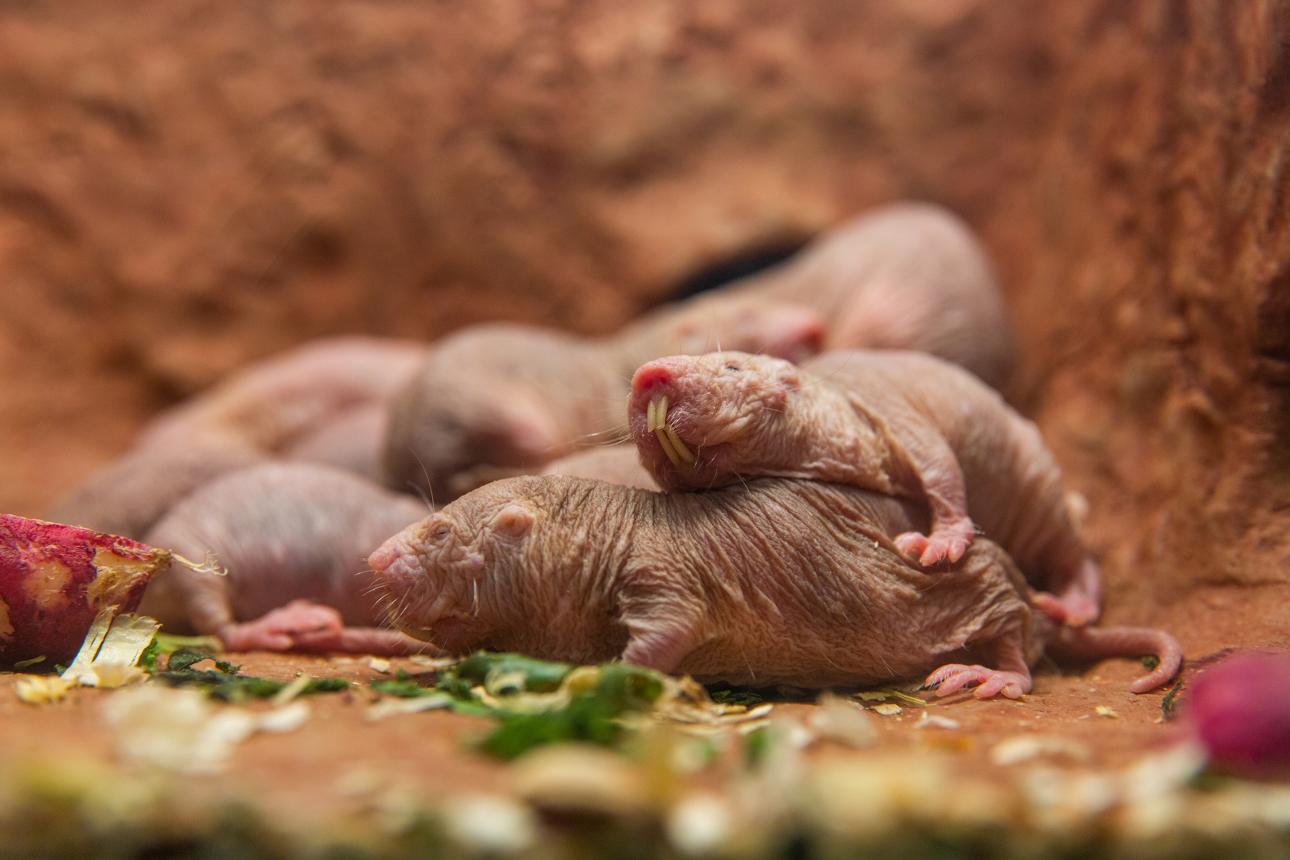
Alt Text: Naked mole rat colony inside underground tunnels caring for newborn pups.
Among mammals, few societies are stranger than those of naked mole rats.
Living underground in large colonies, these unusual rodents organize themselves in a way that resembles ants or bees.
Only one female—the queen—typically reproduces. The rest of the colony helps care for her offspring.
Workers clean the nesting chamber, transport pups, gather food, and defend the tunnel system. Some individuals spend much of their lives helping raise siblings rather than producing offspring of their own.
This cooperative breeding system is extremely rare among mammals.
By functioning as a unified community, naked mole rats create a highly efficient environment for raising young beneath the soil of East Africa.
Babies Carried in a Mouth-Sized Shelter
Figure 5
Alt Text: African cichlid fish protecting dozens of baby fry inside its mouth underwater.
Many fish release eggs and never see their offspring again. Certain cichlid species take a dramatically different approach.
After spawning, the parent gathers eggs into its mouth, where they remain protected throughout development.
The story does not end once the young hatch.
Tiny fry continue using the parent’s mouth as a portable shelter. Whenever danger appears, the babies rush back inside, disappearing within seconds.
Observers have witnessed dozens of young fish crowding into the parent’s mouth simultaneously.
This remarkable behavior transforms an ordinary feeding organ into a highly effective mobile nursery.
Gibbons and the Art of Slow Parenting
Figure 6
Alt Text: Gibbon mother carrying her infant through the rainforest canopy.
Modern life often celebrates speed, but gibbons demonstrate the value of patience.
These tree-dwelling primates inhabit the forests of Southeast Asia and invest heavily in long-term parental care.
A gibbon infant remains closely attached to its mother for years. During this time, it learns movement techniques, communication calls, feeding habits, and social behaviors.
Navigating the forest canopy requires incredible agility. Youngsters must master swinging between branches, judging distances, and maintaining balance high above the ground.
This education cannot be rushed.
By dedicating years to teaching essential skills, gibbon parents prepare offspring for a challenging life among the treetops.
The Amphibian With a Built-In Nursery
Figure 7
Alt Text: Young Surinam toads emerging from pockets in their mother’s back.
The Surinam toad may possess one of the strangest parenting adaptations in the animal kingdom.
After mating, fertilized eggs become embedded within the skin on the female’s back. Over time, the surrounding tissue forms protective chambers around each developing embryo.
The young remain safely enclosed for weeks as they transform from embryos into miniature toads.
Eventually, fully formed offspring emerge directly from openings in the mother’s skin.
The process looks almost unbelievable, yet it provides exceptional protection during early development.
Instead of leaving eggs exposed to predators, the mother effectively carries an entire nursery on her back.
Why Nature Invented So Many Parenting Styles
There is no universal formula for raising young in the animal kingdom.
Species face different challenges depending on where they live and how they survive. Desert birds must solve water shortages. Arctic mammals confront extreme cold. Social rodents rely on teamwork. Forest primates prioritize learning complex skills.
As a result, evolution produces diverse solutions.
Some species invest heavily in protection. Others focus on nourishment, transportation, teaching, or community support. Every strategy represents a balance between energy expenditure and survival benefits.
What appears strange from a human perspective often makes perfect sense within a particular ecological context.
Childcare Beyond Instinct
Scientists once believed that many animal parenting behaviors were purely instinctive. Modern research paints a more complex picture.
In numerous species, adults adjust their behavior based on environmental conditions, social circumstances, and the needs of their offspring.
Some animals teach. Others cooperate. Many communicate in sophisticated ways with their young.
These discoveries continue to reshape our understanding of intelligence and family life in the natural world.
Conclusion
The story of animal parenting is far more diverse than most people realize.
Banded mongooses operate communal nurseries. Sandgrouse transport water across deserts. Harp seals deliver intense bursts of nourishment. Naked mole rats rely on colony-wide childcare. Cichlids transform their mouths into shelters. Gibbons devote years to education, while Surinam toads literally carry developing offspring within their skin.
Each strategy reflects a unique solution to the challenge of survival.
Together, these extraordinary stories reveal a simple truth: throughout nature, raising the next generation often requires remarkable creativity. Whether through teamwork, sacrifice, innovation, or patience, animal parents continue to demonstrate some of the most fascinating behaviors found anywhere in the living world.