

Strange Stories of Animals That Swallow or Eat Things Larger Than Themselves
Nature’s Impossible Meals
If humans attempted to eat objects larger than their own heads—or sometimes larger than their entire bodies—it would sound absurd. Yet across forests, oceans, wetlands, and even backyards, certain animals perform feeding feats that appear impossible at first glance.
Evolution has created remarkable solutions to a simple challenge: survive by eating what others cannot.
Some animals stretch their jaws. Others unfold hidden body parts. A few temporarily reshape themselves. And in rare cases, they gamble everything on meals so oversized that the process can take hours—or even days.
These strange feeding stories are not examples of greed. They are highly specialized survival strategies developed over millions of years.
Here are some of the most surprising animals known for swallowing—or attempting to swallow—things larger than themselves.
1. The Snake That Turns Into a Living Conveyor Belt
Image Alt Text:
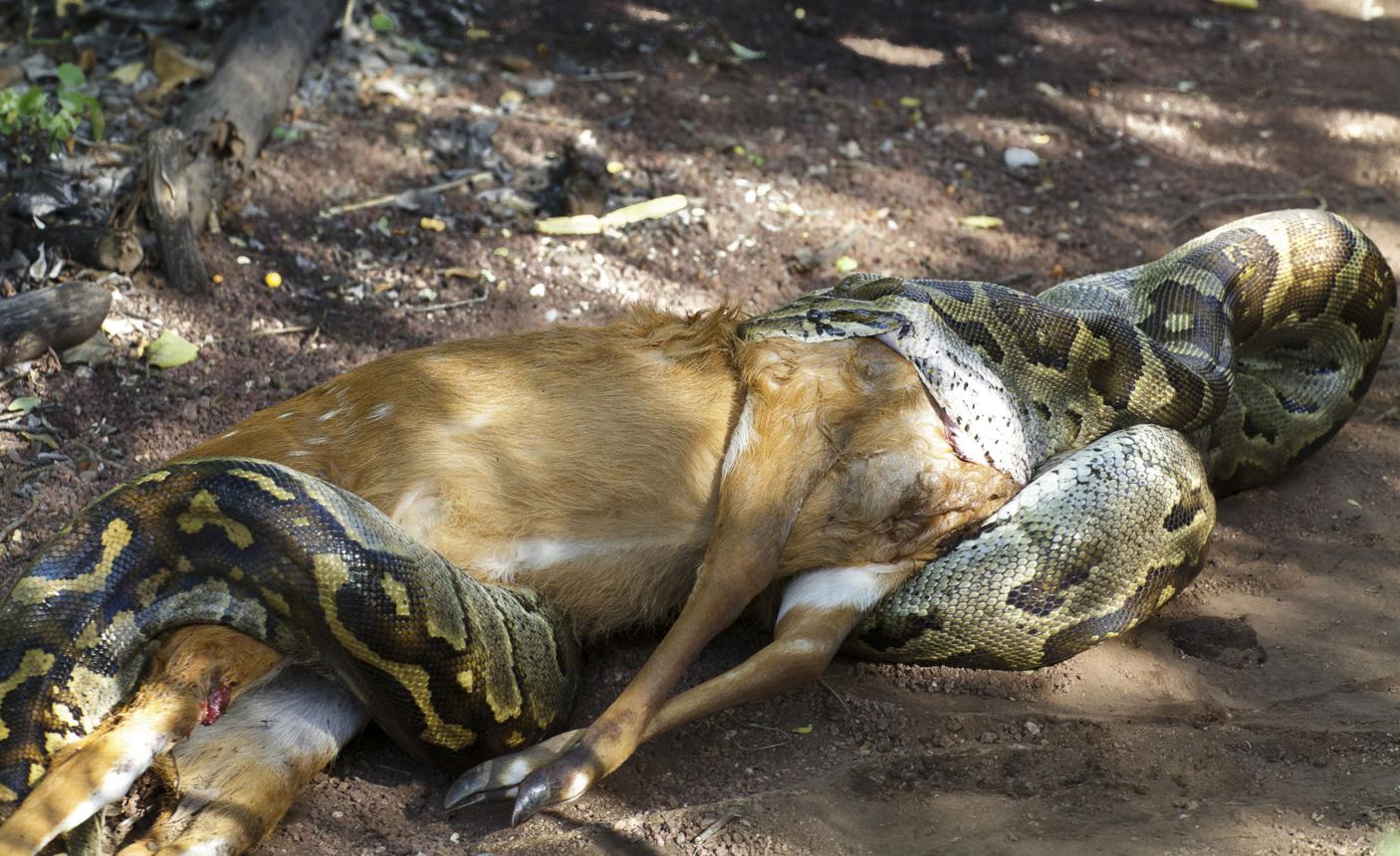
Large python slowly swallowing prey much wider than its own body.
Snakes are probably the most famous oversized eaters on Earth—but even among snakes, some feeding events seem almost unreal.
Unlike mammals, many snakes have jaws that are not rigidly fused together. Their lower jaws are connected by stretchy ligaments, allowing each side to move independently.
This means a python doesn’t “unhinge” its jaw—despite the common myth. Instead, it gradually walks its mouth over prey using alternating jaw movements.
Large pythons and anacondas have been documented swallowing animals that appear dramatically too large to fit inside their bodies:
- Deer
- Wild pigs
- Capybaras
- Antelope
- Small crocodilians
Once swallowed, digestion becomes an intense biological operation. Blood flow shifts toward digestion, metabolism accelerates, and powerful stomach acids begin breaking down bone and tissue.
For a giant snake, one enormous meal can provide energy for weeks—or even months.
But oversized meals are risky. If disturbed during digestion, some snakes will regurgitate prey because moving with a massive meal inside becomes difficult.
Their strategy is simple: eat rarely, but eat big.
2. Pelicans: Birds With Expandable Grocery Bags
Image Alt Text:
Pelican holding an unexpectedly large fish inside its enormous throat pouch.
Pelicans may look calm and graceful while floating across lakes, but their feeding equipment is extraordinary.
The huge pouch beneath a pelican’s bill is not for storing food long term—it acts more like a temporary fishing net.
Pelicans scoop water and prey together, then drain the water before swallowing.
What surprises many observers is the scale.
Pelicans have been seen attempting to swallow fish so large they distort the shape of the bird’s neck. In unusual cases, they’ve also tried to consume:
- Ducks
- Large amphibians
- Seabirds
- Unexpected floating food items
The pouch can expand dramatically and briefly hold far more volume than seems physically possible.
Occasionally, ambitious feeding attempts fail when prey proves impossible to position correctly.
But when successful, the entire process looks less like eating and more like a carefully choreographed swallowing performance.
3. Deep-Sea Gulper Eels and Their Balloon-Like Mouths
Image Alt Text:
Deep sea gulper eel displaying its oversized expandable mouth.
Thousands of meters below the ocean surface lives an animal that seems designed by imagination rather than evolution.
The gulper eel has a body that looks relatively ordinary—until it opens its mouth.
Its mouth expands into a giant flexible pouch capable of engulfing prey much larger than expected.
Unlike fast predators that chase prey, gulper eels survive in an environment where food can be scarce. Missing opportunities could mean long periods without eating.
Because of that, they evolved a “take it if you can” strategy.
Their jaws open wide, and their stomachs stretch enough to process unexpectedly large catches.
Scientists believe this adaptation allows them to maximize rare encounters in the dark deep ocean.
When food appears, size becomes less important than opportunity.
4. Frogs That Ignore the Rules of Proportion
Image Alt Text:
Frog attempting to swallow prey nearly the same size as itself.
Frogs seem harmless until you watch them eat.
Many species operate with a simple rule:
If it moves and fits even remotely into the mouth, try.
Large frogs have been recorded eating:
- Mice
- Small birds
- Other frogs
- Lizards
- Snakes
The swallowing process looks dramatic because frogs often use their eyes to assist feeding.
Their eyeballs sink downward while swallowing, helping push food toward the throat.
Some species can stretch enough to consume prey approaching their own body size.
The meal may leave the frog looking oddly inflated afterward.
Unlike predators that tear food apart, frogs commit completely: once swallowing starts, there is usually no turning back.
5. The Anaconda and the Case of the Impossible Shape
Image Alt Text:
Green anaconda digesting unusually large prey along a riverbank.
Stories about giant snakes are common, but anacondas deserve special attention because of where they hunt.
Water changes everything.
In rivers and wetlands, buoyancy reduces the difficulty of controlling large prey.
That allows anacondas to target surprisingly bulky animals.
Observers have documented anacondas swallowing prey that completely changes the snake’s body profile into enormous rounded forms.
The process is slow.
First comes constriction.
Then positioning.
Then swallowing begins—a sequence of muscular movements that can continue for hours.
Afterward, the snake may remain inactive for long periods while digestion transforms one giant meal into stored energy.
Few animals demonstrate patience and mechanical precision as dramatically.
6. The Tiny Predator With Giant Ambitions: The Star-Nosed Mole
Image Alt Text:
Star nosed mole feeding rapidly underground.
Not every oversized eater is huge.
The star-nosed mole is small enough to fit in your hand, yet it consumes astonishing amounts relative to body size.
Its strange nose contains thousands of sensory receptors that allow it to identify edible targets almost instantly.
Instead of swallowing gigantic individual prey, it wins through speed.
Researchers observed feeding decisions occurring in fractions of a second.
For such a tiny animal, the amount consumed across a day can seem disproportionate to body size.
Its strategy isn’t stretching.
It’s overwhelming volume.
Eat constantly. Stay alive.
7. When Eating Too Much Becomes Dangerous
Image Alt Text:
Wild predator resting after consuming oversized prey.
Oversized feeding is impressive—but dangerous.
Animals that attempt giant meals face real risks:
Mobility Problems
A full stomach can make escape difficult.
Digestion Costs
Processing huge meals demands enormous energy.
Overheating
Metabolism may spike dramatically.
Physical Injury
Prey can sometimes fight back.
Suffocation Risks
Improper swallowing angles can become fatal.
Nature rewards efficiency—but it does not guarantee success.
Many dramatic feeding attempts never end well.
That balance between reward and risk is what makes these stories so remarkable.
Why Evolution Keeps Producing Extreme Eaters
Oversized eating evolved repeatedly because it solves one major problem: uncertainty.
If food appears rarely, eating big becomes efficient.
If competition is intense, unusual feeding methods create advantages.
If survival windows are short, maximizing each opportunity matters.
From deep oceans to tropical wetlands, animals continue proving that our idea of “too big to eat” often doesn’t apply outside the human world.
The next time you see a snake, a pelican, or even a small frog, remember:
Some of nature’s strangest creatures survive by attempting meals that seem physically impossible—and sometimes succeeding.