

The Wildest Parenting Experiments in Nature: Animal Families That Rewrite the Rules
Parenting in the natural world is far more diverse than most people imagine. While some species follow familiar patterns of nurturing and protection, others have evolved astonishing methods that seem to defy common sense. In many cases, survival depends not on strength or speed, but on creative solutions to the challenges of raising young.
Some parents carry babies in unusual places. Others construct giant structures before a single egg is laid. Certain animals teach escape tactics, while others form lifelong support networks that extend far beyond childhood.
These behaviors are not random oddities. They are the result of millions of years of adaptation, each one fine-tuned to help offspring survive in a particular environment.
The following stories showcase some of the most remarkable child-rearing strategies found anywhere in the animal kingdom.
The Fish Fathers Who Stop Eating for Their Children
Figure 1
Alt Text: Male sea catfish carrying developing eggs safely inside its mouth underwater.
In the warm coastal waters of tropical regions, some sea catfish fathers make an extraordinary sacrifice.
After spawning, the male collects a large cluster of fertilized eggs and stores them inside his mouth. The eggs are often surprisingly large, taking up most of the available space.
For weeks, the father protects them from predators, strong currents, and environmental hazards.
The challenge is that eating becomes nearly impossible.
Many mouthbrooding sea catfish lose significant body weight because they spend so much time safeguarding their offspring instead of feeding themselves.
Only when the young fish are fully developed does the father release them into the surrounding water.
His willingness to endure hunger demonstrates the remarkable lengths some parents will go to ensure their offspring survive.
The Bird Chicks That Learn to Climb Before They Learn to Fly
Figure 2
Alt Text: Young hoatzin chick climbing tree branches near a river in the Amazon rainforest.
Deep within the wetlands of South America lives one of the world’s strangest birds: the hoatzin.
Hoatzin chicks possess a surprising feature rarely seen in modern birds—functional claws on their wings.
When danger threatens, young birds can drop from the nest into the water below. Instead of relying on flight, they use their clawed wings to climb vegetation and return to safety.
Parents continue feeding and protecting them during this vulnerable period.
Scientists believe this unusual adaptation offers a valuable escape route from predators such as snakes and monkeys.
Few young birds in the world possess such a remarkable survival skill.
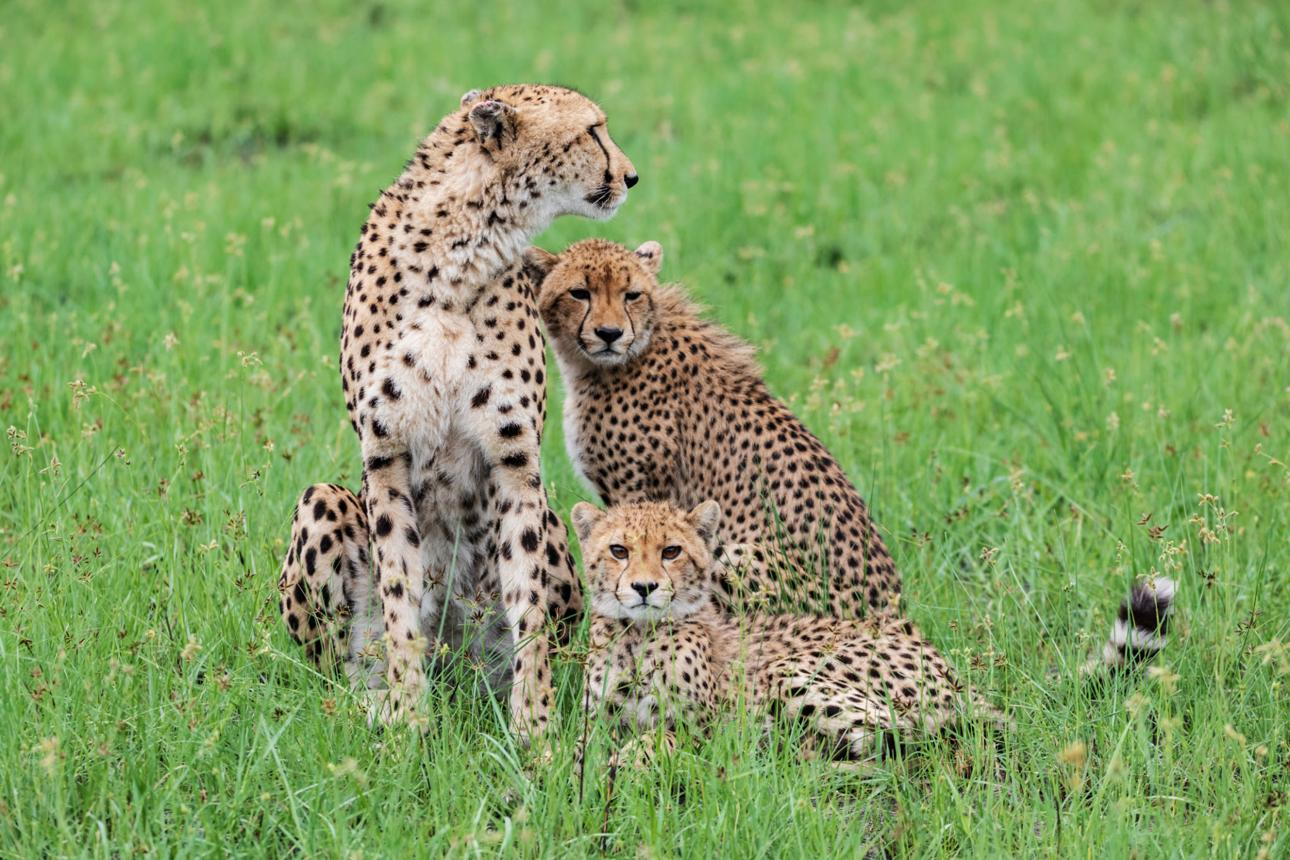
Cheetah Mothers Raise Future Hunters Alone
Figure 3
Alt Text: Cheetah mother leading several cubs across an African grassland.
Life is especially challenging for cheetah cubs.
Unlike lions, cheetahs do not benefit from the protection of a pride. A mother must raise her young almost entirely on her own.
For many months, she teaches stalking techniques, hunting strategies, and predator awareness.
One of the most fascinating aspects of cheetah parenting involves practical lessons. Mothers sometimes release captured prey so cubs can practice chasing and capturing it themselves.
These exercises help transform inexperienced youngsters into capable hunters.
The process resembles a carefully planned training program rather than simple parental protection.
Building a Nursery the Size of a Small Car
Figure 4
Alt Text: Male Australian brush turkey standing beside a massive nesting mound made of leaves and soil.
Some parents care for young after birth. Australian brush turkeys invest heavily before the eggs even hatch.
The male spends months constructing a gigantic mound from leaves, soil, and organic material.
These structures can reach several meters across and weigh several tons.
As plant matter decomposes, heat is generated naturally. The mound functions as a giant incubator, maintaining temperatures suitable for egg development.
The father constantly monitors conditions and adjusts the structure by adding or removing material.
Few animals demonstrate such impressive engineering skills in preparation for parenthood.
Whale Mothers and the Longest Classroom on Earth
Figure 5
Alt Text: Sperm whale mother swimming alongside her calf in the deep ocean.
The ocean can be a difficult place for a newborn whale.
For sperm whales, learning begins immediately after birth.
Young calves remain close to their mothers for years, absorbing information about migration routes, feeding grounds, communication signals, and social behavior.
Female relatives often participate as well. Groups of related females cooperate to protect calves while mothers dive to great depths in search of food.
Researchers have compared these family groups to extended learning communities.
The ocean becomes a classroom where survival knowledge is passed from one generation to the next.
Tiny Monkeys, Giant Parenting Commitments
Figure 6
Alt Text: Emperor tamarin father carrying twin infants through a rainforest canopy.
Emperor tamarins may be small primates, but their parenting efforts are enormous.
Twin births are common, creating a significant burden for mothers.
To address this challenge, fathers become heavily involved from the beginning. Infants spend much of their time riding on the backs of adult males.
Brothers, sisters, and other relatives frequently assist as well.
The result is a highly cooperative childcare system in which responsibility is shared among multiple family members.
This teamwork allows the group to successfully raise offspring in the demanding environment of the tropical forest.
A Marsupial Childhood Spent Above the Forest Floor
Figure 7
Alt Text: Tree kangaroo mother carrying a young joey while resting in a rainforest tree.
Tree kangaroos represent an unusual blend of familiar and surprising parenting behaviors.
Like other marsupials, mothers give birth to extremely small young that continue developing inside a pouch.
What makes tree kangaroos unique is their arboreal lifestyle.
The mother must navigate branches, leap between trees, and forage in elevated rainforest habitats while carrying a growing joey.
As the youngster matures, it gradually begins exploring the canopy but remains dependent on maternal guidance.
Learning to move safely among the treetops is essential for survival, making the mother’s role particularly important during early development.
Why Extreme Parenting Evolves
Every environment creates different challenges for offspring.
Animals living in oceans face threats different from those encountered in forests or deserts. Some species struggle with predators. Others must deal with limited food, harsh weather, or complex social systems.
Because of these pressures, parenting strategies evolve in countless directions.
Some parents emphasize teaching. Others prioritize protection, transportation, engineering, or cooperation.
The incredible variety of solutions found in nature demonstrates the flexibility of evolution when faced with a common problem.
The Hidden Cost of Raising Young
Although animal parenting often appears inspiring, it frequently comes at a significant cost.
Parents may sacrifice energy reserves, increase exposure to predators, or delay future reproduction.
A mouthbrooding fish may go weeks without eating. A cheetah mother spends months hunting for growing cubs. A brush turkey invests enormous effort constructing a nesting mound.
These sacrifices highlight the importance of offspring survival in the evolutionary process.
Without successful child rearing, even the strongest species cannot persist.
Family Life Beyond Human Society
One of the most surprising discoveries in modern biology is how widespread complex parenting behaviors are.
Scientists have documented teaching, cooperation, communication, babysitting, and even cultural learning among various animal groups.
These behaviors reveal that family life is not exclusive to humans.
Across the natural world, animals invest tremendous resources in helping the next generation navigate a dangerous and unpredictable environment.
Their methods may differ dramatically, but the underlying goal remains the same.
Conclusion
The animal kingdom is filled with parenting stories that challenge our expectations.
Sea catfish fathers endure weeks of fasting while protecting eggs. Hoatzin chicks climb trees using wing claws. Cheetah mothers provide hunting lessons, and brush turkeys construct enormous incubators before offspring even hatch.
Sperm whales transform oceans into classrooms, emperor tamarins rely on cooperative childcare, and tree kangaroos guide young through life high in the rainforest canopy.
Together, these examples demonstrate that successful parenting is one of nature’s greatest achievements. Through sacrifice, innovation, teamwork, and education, animal families have evolved remarkable strategies that continue to fascinate scientists and wildlife enthusiasts around the world.
The next time you think of parenting, remember that somewhere in nature, a fish is fasting for its young, a bird is climbing with wing claws, and a whale is teaching lessons beneath the waves.