

The Accidental Parents of the Animal Kingdom: When Nature Creates Unexpected Families
Category
Animals, Wildlife & Nature
Introduction: Families That Defy Biology
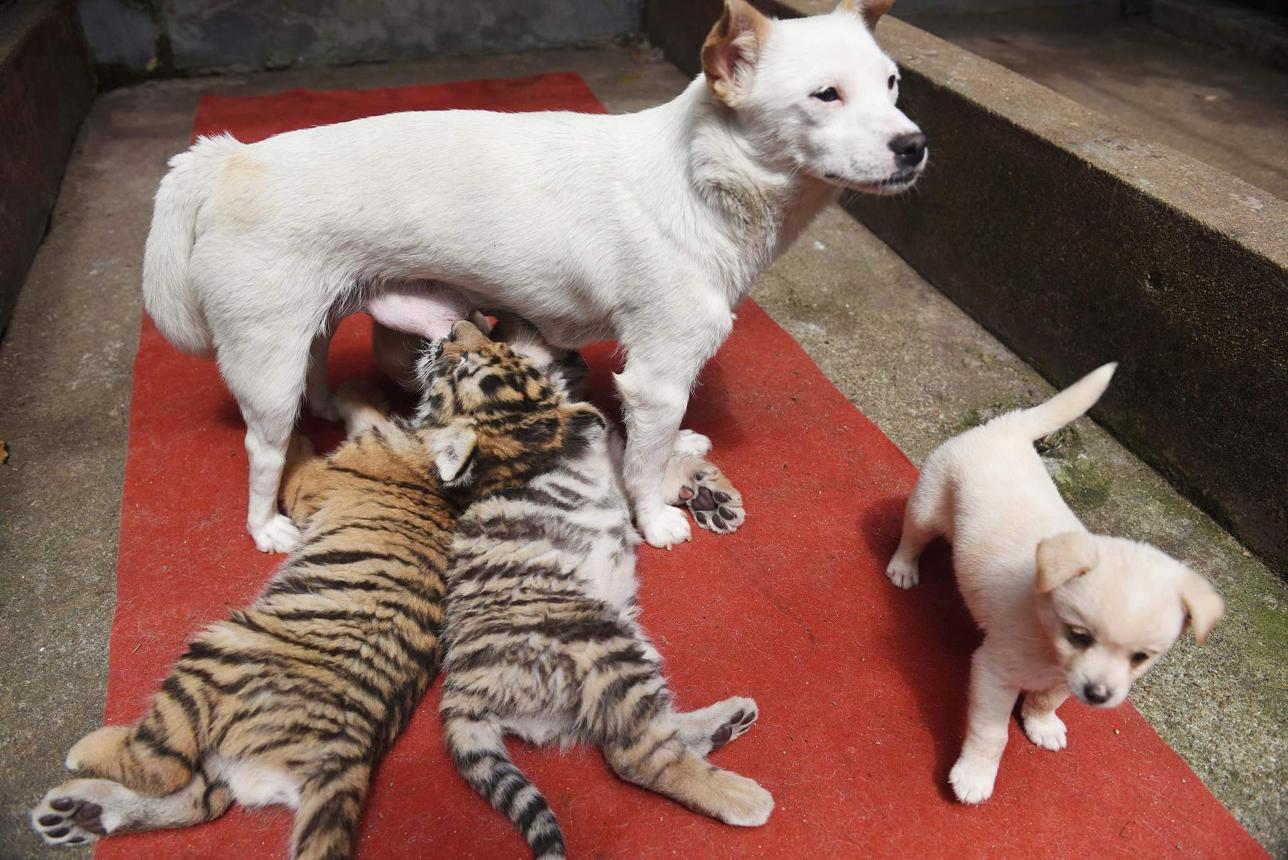
Imagine walking through a wildlife sanctuary and seeing a dog caring for a tiger cub. Or spotting a baboon carrying a lost puppy as if it were its own child. These scenes sound like stories from a children’s book, yet similar events have occurred in real life.
The natural world is filled with examples of animals forming families that biology never intended. While most species devote their energy to raising their own offspring, there are extraordinary moments when adults care for babies that are unrelated—or even belong to entirely different species.
For scientists, these unusual relationships provide valuable clues about animal behavior. For everyone else, they offer a fascinating glimpse into a softer side of nature that often goes unnoticed.
From birds that become accidental foster parents to mammals that adopt orphaned youngsters, the animal kingdom contains countless examples of unexpected caregiving.
Nature’s Orphans and Their Unlikely Guardians
Every year, thousands of young animals lose their parents due to predators, disease, accidents, or environmental disasters.
In many cases, survival becomes nearly impossible.
Yet some youngsters receive a second chance when another adult steps in to provide care. This substitute caregiver may not share any genetic connection with the orphan, but it can still provide food, protection, warmth, and guidance.
Scientists refer to this phenomenon as foster parenting or alloparental care. While relatively uncommon in some species, it appears surprisingly widespread throughout the animal kingdom.
The Goose That Adopted Ducklings
One of the most charming examples comes from waterfowl.
Wildlife photographers have occasionally documented geese caring for ducklings that became separated from their biological parents. The adopted ducklings follow the goose across ponds and wetlands just as they would their natural mother.
Because young birds instinctively follow the first protective adult they recognize, unusual mixed-species families sometimes develop.
The goose often responds by defending the ducklings from threats and leading them to feeding areas.
For the ducklings, the difference between a goose and a duck may matter less than having a dependable guardian.
Why Puppies Seem to Get Adopted So Often
Across the world, puppies appear in many stories involving cross-species adoption.
Monkeys, cats, dogs, and even larger mammals have been observed caring for abandoned puppies. Researchers believe puppies possess several traits that encourage nurturing responses.
They are vocal, dependent, playful, and display many of the same characteristics seen in infant mammals.
In parts of Asia, baboons and macaques have repeatedly been observed carrying puppies through their territories. Some share food, groom the puppies, and protect them from danger.
These relationships sometimes last for months, demonstrating that social bonds can extend beyond species boundaries.
Elephant “Aunts” and Shared Parenting
Elephants have one of the most sophisticated childcare systems in the animal kingdom.
A calf is rarely watched by its mother alone. Instead, a network of females helps supervise and protect the youngster. These helpers are often called allomothers or “aunts.”
The arrangement benefits everyone involved.
Young females gain parenting experience, mothers receive support, and calves enjoy constant protection.
If a calf loses its mother, these relationships can become especially important. Other females frequently provide care and companionship, helping the orphan remain integrated within the herd.
This collective approach makes elephants one of nature’s most successful examples of cooperative parenting.


Penguins That Refuse to Give Up
Penguins are famous for their dedication to parenting.
In crowded breeding colonies, however, mistakes happen. Eggs become separated, chicks wander away, and parents occasionally lose their offspring.
Researchers have observed adults attempting to care for abandoned chicks even when those chicks are unrelated.
Some penguins whose own eggs failed to hatch become particularly attentive toward orphaned youngsters.
This behavior highlights the extraordinary strength of parental instincts. The desire to nurture can remain powerful even when biological connections are absent.
Wolves and the Pack Mentality
Unlike many solitary predators, wolves operate as highly cooperative social groups.
Raising pups is considered a responsibility shared by the entire pack. Older siblings and unrelated adults often contribute by guarding, feeding, and entertaining the young.
This communal approach increases survival rates and strengthens social bonds.
Although most pups are related to the adults helping them, the behavior demonstrates how caregiving can extend beyond direct parent-offspring relationships.
The pack functions as a team rather than a collection of individuals.
Cats That Rewrite the Rules
Cats are natural hunters, which makes some adoption stories particularly surprising.
Animal shelters have reported mother cats accepting baby squirrels, rabbits, ducklings, and even tiny puppies.
Once maternal instincts are activated, the cat may groom, protect, and cuddle the adopted babies just as she would her own kittens.
To human observers, these mixed families appear extraordinary because they involve species that would rarely interact peacefully in the wild.
Yet for the nursing mother, the babies simply represent vulnerable youngsters in need of care.
Birds That Accidentally Become Foster Parents
Some bird species spend enormous amounts of time raising chicks that are not their own.
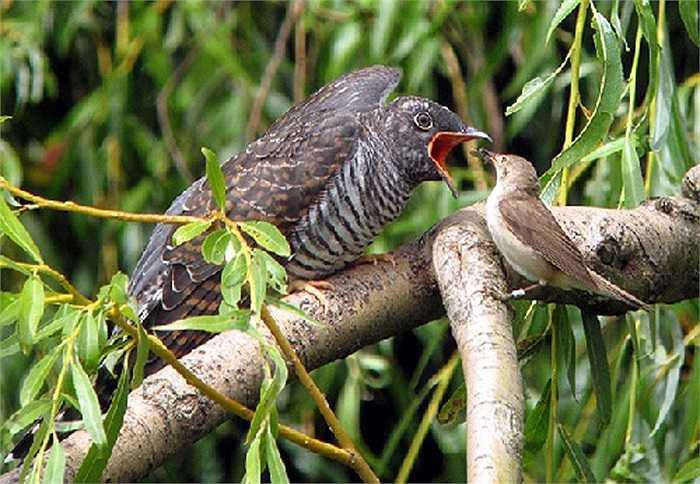
The most famous example involves cuckoos.
Female cuckoos secretly place their eggs in another bird’s nest. The unsuspecting host parents incubate the egg and later raise the chick.
In some cases, the foster chick grows significantly larger than the birds feeding it.
Even so, the adoptive parents continue delivering food because the chick’s begging behavior activates powerful feeding instincts.
This remarkable strategy has evolved independently in several bird groups around the world.
The Role of Baby Signals
One reason cross-species parenting occurs is that many babies send similar signals.
These include:
- High-pitched cries
- Large eyes
- Rounded faces
- Small body size
- Dependent behavior
Such characteristics encourage adults to respond with care and protection.
Scientists sometimes describe these traits as evolutionary signals designed to attract attention from caregivers.
Because these signals are effective across many species, they occasionally trigger nurturing behavior toward unrelated young animals.


Are Animals Capable of Compassion?
One of the most debated questions in animal behavior research concerns emotions.
Do animals feel empathy?
Scientists remain cautious about assigning human emotions to wildlife. However, studies increasingly show that many species possess complex social awareness.
Elephants comfort distressed companions. Dolphins assist injured group members. Primates maintain long-term friendships.
While foster parenting may sometimes result from instinct alone, emotional and social factors likely influence behavior as well.
The answer may differ between species, but evidence suggests that animal social lives are more sophisticated than once believed.
What These Stories Reveal About Evolution
At first glance, raising an unrelated youngster seems inefficient.
Why invest resources in a baby that does not carry your genes?
The answer depends on the species and situation. Cooperative care can strengthen social groups, improve survival rates, provide parenting experience, and help maintain important relationships.
Evolution does not always favor selfish behavior. In many cases, cooperation proves just as valuable.
The existence of foster families demonstrates how flexible survival strategies can become.
Conclusion
The animal kingdom is filled with extraordinary examples of creatures raising young that are not their own. From geese guiding ducklings to baboons adopting puppies and elephants helping orphaned calves, these relationships challenge simple ideas about parenting and survival.
Some arise from instinct. Others develop through social bonds or unusual circumstances. A few remain scientific mysteries.
What they all share is a reminder that nature is more complex than it first appears. Behind the competition and struggle often associated with the wild lies another story—one of protection, caregiving, and unexpected family connections.
These accidental parents prove that, sometimes, the strongest bond is not created by birth but by the act of caring itself.