Strange Stories About Animals During Child Rearing: Nature’s Most Extraordinary Parenting Secrets
Parenting is one of the most important challenges in the animal kingdom. Every species faces the same fundamental problem: how to help the next generation survive long enough to reproduce. Over millions of years, evolution has produced some astonishing solutions.
While many animals follow familiar parenting patterns, others have developed behaviors so unusual that they seem almost impossible. Some fathers become full-time caregivers. Some mothers carry babies in unexpected places. Others rely on entire communities to raise offspring.
These remarkable stories reveal just how creative nature can be when it comes to protecting and nurturing young animals.
Let’s explore some of the strangest examples of child rearing found anywhere on Earth.
1. The Surinam Toad Carries Babies Inside Her Back
Figure 1
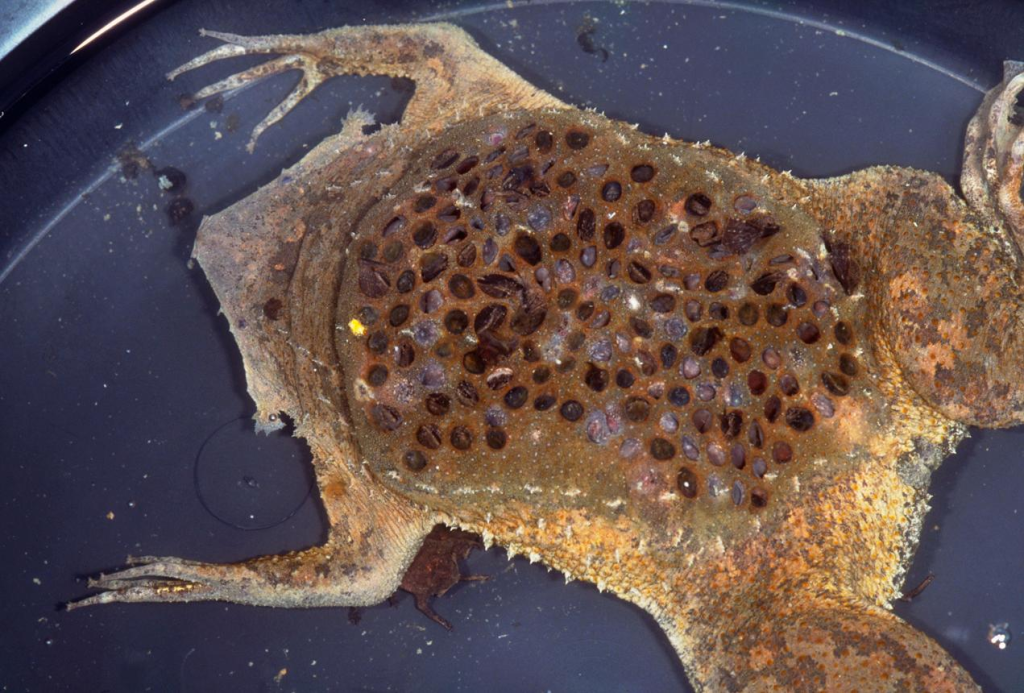
Alt Text: Female Surinam toad with developing young embedded in pockets on her back.
One of the strangest parenting stories in the animal kingdom belongs to the Surinam toad of South America.
Unlike most frogs and toads, this species does not simply lay eggs and leave them behind. During reproduction, the male helps place fertilized eggs onto the female’s back.
Over time, the skin grows around each egg, creating dozens of individual pockets. The developing young remain safely embedded inside the mother’s back for several months.
Inside these tiny chambers, the embryos continue growing until they become fully formed young toads.
Eventually, miniature toads emerge from the mother’s skin and enter the surrounding water.
The unusual sight of babies literally growing inside pockets on their mother’s back makes the Surinam toad one of nature’s most bizarre parents.
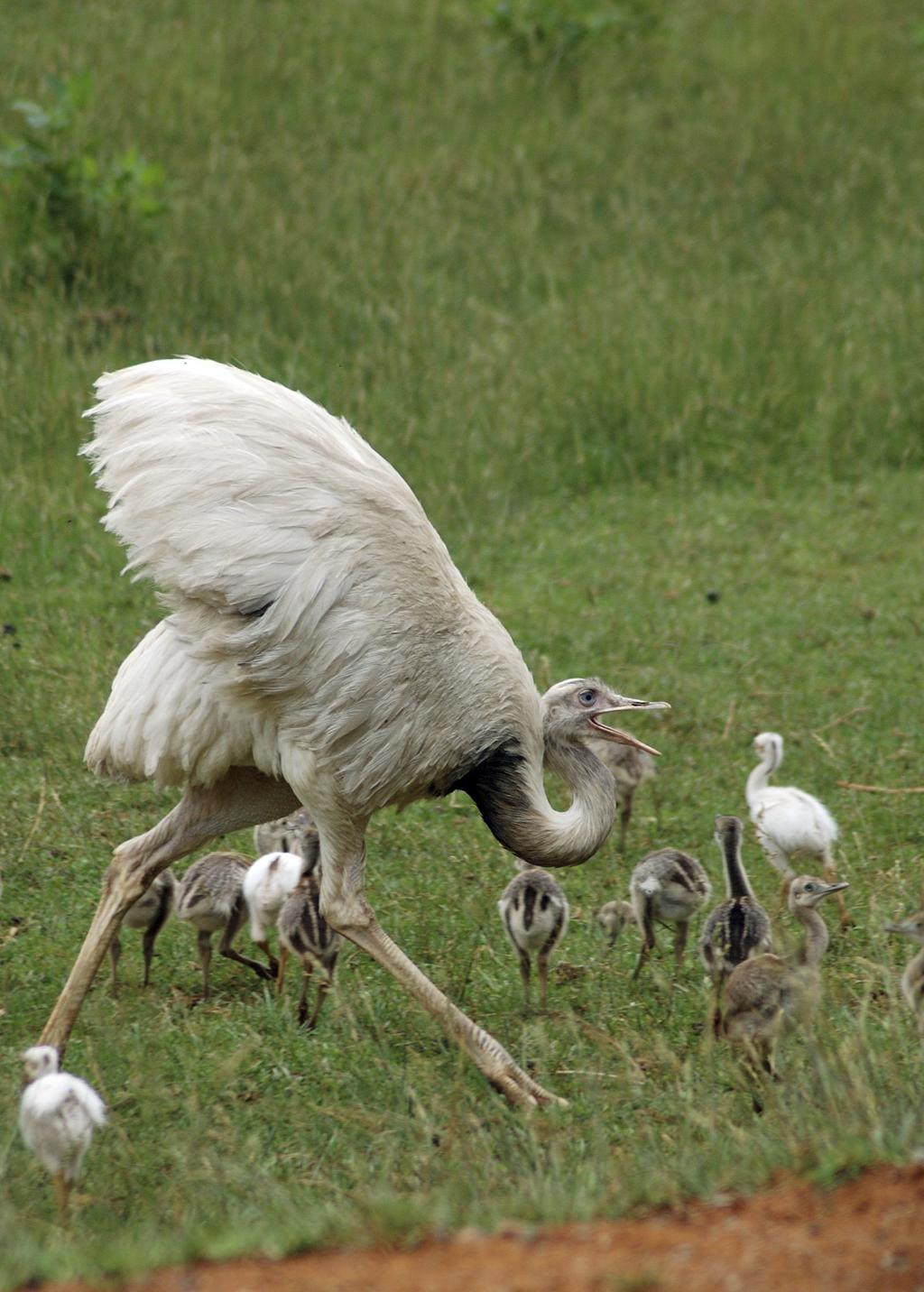
2. Male Rheas Become Single Fathers
Figure 2
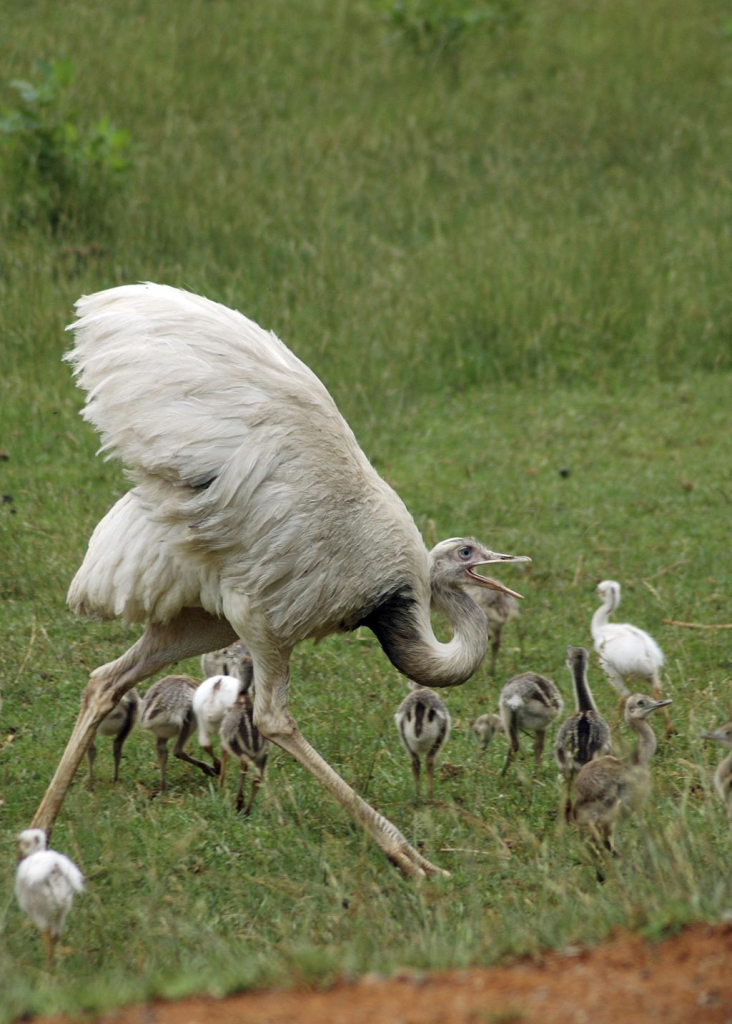
Alt Text: Male rhea bird walking across grassland while leading a large group of chicks.
In many bird species, mothers play a major role in raising offspring. Rheas, large flightless birds from South America, follow a very different approach.
After mating with multiple females, the male builds a nest and gathers eggs from several partners. Once the eggs are laid, the females often leave.
The father takes over completely.
He incubates the eggs for several weeks, rarely leaving the nest. After the chicks hatch, he becomes their sole protector and guide.
A single father may care for dozens of chicks at once. He aggressively defends them against predators and teaches them how to find food.
This unusual parenting system makes rheas one of the few animals where fathers perform nearly all childcare duties.
3. Poison Frogs Give Each Tadpole Its Own Nursery
Figure 3
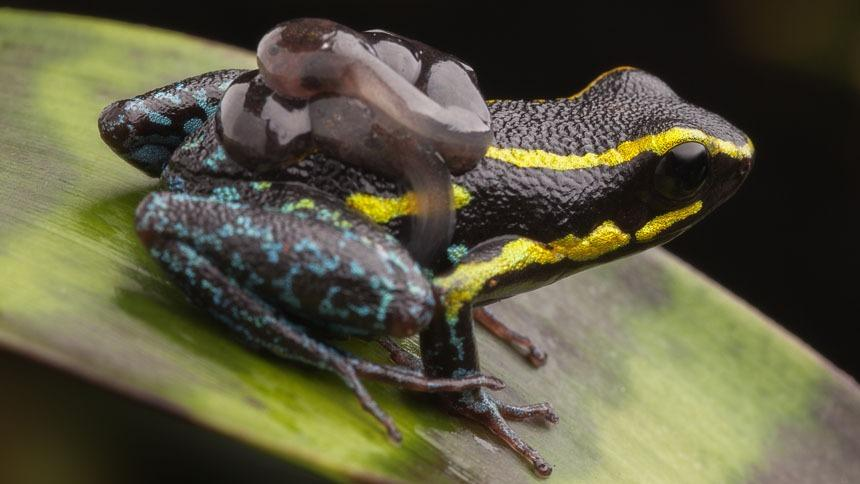
Alt Text: Poison frog carrying a tadpole on its back through a tropical rainforest.
Certain poison frogs from Central and South America display extraordinary dedication to their young.
After eggs hatch, one parent carefully transports the tadpoles on its back. The journey may require climbing trees and navigating dense rainforest vegetation.
Instead of placing all tadpoles in the same pond, the parent deposits each one into a separate pool of water held inside plant leaves.
These miniature pools act as private nurseries.
In some species, the mother regularly visits each tadpole and lays unfertilized eggs as food.
This remarkable level of personalized care is rare among amphibians and demonstrates an impressive commitment to offspring survival.
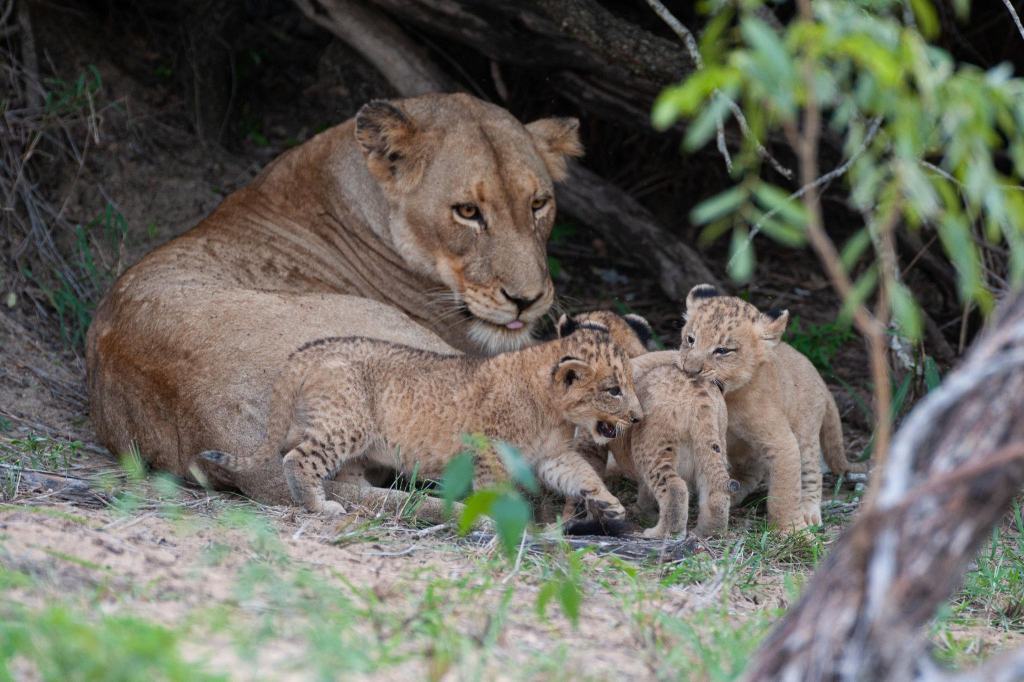
4. Lionesses Raise Cubs Together
Figure 4
Alt Text: Several lionesses resting together while watching over young cubs.
Lions have developed one of the most cooperative parenting systems among large predators.
Female lions living in the same pride often give birth around the same time. Instead of raising cubs separately, they frequently share responsibilities.
Mothers may nurse one another’s cubs and take turns guarding the young.
This communal approach provides several advantages. Cubs receive protection from multiple adults and benefit from increased access to milk and supervision.
If one mother is hunting, another may watch over the entire group of youngsters.
The result is a childcare system that resembles a cooperative nursery.
5. Pigeons Produce “Milk” for Their Babies
Figure 5
Alt Text: Adult pigeon feeding crop milk to a young chick inside a nest.
Many people are surprised to learn that pigeons produce a milk-like substance.
After chicks hatch, both parents generate a nutrient-rich secretion known as crop milk. Unlike mammalian milk, this material is produced within the crop, a specialized section of the digestive system.
The substance contains proteins, fats, and beneficial nutrients essential for rapid growth.
Parents feed crop milk directly to their chicks during the first days of life.
Without this unique food source, young pigeons would struggle to survive.
The ability of both male and female pigeons to produce milk-like nourishment makes them highly unusual among birds.
6. Leafcutter Ant Colonies Raise Young Collectively
Figure 6
Alt Text: Leafcutter ant workers caring for larvae inside an underground colony.
Leafcutter ants demonstrate one of nature’s most advanced examples of collective childcare.
Within a colony, thousands or even millions of individuals work together to raise young.
Worker ants carefully transport larvae, clean them, protect them, and regulate environmental conditions within the nest.
Different groups specialize in different tasks. Some gather leaves, others cultivate fungus gardens, and others focus entirely on childcare.
The queen lays eggs, but worker ants handle most parental responsibilities.
This highly organized system allows colonies to raise enormous numbers of offspring successfully.
It also demonstrates how social cooperation can replace traditional family-based parenting.
7. Black-Backed Jackals Form Strong Family Teams
Figure 7
Alt Text: Black-backed jackal parents standing near a den with young pups.
Black-backed jackals of Africa are known for forming strong pair bonds and highly cooperative family units.
Unlike many predators, both parents actively participate in raising pups.
The father provides food, guards the den, and protects the family from danger. As pups grow, older siblings may also assist with childcare.
Young jackals learn important survival skills through observation and play.
The combined effort of multiple family members significantly improves the pups’ chances of survival.
This teamwork highlights the benefits of shared parenting in challenging environments.
Why Strange Parenting Behaviors Evolved
The diversity of parenting strategies found in animals reflects the incredible variety of environments and challenges they face.
Some species live in habitats filled with predators. Others must cope with harsh climates, limited food supplies, or complex social structures.
Natural selection favors behaviors that increase offspring survival.
As a result, animals have evolved solutions ranging from carrying babies inside skin pockets to producing specialized food and creating cooperative childcare networks.
What may seem unusual to humans often represents an elegant evolutionary adaptation.
The Importance of Parenting in Animal Survival
For many species, raising offspring requires enormous investments of time and energy.
Parents may sacrifice feeding opportunities, risk exposure to predators, or devote months or years to teaching young animals essential skills.
These efforts improve survival rates and ensure that valuable genetic traits continue into future generations.
Scientists increasingly recognize that successful parenting plays a critical role in shaping animal behavior, social systems, and population dynamics.
The remarkable diversity of parental care strategies demonstrates how important child rearing is throughout the natural world.
Lessons From Nature’s Parents
Studying animal parenting provides insights far beyond wildlife biology.
Researchers learn about cooperation, communication, learning, and social organization by observing how animals raise their young.
Whether it is a poison frog delivering food to individual tadpoles or a lioness caring for another mother’s cubs, these behaviors reveal sophisticated solutions to common challenges.
They also remind us that nurturing and protection are not uniquely human traits.
Across the planet, animals display extraordinary dedication to the next generation.
Conclusion
The animal kingdom contains countless examples of strange and fascinating parenting behaviors. Surinam toads carry babies in their backs, male rheas become single fathers, and poison frogs transport tadpoles to individual nurseries.
Lionesses cooperate to raise cubs, pigeons produce milk-like food, leafcutter ants operate massive childcare systems, and black-backed jackals rely on teamwork to raise healthy pups.
These extraordinary stories reveal the creativity of evolution and the remarkable lengths animals will go to ensure their offspring survive.
Whether through sacrifice, cooperation, protection, or innovation, animal parents continue to amaze scientists and wildlife enthusiasts alike. Their stories offer a fascinating glimpse into one of nature’s most important and enduring responsibilities: raising the next generation.