

When Dinner Looks Impossible: Strange Stories of Animals That Swallow or Eat Things Bigger Than Themselves
Nature rarely follows the rules people expect.
Most of us assume animals eat things smaller than their mouths and only slightly larger than their stomachs. But in many corners of the world—from rivers and rainforests to deep ocean trenches—animals routinely attempt meals that seem physically impossible.
Some stretch. Some unhinge. Some dissolve food outside their bodies. Others gamble everything on a single oversized meal.
These are not mythical creatures or exaggerated fishing stories. They are real animals with remarkable feeding strategies that reveal just how inventive evolution can be.
1. The Snake That Turns One Meal Into Weeks of Survival
If there were an award for swallowing impossible meals, snakes would dominate the competition.
Unlike mammals that chew and reduce food into manageable pieces, many snakes swallow prey whole. Their skulls are not fused in the same way ours are. Flexible ligaments allow each side of the jaw to move independently, creating astonishing expansion.
Large constrictors and pythons sometimes consume prey that appears wider than their own body.
Wildlife researchers have documented snakes eating animals such as deer, antelope, pigs, monkeys, and even crocodilians.
One of the most extraordinary examples involves giant constrictors in South America. A snake may spend hours slowly advancing its mouth over prey, alternately gripping and walking its jaws forward until the entire body disappears inside.
The process can look impossible because the snake itself appears too small.
But swallowing is only the beginning.
After such massive meals, the snake’s metabolism temporarily transforms. Digestion accelerates dramatically. Internal organs become more active, energy use rises, and the animal may remain inactive for days or weeks while processing a single meal.
For these predators, one enormous dinner can replace dozens of smaller hunts.
2. The Pelican’s Unexpected Talent for Oversized Meals
Pelicans are often remembered for their oversized bills and dramatic fishing dives.
But occasionally, their appetite leads to scenes that seem unbelievable.
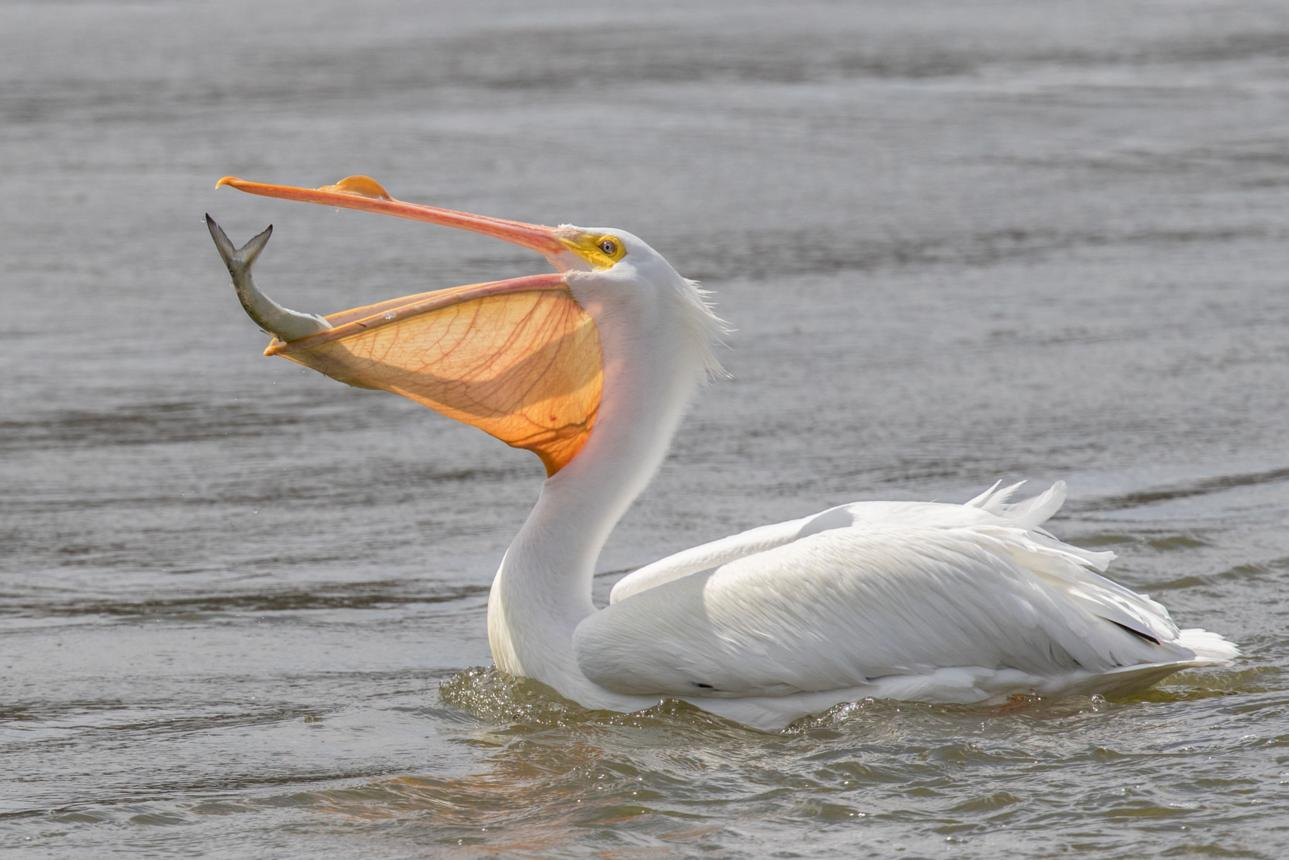
Pelicans have been observed swallowing fish that barely appear capable of fitting inside their throats. In rare cases, they attempt prey so large that it stretches the throat pouch into a balloon-like shape.
The pouch itself is not the stomach.
Instead, it acts like a temporary storage and capture net before food is repositioned and swallowed.
Some pelicans have even attempted birds, unexpectedly large fish, and animals that challenge their physical limits.
Observers watching from shore often assume the animal has made a mistake.
Yet pelicans evolved for these moments.
Their expandable structures allow them to exploit sudden feeding opportunities. In environments where food availability changes quickly, hesitation can mean missing an entire meal.
Oversized prey is risky—but sometimes worth the gamble.
3. Deep-Sea Eels and the Art of Extreme Expansion
Thousands of meters below the ocean surface, food can become painfully scarce.
That scarcity has produced some of nature’s strangest feeding adaptations.
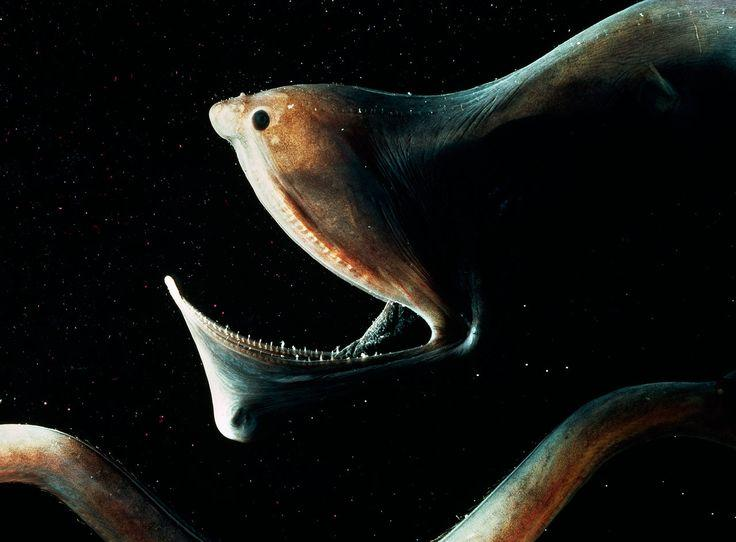
Among the most bizarre is the gulper eel.
This creature appears almost unfinished: a narrow body attached to a gigantic mouth.
Its head opens into a pouch-like structure capable of engulfing surprisingly large prey relative to body size.
Unlike fast pursuit predators, gulper eels rely on opportunity.
When something edible appears in darkness, they may attempt to consume it immediately because another chance might not come soon.
Their bodies support this strategy through stretchable tissues and unusual digestive capacity.
To human eyes, these animals seem exaggerated or even fictional.
But in the deep sea, wasting calories can be more dangerous than attempting a meal that looks absurd.
4. Frogs That Refuse to Respect Size Limits
Frogs seem harmless.
Then you watch one try to eat something nearly its own size.
Many frog species are opportunistic feeders. Their approach is simple: if it moves and can possibly fit, it might become lunch.
Large frogs have been observed attempting insects, rodents, birds, smaller frogs, reptiles, and occasionally prey that appears impossible to manage.
Their mouths open wider than many people expect.
Unlike careful predators that evaluate each hunt, frogs often react instantly.
This strategy sometimes produces astonishing outcomes.
A frog may wrestle oversized prey for several minutes before gradually repositioning and swallowing it.
Success is not guaranteed.
But evolutionary pressure rewards animals that maximize calories whenever opportunities appear.
To a frog, a difficult meal may still be better than waiting for an easier one.
5. The Starfish That Eats Without Looking Like It’s Eating
Some animals break the rules in ways that seem impossible until you understand the mechanism.
Starfish are a perfect example.
At first glance, they do not appear equipped to eat anything substantial.
They lack obvious jaws and cannot chase prey.
Yet some species consume shellfish larger than what their bodies seem capable of handling.
Their secret is unusual.
A starfish can use tube feet to slowly pull open shells and then extend part of its stomach outside its body.
Instead of bringing food inside immediately, digestion begins externally.
Soft tissue is broken down first, allowing nutrients to be absorbed gradually.
The prey may actually appear larger than the predator throughout the feeding process.
It is less dramatic than a snake swallowing a deer—but equally extraordinary.
Nature sometimes solves problems by changing the rules instead of competing directly.
6. Crocodiles and the “Anything That Fits” Philosophy
Crocodiles are famous for powerful bites.
Less appreciated is how ambitious their eating behavior can become.
Large crocodilians occasionally tackle prey that appears oversized relative to their body.
Unlike mammals that chew thoroughly, crocodiles rely on tearing, twisting, and strategic swallowing.
One unusual behavior is known informally as the death roll.
By spinning rapidly, they can break apart large prey into manageable sections.
But when conditions allow, they sometimes swallow surprisingly large portions whole.
Young crocodiles also demonstrate this instinct early.
Even juveniles may attempt prey that seems unrealistically large.
Their feeding decisions reflect a simple reality:
In ecosystems where competition is intense, passing up food can be more dangerous than attempting too much.
7. Why Eating Huge Meals Actually Makes Sense
To people, oversized meals seem reckless.
In nature, they can be efficient.
Large meals reduce the number of dangerous hunting attempts.
Predators spend less energy searching.
Animals in unpredictable environments gain insurance against future scarcity.
Evolution rarely rewards elegance.
It rewards survival.
That is why so many unrelated species—snakes, birds, fish, amphibians, marine invertebrates, and reptiles—arrived at similar outcomes through completely different methods.
Some stretch.
Some dissolve.
Some store.
Some simply try and hope.
The next time you imagine survival in the wild, it is worth remembering:
Nature is filled with animals that routinely ignore what looks physically possible.
And sometimes the strangest stories are not about speed, strength, or intelligence.
Sometimes they begin with a creature looking at something far too large and deciding to eat it anyway.
Final Thoughts
Animals that consume prey larger than themselves reveal one of nature’s most fascinating truths: survival often rewards flexibility more than perfection.
Whether it is a snake patiently unfolding over a massive meal, a pelican stretching the limits of its pouch, or a starfish digesting dinner outside its own body, these stories remind us that life adapts in unexpected ways.
The wild is not built around what seems reasonable.
It is built around what works.