Tag: Weird Animals

  • Nature’s Giants: The Biggest Creepy Crawlers and Amphibians on Earth

    Nature’s Giants: The Biggest Creepy Crawlers and Amphibians on Earth

    The World’s Biggest Gecko, Centipede, and Frog: Giant Creatures That Seem Too Strange to Be Real

    Image
    Image
    Image
    Image
    Image

    The Largest Gecko, Centipede, and Frog Ever Discovered

    The natural world is filled with extraordinary creatures, but every so often scientists discover animals that seem to break the normal rules of size.

    Most geckos are small enough to fit comfortably in the palm of your hand. Most frogs can sit on a leaf, and most centipedes are creatures people barely notice as they crawl through the soil.

    However, some species have evolved into giants compared to their relatives. These animals are so large that they often surprise even experienced wildlife researchers.

    Today, we’ll explore three record-breaking creatures that hold the title of being among the largest members of their groups: the giant gecko, the giant centipede, and the enormous Goliath frog.

    These remarkable animals prove that nature still has the power to amaze us.


    1. The Giant Gecko of New Caledonia

    Image
    Image
    Image
    Image
    Image
    Image
    Image

    When most people think of geckos, they imagine small lizards running across walls or hiding in gardens.

    However, the largest gecko species in the world is a completely different story.

    Known scientifically as Leach’s Gecko, this giant reptile lives in the forests of New Caledonia, a group of islands in the South Pacific.

    Unlike common house geckos, Leach’s Gecko can grow up to 17 inches (43 centimeters) long and weigh more than 300 grams.

    Its thick body, powerful jaws, and impressive size make it look more like a miniature dragon than a typical gecko.

    A Strange Appearance

    The giant gecko has rough, bark-like skin that helps it blend perfectly into tree trunks.

    During the day, it hides among branches and tree cavities. At night, it becomes active and searches for food.

    Its diet includes:

    • Fruits
    • Nectar
    • Insects
    • Small animals

    A Powerful Bite

    One surprising fact about Leach’s Gecko is the strength of its bite.

    Many reptile enthusiasts report that this species has one of the strongest bites among geckos.

    Although it is not dangerous to humans, it can certainly deliver a painful bite when threatened.


    2. The Giant Centipede: A Predator With Hundreds of Legs

    Image
    Image
    Image
    Image
    Image
    Image

    Among all centipede species, one stands above the rest in terms of size and reputation.

    The giant Amazonian centipede, known scientifically as Amazonian Giant Centipede, is considered one of the largest centipedes on Earth.

    This incredible arthropod can grow up to 30 centimeters (12 inches) long.

    For comparison, many ordinary centipedes are only a few centimeters long.

    Built for Hunting

    Unlike insects that feed on plants, giant centipedes are predators.

    They use specialized venomous claws to capture prey.

    Their diet may include:

    • Insects
    • Spiders
    • Small reptiles
    • Frogs
    • Rodents
    • Small birds

    Scientists have even observed giant centipedes catching bats inside caves.

    Surprisingly Fast

    Despite having dozens of legs, giant centipedes can move with incredible speed.

    This allows them to surprise prey before it has a chance to escape.

    Although their appearance may seem frightening, giant centipedes play an important role in maintaining ecological balance by controlling populations of smaller animals.


    3. The Goliath Frog: The Largest Frog in the World

    Image
    Image
    Image
    Image
    Image
    Image

    If you think all frogs are small creatures that sit beside ponds and croak at night, think again.

    The world’s largest frog is truly enormous.

    Known as the Goliath Frog, this giant amphibian lives in parts of Cameroon and Equatorial Guinea in Africa.

    How Big Is It?

    A fully grown Goliath frog can reach:

    • Length: Up to 34 centimeters (13 inches)
    • Weight: Over 3 kilograms (7 pounds)

    That’s heavier than many domestic cats.

    When people see photographs of a Goliath frog being held by researchers, they often assume the images have been edited.

    The frog’s size is genuinely astonishing.

    Life Near Fast Rivers

    Unlike many frog species, Goliath frogs prefer fast-flowing rivers and waterfalls.

    These powerful amphibians use their muscular legs to navigate strong currents.

    Researchers have even discovered that Goliath frogs move rocks to help create safe nesting areas for their young.

    This behavior demonstrates a level of environmental interaction rarely seen among amphibians.


    Why Do Some Animals Become Giants?

    Image
    Image
    Image
    Image

    Scientists believe several factors can contribute to unusually large sizes in animals.

    1. Genetics

    Inherited traits play a major role in determining how large an animal can grow.

    2. Food Availability

    Animals living in environments with abundant food resources may grow larger over time.

    3. Evolutionary Advantages

    Being larger can help with:

    • Defending territory
    • Avoiding predators
    • Capturing prey
    • Reproduction

    4. Habitat Conditions

    Stable environments sometimes allow species to evolve larger body sizes across generations.


    Amazing Facts About These Giant Creatures

    Here are some fascinating facts:

    Giant Gecko

    • Largest living gecko species.
    • Can produce surprisingly loud vocalizations.
    • Uses camouflage to hide in trees.

    Giant Centipede

    • One of the largest centipedes ever discovered.
    • Can hunt animals larger than many people expect.
    • Possesses venom used to subdue prey.

    Goliath Frog

    • Largest frog species on Earth.
    • Can weigh more than 7 pounds.
    • Lives only in limited regions of Africa.

    Conservation Challenges

    Image
    Image
    Image
    Image

    Unfortunately, all three of these remarkable animals face threats in the modern world.

    These challenges include:

    • Habitat destruction
    • Deforestation
    • Pollution
    • Illegal wildlife trade
    • Climate change

    As natural habitats continue to shrink, protecting biodiversity becomes increasingly important.

    Many scientists believe preserving these species is essential because they represent unique branches of Earth’s evolutionary history.


    Conclusion

    The giant gecko, Amazonian giant centipede, and Goliath frog demonstrate that nature is capable of producing creatures far larger than most people imagine.

    From the tree-dwelling giant gecko of New Caledonia to the fearsome centipede of South America and the enormous frog of Africa, these animals challenge our assumptions about what reptiles, arthropods, and amphibians should look like.

    Their incredible size, unique adaptations, and fascinating behaviors continue to inspire scientists and wildlife enthusiasts around the world.

    The next time you see a small gecko, frog, or centipede, remember that somewhere on Earth, there may be a giant relative that looks like it belongs in a prehistoric world rather than the modern one. 🦎🐸🪱🌍
  • Nature’s Giants and Tiny Wonders: 7 Animals That Broke the Size Rules of Their Species

    Nature’s Giants and Tiny Wonders: 7 Animals That Broke the Size Rules of Their Species

    Nature’s Giants and Tiny Wonders: 7 Animals That Broke the Size Rules of Their Species

    Image
    Image
    Image
    Image
    Image
    Image
    Image

    Nature’s Giants and Tiny Wonders: Animals That Defied the Size Expectations of Their Species

    Nature is full of surprises. Most animals grow to sizes that are typical for their species, allowing scientists to predict roughly how large they will become. However, every once in a while, an animal appears that seems to ignore the rules entirely.

    Some individuals grow to enormous sizes, towering over others of the same species. Others remain surprisingly small, looking almost like miniature versions of their relatives. These unusual animals often become famous because they challenge what we think we know about biology and growth.

    Scientists explain these differences through genetics, environmental conditions, diet, and occasionally rare mutations. Whatever the cause, these extraordinary creatures remind us that nature does not always follow expectations.

    Let’s explore some of the most incredible giant and miniature animals ever discovered.


    1. Darius – The Giant Rabbit That Shocked the World

    Image
    Image
    Image
    Image
    Image

    Most pet rabbits are small enough to fit comfortably in a person’s lap. However, Darius, a giant rabbit from the Flemish Giant breed, became famous for reaching a length of more than four feet.

    Compared to ordinary rabbits, Darius looked almost unbelievable. Visitors often mistook him for a small dog rather than a rabbit.

    His enormous size required significantly more food than average rabbits. He consumed large amounts of vegetables, hay, and specially prepared meals to maintain his health.

    Although giant rabbits may appear intimidating because of their size, they are generally known for being calm and friendly animals.


    2. Knickers – The Giant Cow Taller Than Most Humans

    When photos of Knickers appeared online, many people thought the images had been digitally edited.

    Knickers, a steer from Australia, stood significantly taller than normal cattle and weighed well over a ton.

    Standing beside ordinary cows, he appeared almost twice their size.

    Farmers explained that his unusual growth likely resulted from a combination of genetics and natural development. Because of his massive frame, he became an international internet sensation.

    Despite his giant appearance, Knickers was known for his gentle personality and became one of the most recognizable farm animals in the world.


    3. Sarcosuchus – The Giant Crocodile of Prehistoric Times

    Image
    Image
    Image
    Image

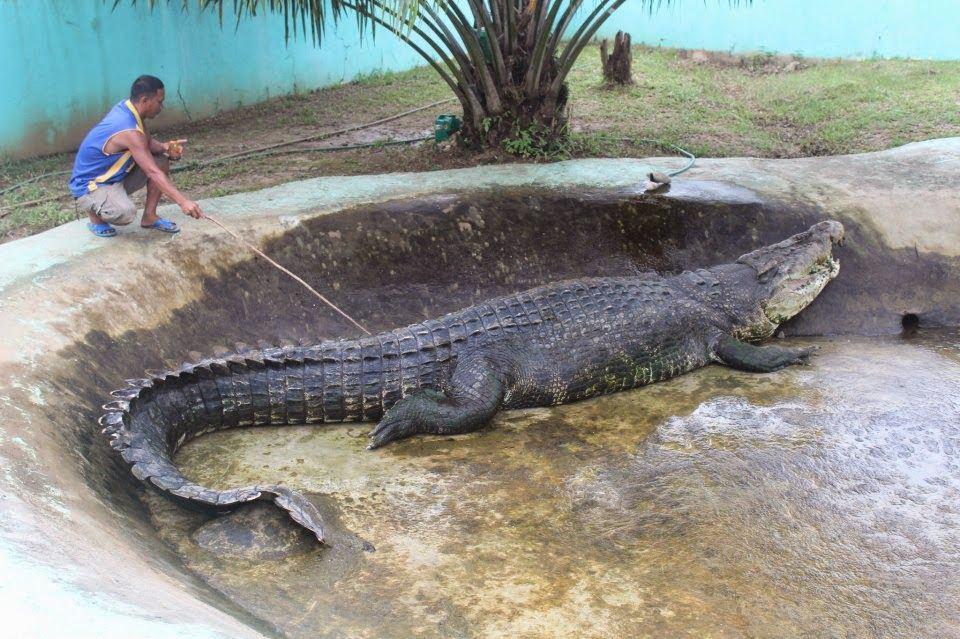
    Modern crocodiles are already among the most powerful reptiles alive today. Yet millions of years ago, Earth was home to an even larger relative known as Sarcosuchus.

    Nicknamed the “Super Croc,” this giant reptile may have reached lengths of nearly 40 feet and weighed several tons.

    Scientists believe it was one of the largest crocodile-like creatures ever to exist.

    Compared with today’s crocodiles, Sarcosuchus looked like a monster from a science-fiction movie.

    Its discovery provides a fascinating glimpse into a prehistoric world where many animals were much larger than their modern descendants.


    4. Thumbelina – The Tiny Horse That Captured Hearts

    Not every size record involves gigantic animals.

    Thumbelina became famous as one of the smallest horses ever recorded.

    Unlike normal horses that can stand well over four feet tall at the shoulder, Thumbelina measured only a fraction of that height.

    People often compared her size to that of a large dog.

    Despite her miniature stature, she possessed all the characteristics of a horse, including intelligence, curiosity, and a playful personality.

    Her story demonstrated that extraordinary animals can be remarkable whether they are giant or tiny.


    5. The Maine Coon Cat That Looked Like a Wild Animal

    Image
    Image
    Image
    Image
    Image
    Image
    Image

    Most domestic cats are relatively small creatures. However, Maine Coon cats are famous for reaching impressive sizes.

    Some individuals grow so large that people mistake them for small wild animals.

    With long bodies, thick fur, and massive tails, giant Maine Coons often become internet celebrities.

    Despite their intimidating appearance, they are widely known as gentle and affectionate pets.

    Veterinarians explain that genetics play a major role in determining the size of these remarkable cats.


    6. The World’s Smallest Dog

    Tiny dogs have fascinated humans for centuries.

    Some of the smallest dogs ever recorded weighed less than a pound and could fit comfortably inside a person’s hand.

    Compared to average dogs, these miniature companions appear almost toy-like.

    Although their size makes them adorable, owners must take extra precautions because small animals are generally more vulnerable to injuries.

    Their existence demonstrates how dramatically size can vary even within closely related breeds.


    7. Brookesia Nana – One of the Smallest Reptiles Ever Found

    Image
    Image
    Image
    Image
    Image

    One of the most astonishing discoveries in recent years was a tiny chameleon species known as Brookesia nana.

    This miniature reptile is so small that it can comfortably sit on the tip of a human finger.

    Scientists were amazed by its tiny dimensions because most people imagine reptiles as relatively large creatures.

    The discovery highlights how much biodiversity remains hidden in remote parts of the world.

    Even today, researchers continue finding animals that challenge expectations about size and evolution.


    Why Do Some Animals Become Giant?

    Scientists have identified several factors that can contribute to unusually large animals:

    Genetics

    Inherited traits can influence growth and body size.

    Diet

    Access to abundant nutrition may allow animals to reach larger sizes.

    Environment

    Climate and habitat conditions can affect growth patterns.

    Selective Breeding

    Humans have intentionally bred certain animals, such as rabbits, dogs, and cats, to emphasize particular characteristics, including size.


    Why Do Some Animals Remain Tiny?

    Miniature animals often result from different biological factors:

    Genetic Mutations

    Certain genes can limit growth.

    Evolutionary Adaptation

    Smaller animals may require fewer resources to survive.

    Habitat Constraints

    Living in restricted environments sometimes favors reduced body size.

    Natural Selection

    Over time, some species evolve smaller forms that are better suited to their surroundings.


    The Fascination With Animal Size

    Humans have always been fascinated by extremes.

    Whether it is the largest whale, the smallest reptile, the tallest cow, or the tiniest dog, animals that break size records capture our imagination because they challenge our expectations.

    These unusual creatures remind us that nature is far more diverse and unpredictable than we often assume.

    Every giant animal and every miniature wonder tells a unique story about genetics, evolution, and survival.


    Conclusion

    From giant rabbits and towering cattle to miniature horses and tiny chameleons, the animal kingdom is filled with extraordinary individuals that seem to ignore the normal rules of size.

    Some become giants through genetics and favorable conditions, while others remain astonishingly small due to evolutionary adaptations or rare biological traits. Together, they demonstrate one of nature’s most fascinating truths: there is always room for surprises.

    The next time you encounter an animal, remember that somewhere in the world there may be another member of the same species that is twice as large—or half as small—as anyone thought possible.