Tag: wildlife facts

  • Meet the Oldest Living Animal on Earth: The Incredible Creature That Has Survived for Nearly Two Centuries

    Meet the Oldest Living Animal on Earth: The Incredible Creature That Has Survived for Nearly Two Centuries

    Image
    Image
    Image
    Image
    Image
    Image

    Meet Jonathan: The Oldest Living Land Animal Still Alive Today

    Imagine living through the invention of the telephone, the first airplane flight, two World Wars, the arrival of television, the birth of the internet, and the rise of artificial intelligence.

    Now imagine experiencing all of that without being a human.

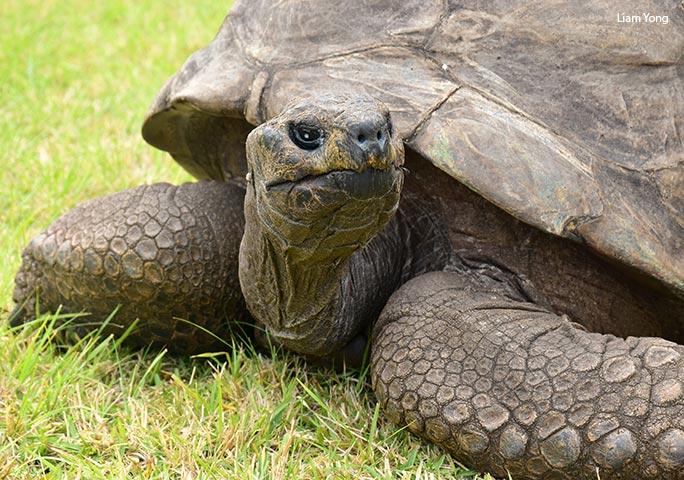
    On a remote island in the South Atlantic Ocean lives a remarkable creature that has witnessed more history than almost anyone alive today. His name is Jonathan, and he is recognized as the oldest known living land animal on Earth.

    What makes Jonathan truly extraordinary is that he is not a whale, shark, or deep-sea creature. He is a giant tortoise that continues to live a peaceful life despite being nearly two centuries old.

    His story has fascinated scientists, animal lovers, and historians around the world because he represents one of nature’s greatest mysteries: extreme longevity.


    A Living Piece of History

    Jonathan is a Seychelles giant tortoise, a species famous for its long lifespan. However, even among giant tortoises, Jonathan is exceptional.

    Historical records indicate that he was already fully grown when he arrived on the island of Saint Helena in 1882. Since giant tortoises require decades to reach adulthood, experts estimate that Jonathan was born around 1832.

    That means Jonathan has lived through nearly 200 years of world history.

    To understand just how old that is, consider some events that had not yet happened when Jonathan was born:

    • The automobile had not been invented.
    • The telephone did not exist.
    • Electric light bulbs were not in common use.
    • The American Civil War had not begun.
    • The Eiffel Tower had not been built.
    • Airplanes were still unimaginable.

    Yet Jonathan remains alive today.


    Life on Saint Helena

    Image
    Image
    Image
    Image
    Image
    Image
    Image
    Image

    Jonathan lives on Saint Helena, a remote volcanic island located in the South Atlantic Ocean.

    The island is perhaps best known as the place where Napoleon Bonaparte spent his final years in exile.

    For Jonathan, however, Saint Helena has been home for well over a century.

    He spends much of his day wandering grassy fields, resting in the shade, and enjoying meals prepared by caretakers. Despite his age, Jonathan continues to move around regularly and interact with his surroundings.

    Visitors from around the world travel to Saint Helena hoping to catch a glimpse of this living legend.


    How Has Jonathan Lived So Long?

    Scientists have long studied animals with exceptional lifespans, hoping to understand the secrets of aging.

    Several factors may contribute to Jonathan’s remarkable longevity.

    1. Slow Metabolism

    Giant tortoises have extremely slow metabolisms. Their bodies use energy efficiently, which may reduce wear and tear on cells over time.

    Because they move slowly and conserve energy, their biological systems experience less stress than those of many other animals.

    2. Few Natural Predators

    Adult giant tortoises are enormous and possess thick protective shells. This means they face relatively few threats once they reach maturity.

    Animals that avoid predators often have more opportunities to evolve longer lifespans.

    3. Stable Environment

    Jonathan has lived in a protected environment for decades.

    Regular food, veterinary care, and freedom from predators have likely contributed to his continued survival.

    4. Genetics

    Researchers suspect that giant tortoises possess unique genetic traits that help them resist age-related damage and disease.

    Scientists continue studying tortoise biology in hopes of learning lessons that could one day benefit human medicine.


    Remarkably Healthy for His Age

    Many people assume an animal approaching 200 years old would be extremely weak or inactive.

    Surprisingly, Jonathan continues to enjoy life.

    Caretakers report that although he has lost much of his vision and sense of smell, he remains active and maintains a healthy appetite.

    Veterinarians monitor his health closely and provide specialized care when necessary.

    Jonathan particularly enjoys eating:

    • Lettuce
    • Apples
    • Bananas
    • Cabbage
    • Carrots
    • Seasonal fruits

    His caretakers often hand-feed him to ensure he receives proper nutrition.

    Considering his extraordinary age, his overall condition continues to amaze experts.


    The Science of Extreme Longevity

    Image
    Image
    Image
    Image
    Image

    Jonathan is part of a small group of animals known for exceptional lifespans.

    Some species capable of extraordinary longevity include:

    • Giant tortoises
    • Greenland sharks
    • Bowhead whales
    • Ocean quahog clams
    • Certain jellyfish species

    Scientists are increasingly interested in understanding why some animals age much more slowly than others.

    Research suggests that long-lived species may possess:

    • Enhanced DNA repair systems
    • Stronger cancer resistance
    • Efficient cellular maintenance
    • Reduced metabolic stress

    These discoveries could provide valuable insights into aging and longevity across all species.


    Witness to Nearly Two Centuries of Change

    Perhaps the most fascinating aspect of Jonathan’s life is not simply his age but everything he has witnessed.

    During Jonathan’s lifetime:

    • More than 40 U.S. presidents have served.
    • The industrial revolution transformed societies.
    • Humans landed on the Moon.
    • Computers were invented.
    • The internet connected the world.
    • Smartphones became common.
    • Artificial intelligence emerged.

    Few living creatures have observed such dramatic changes across generations.

    Jonathan serves as a reminder of how brief human lives are compared with some of nature’s longest-lived animals.


    Why People Around the World Love Jonathan

    Image
    Image
    Image
    Image
    Image

    Jonathan has become much more than an animal record holder.

    For many people, he symbolizes:

    • Resilience
    • Survival
    • Patience
    • Adaptability
    • The wonders of nature

    His story inspires curiosity about wildlife and encourages greater appreciation for conservation efforts.

    As habitats disappear and species face increasing challenges, Jonathan reminds us of the importance of protecting Earth’s biodiversity.

    Every species contains unique biological secrets that could help us better understand life itself.


    Could Any Animal Live Longer?

    Although Jonathan holds the title of the oldest known living land animal, some marine species may live even longer.

    Scientists believe certain Greenland sharks can survive for several centuries, while some ocean-dwelling clams have been estimated to live for more than 500 years.

    However, among land animals currently known to be alive, Jonathan remains unmatched.

    His lifespan continues to astonish researchers and animal enthusiasts alike.


    Conclusion

    Jonathan the giant tortoise is far more than an old animal. He is a living connection to a world that existed nearly 200 years ago.

    From the age of sailing ships to the era of artificial intelligence, Jonathan has quietly endured while civilizations transformed around him. His extraordinary life offers a rare glimpse into the mysteries of aging, survival, and the incredible resilience of nature.

    As he continues grazing peacefully on the island of Saint Helena, Jonathan remains one of the most remarkable living creatures on Earth—a true survivor whose story reminds us that sometimes the greatest wonders of the natural world move at their own slow and steady pace.
  • When Dinner Looks Impossible: Strange Stories of Animals That Swallow or Eat Things Bigger Than Themselves

    When Dinner Looks Impossible: Strange Stories of Animals That Swallow or Eat Things Bigger Than Themselves

    https://images.openai.com/static-rsc-4/oxN8uySU2of3T3ZQRLNI4a-9WxzGFrfGDWsycvfectJ0X9tn2TFx54pbW-D8z_h1eyPeO2p9LxStyb60_l7kxLDZS6m8aQQw52i5fqMmo7-2tW7h7FZLeFtaqfLoohWwXfRAkQY0MfZ1tPdUtMhw1AmbC92vsAWvY1RlifDWDN7ems-GaIhF7YITphCITPew?purpose=fullsize
    https://images.openai.com/static-rsc-4/qdoDbTNxZ-86G5Dsn_k-Nu1coQzCxVoA4eK0jMdfI37gT8KphfdwC1NAaZVdPTuNAwWxt3KfNAUM-NMxlgGzUEoQIUUxzssrdNdYkIx-k-6s9ovYgRhcn8YrCU9IbEGncRv5e5N5slBtWZiDFAEQ5A9p6LOmiOkf9V5vypxdKTp2Lc_6xHe6_n8N6IBCcsin?purpose=fullsize
    https://images.openai.com/static-rsc-4/5QfHtHYbgf75G0ZMUPcmtoag4oEIRb3gcytjPRF0LsR3VxxoR5a-jYE0QDWhOH8OqzCz__WF7DsXfwS0TjLwEGMN0FOcTTe6rKTQY8HKu1y_lpJrRz-j7PWaXHDZT6g8ktKtaidGWbc-4ovezcIDW91TrWqwimjn2Kn6p-27JuNTN8qiCQ7nHkvEhwmwL9oL?purpose=fullsize

    When Dinner Looks Impossible: Strange Stories of Animals That Swallow or Eat Things Bigger Than Themselves

    Nature rarely follows the rules people expect.

    Most of us assume animals eat things smaller than their mouths and only slightly larger than their stomachs. But in many corners of the world—from rivers and rainforests to deep ocean trenches—animals routinely attempt meals that seem physically impossible.

    Some stretch. Some unhinge. Some dissolve food outside their bodies. Others gamble everything on a single oversized meal.

    These are not mythical creatures or exaggerated fishing stories. They are real animals with remarkable feeding strategies that reveal just how inventive evolution can be.

    1. The Snake That Turns One Meal Into Weeks of Survival

    If there were an award for swallowing impossible meals, snakes would dominate the competition.

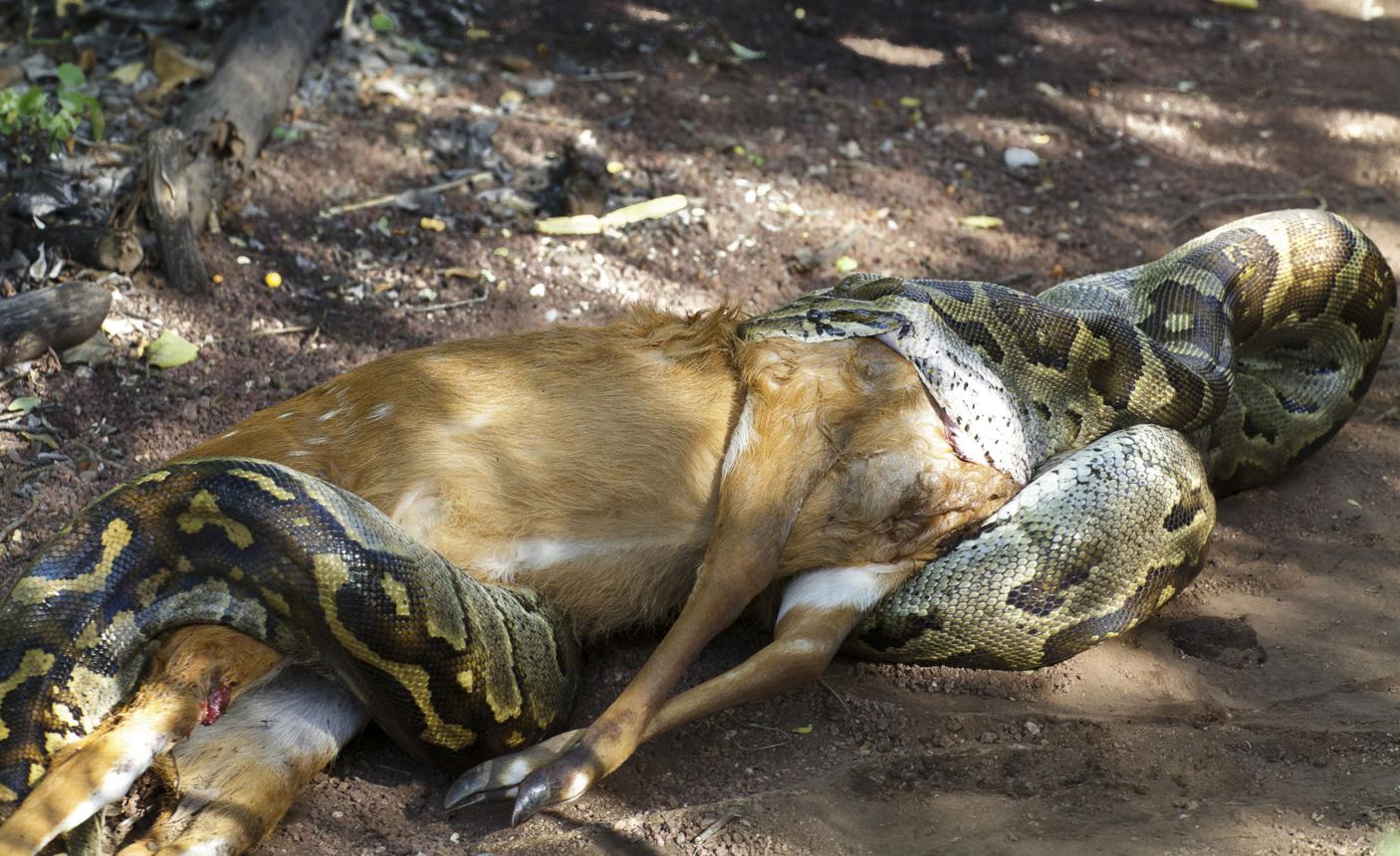
    Unlike mammals that chew and reduce food into manageable pieces, many snakes swallow prey whole. Their skulls are not fused in the same way ours are. Flexible ligaments allow each side of the jaw to move independently, creating astonishing expansion.

    Large constrictors and pythons sometimes consume prey that appears wider than their own body.

    Wildlife researchers have documented snakes eating animals such as deer, antelope, pigs, monkeys, and even crocodilians.

    One of the most extraordinary examples involves giant constrictors in South America. A snake may spend hours slowly advancing its mouth over prey, alternately gripping and walking its jaws forward until the entire body disappears inside.

    The process can look impossible because the snake itself appears too small.

    But swallowing is only the beginning.

    After such massive meals, the snake’s metabolism temporarily transforms. Digestion accelerates dramatically. Internal organs become more active, energy use rises, and the animal may remain inactive for days or weeks while processing a single meal.

    For these predators, one enormous dinner can replace dozens of smaller hunts.


    2. The Pelican’s Unexpected Talent for Oversized Meals

    Pelicans are often remembered for their oversized bills and dramatic fishing dives.

    But occasionally, their appetite leads to scenes that seem unbelievable.

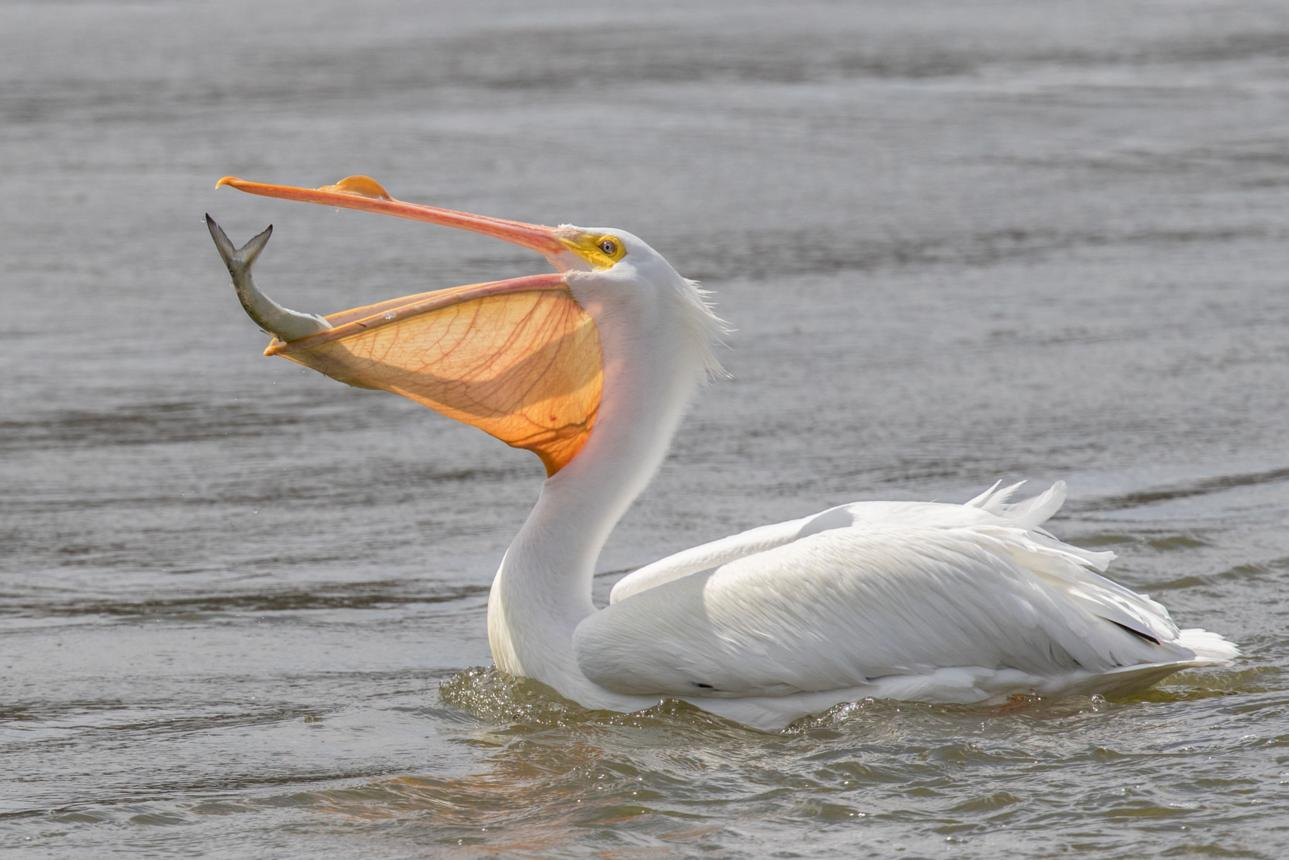
    Pelicans have been observed swallowing fish that barely appear capable of fitting inside their throats. In rare cases, they attempt prey so large that it stretches the throat pouch into a balloon-like shape.

    The pouch itself is not the stomach.

    Instead, it acts like a temporary storage and capture net before food is repositioned and swallowed.

    Some pelicans have even attempted birds, unexpectedly large fish, and animals that challenge their physical limits.

    Observers watching from shore often assume the animal has made a mistake.

    Yet pelicans evolved for these moments.

    Their expandable structures allow them to exploit sudden feeding opportunities. In environments where food availability changes quickly, hesitation can mean missing an entire meal.

    Oversized prey is risky—but sometimes worth the gamble.


    3. Deep-Sea Eels and the Art of Extreme Expansion

    Thousands of meters below the ocean surface, food can become painfully scarce.

    That scarcity has produced some of nature’s strangest feeding adaptations.

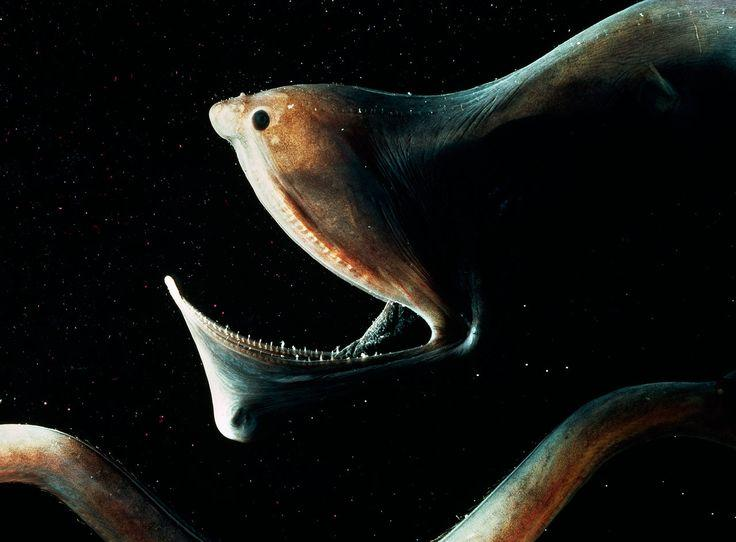
    Among the most bizarre is the gulper eel.

    This creature appears almost unfinished: a narrow body attached to a gigantic mouth.

    Its head opens into a pouch-like structure capable of engulfing surprisingly large prey relative to body size.

    Unlike fast pursuit predators, gulper eels rely on opportunity.

    When something edible appears in darkness, they may attempt to consume it immediately because another chance might not come soon.

    Their bodies support this strategy through stretchable tissues and unusual digestive capacity.

    To human eyes, these animals seem exaggerated or even fictional.

    But in the deep sea, wasting calories can be more dangerous than attempting a meal that looks absurd.


    4. Frogs That Refuse to Respect Size Limits

    Frogs seem harmless.

    Then you watch one try to eat something nearly its own size.

    Many frog species are opportunistic feeders. Their approach is simple: if it moves and can possibly fit, it might become lunch.

    Large frogs have been observed attempting insects, rodents, birds, smaller frogs, reptiles, and occasionally prey that appears impossible to manage.

    Their mouths open wider than many people expect.

    Unlike careful predators that evaluate each hunt, frogs often react instantly.

    This strategy sometimes produces astonishing outcomes.

    A frog may wrestle oversized prey for several minutes before gradually repositioning and swallowing it.

    Success is not guaranteed.

    But evolutionary pressure rewards animals that maximize calories whenever opportunities appear.

    To a frog, a difficult meal may still be better than waiting for an easier one.


    5. The Starfish That Eats Without Looking Like It’s Eating

    Some animals break the rules in ways that seem impossible until you understand the mechanism.

    Starfish are a perfect example.

    At first glance, they do not appear equipped to eat anything substantial.

    They lack obvious jaws and cannot chase prey.

    Yet some species consume shellfish larger than what their bodies seem capable of handling.

    Their secret is unusual.

    A starfish can use tube feet to slowly pull open shells and then extend part of its stomach outside its body.

    Instead of bringing food inside immediately, digestion begins externally.

    Soft tissue is broken down first, allowing nutrients to be absorbed gradually.

    The prey may actually appear larger than the predator throughout the feeding process.

    It is less dramatic than a snake swallowing a deer—but equally extraordinary.

    Nature sometimes solves problems by changing the rules instead of competing directly.


    6. Crocodiles and the “Anything That Fits” Philosophy

    Crocodiles are famous for powerful bites.

    Less appreciated is how ambitious their eating behavior can become.

    Large crocodilians occasionally tackle prey that appears oversized relative to their body.

    Unlike mammals that chew thoroughly, crocodiles rely on tearing, twisting, and strategic swallowing.

    One unusual behavior is known informally as the death roll.

    By spinning rapidly, they can break apart large prey into manageable sections.

    But when conditions allow, they sometimes swallow surprisingly large portions whole.

    Young crocodiles also demonstrate this instinct early.

    Even juveniles may attempt prey that seems unrealistically large.

    Their feeding decisions reflect a simple reality:

    In ecosystems where competition is intense, passing up food can be more dangerous than attempting too much.


    7. Why Eating Huge Meals Actually Makes Sense

    To people, oversized meals seem reckless.

    In nature, they can be efficient.

    Large meals reduce the number of dangerous hunting attempts.

    Predators spend less energy searching.

    Animals in unpredictable environments gain insurance against future scarcity.

    Evolution rarely rewards elegance.

    It rewards survival.

    That is why so many unrelated species—snakes, birds, fish, amphibians, marine invertebrates, and reptiles—arrived at similar outcomes through completely different methods.

    Some stretch.

    Some dissolve.

    Some store.

    Some simply try and hope.

    The next time you imagine survival in the wild, it is worth remembering:

    Nature is filled with animals that routinely ignore what looks physically possible.

    And sometimes the strangest stories are not about speed, strength, or intelligence.

    Sometimes they begin with a creature looking at something far too large and deciding to eat it anyway.

    Final Thoughts

    Animals that consume prey larger than themselves reveal one of nature’s most fascinating truths: survival often rewards flexibility more than perfection.

    Whether it is a snake patiently unfolding over a massive meal, a pelican stretching the limits of its pouch, or a starfish digesting dinner outside its own body, these stories remind us that life adapts in unexpected ways.

    The wild is not built around what seems reasonable.

    It is built around what works.

  • Strange Stories of Animals That Swallow or Eat Things Larger Than Themselves

    Strange Stories of Animals That Swallow or Eat Things Larger Than Themselves

    Image
    Image
    Image
    Image

    Strange Stories of Animals That Swallow or Eat Things Larger Than Themselves


    Nature’s Impossible Meals

    If humans attempted to eat objects larger than their own heads—or sometimes larger than their entire bodies—it would sound absurd. Yet across forests, oceans, wetlands, and even backyards, certain animals perform feeding feats that appear impossible at first glance.

    Evolution has created remarkable solutions to a simple challenge: survive by eating what others cannot.

    Some animals stretch their jaws. Others unfold hidden body parts. A few temporarily reshape themselves. And in rare cases, they gamble everything on meals so oversized that the process can take hours—or even days.

    These strange feeding stories are not examples of greed. They are highly specialized survival strategies developed over millions of years.

    Here are some of the most surprising animals known for swallowing—or attempting to swallow—things larger than themselves.


    1. The Snake That Turns Into a Living Conveyor Belt

    Image Alt Text:
    Large python slowly swallowing prey much wider than its own body.

    Snakes are probably the most famous oversized eaters on Earth—but even among snakes, some feeding events seem almost unreal.

    Unlike mammals, many snakes have jaws that are not rigidly fused together. Their lower jaws are connected by stretchy ligaments, allowing each side to move independently.

    This means a python doesn’t “unhinge” its jaw—despite the common myth. Instead, it gradually walks its mouth over prey using alternating jaw movements.

    Large pythons and anacondas have been documented swallowing animals that appear dramatically too large to fit inside their bodies:

    • Deer
    • Wild pigs
    • Capybaras
    • Antelope
    • Small crocodilians

    Once swallowed, digestion becomes an intense biological operation. Blood flow shifts toward digestion, metabolism accelerates, and powerful stomach acids begin breaking down bone and tissue.

    For a giant snake, one enormous meal can provide energy for weeks—or even months.

    But oversized meals are risky. If disturbed during digestion, some snakes will regurgitate prey because moving with a massive meal inside becomes difficult.

    Their strategy is simple: eat rarely, but eat big.


    2. Pelicans: Birds With Expandable Grocery Bags

    Image Alt Text:
    Pelican holding an unexpectedly large fish inside its enormous throat pouch.

    Pelicans may look calm and graceful while floating across lakes, but their feeding equipment is extraordinary.

    The huge pouch beneath a pelican’s bill is not for storing food long term—it acts more like a temporary fishing net.

    Pelicans scoop water and prey together, then drain the water before swallowing.

    What surprises many observers is the scale.

    Pelicans have been seen attempting to swallow fish so large they distort the shape of the bird’s neck. In unusual cases, they’ve also tried to consume:

    • Ducks
    • Large amphibians
    • Seabirds
    • Unexpected floating food items

    The pouch can expand dramatically and briefly hold far more volume than seems physically possible.

    Occasionally, ambitious feeding attempts fail when prey proves impossible to position correctly.

    But when successful, the entire process looks less like eating and more like a carefully choreographed swallowing performance.


    3. Deep-Sea Gulper Eels and Their Balloon-Like Mouths

    Image Alt Text:
    Deep sea gulper eel displaying its oversized expandable mouth.

    Thousands of meters below the ocean surface lives an animal that seems designed by imagination rather than evolution.

    The gulper eel has a body that looks relatively ordinary—until it opens its mouth.

    Its mouth expands into a giant flexible pouch capable of engulfing prey much larger than expected.

    Unlike fast predators that chase prey, gulper eels survive in an environment where food can be scarce. Missing opportunities could mean long periods without eating.

    Because of that, they evolved a “take it if you can” strategy.

    Their jaws open wide, and their stomachs stretch enough to process unexpectedly large catches.

    Scientists believe this adaptation allows them to maximize rare encounters in the dark deep ocean.

    When food appears, size becomes less important than opportunity.


    4. Frogs That Ignore the Rules of Proportion

    Image Alt Text:
    Frog attempting to swallow prey nearly the same size as itself.

    Frogs seem harmless until you watch them eat.

    Many species operate with a simple rule:

    If it moves and fits even remotely into the mouth, try.

    Large frogs have been recorded eating:

    • Mice
    • Small birds
    • Other frogs
    • Lizards
    • Snakes

    The swallowing process looks dramatic because frogs often use their eyes to assist feeding.

    Their eyeballs sink downward while swallowing, helping push food toward the throat.

    Some species can stretch enough to consume prey approaching their own body size.

    The meal may leave the frog looking oddly inflated afterward.

    Unlike predators that tear food apart, frogs commit completely: once swallowing starts, there is usually no turning back.


    5. The Anaconda and the Case of the Impossible Shape

    Image Alt Text:
    Green anaconda digesting unusually large prey along a riverbank.

    Stories about giant snakes are common, but anacondas deserve special attention because of where they hunt.

    Water changes everything.

    In rivers and wetlands, buoyancy reduces the difficulty of controlling large prey.

    That allows anacondas to target surprisingly bulky animals.

    Observers have documented anacondas swallowing prey that completely changes the snake’s body profile into enormous rounded forms.

    The process is slow.

    First comes constriction.

    Then positioning.

    Then swallowing begins—a sequence of muscular movements that can continue for hours.

    Afterward, the snake may remain inactive for long periods while digestion transforms one giant meal into stored energy.

    Few animals demonstrate patience and mechanical precision as dramatically.


    6. The Tiny Predator With Giant Ambitions: The Star-Nosed Mole

    Image Alt Text:
    Star nosed mole feeding rapidly underground.

    Not every oversized eater is huge.

    The star-nosed mole is small enough to fit in your hand, yet it consumes astonishing amounts relative to body size.

    Its strange nose contains thousands of sensory receptors that allow it to identify edible targets almost instantly.

    Instead of swallowing gigantic individual prey, it wins through speed.

    Researchers observed feeding decisions occurring in fractions of a second.

    For such a tiny animal, the amount consumed across a day can seem disproportionate to body size.

    Its strategy isn’t stretching.

    It’s overwhelming volume.

    Eat constantly. Stay alive.


    7. When Eating Too Much Becomes Dangerous

    Image Alt Text:
    Wild predator resting after consuming oversized prey.

    Oversized feeding is impressive—but dangerous.

    Animals that attempt giant meals face real risks:

    Mobility Problems

    A full stomach can make escape difficult.

    Digestion Costs

    Processing huge meals demands enormous energy.

    Overheating

    Metabolism may spike dramatically.

    Physical Injury

    Prey can sometimes fight back.

    Suffocation Risks

    Improper swallowing angles can become fatal.

    Nature rewards efficiency—but it does not guarantee success.

    Many dramatic feeding attempts never end well.

    That balance between reward and risk is what makes these stories so remarkable.


    Why Evolution Keeps Producing Extreme Eaters

    Oversized eating evolved repeatedly because it solves one major problem: uncertainty.

    If food appears rarely, eating big becomes efficient.

    If competition is intense, unusual feeding methods create advantages.

    If survival windows are short, maximizing each opportunity matters.

    From deep oceans to tropical wetlands, animals continue proving that our idea of “too big to eat” often doesn’t apply outside the human world.

    The next time you see a snake, a pelican, or even a small frog, remember:

    Some of nature’s strangest creatures survive by attempting meals that seem physically impossible—and sometimes succeeding.