Tag: Animal Behavior

  • Unusual Families in the Wild: Animals That End Up Raising Someone Else’s Young

    Unusual Families in the Wild: Animals That End Up Raising Someone Else’s Young

    Image
    Image
    Image
    Image

    Unusual Families in the Wild: Animals That End Up Raising Someone Else’s Young

    Category

    Wildlife & Nature

    Introduction: When Nature Breaks Its Own Rules

    In the animal kingdom, parenthood is usually a straightforward affair. Mothers and fathers invest enormous effort into raising offspring that carry their genes, ensuring the survival of their family line. This basic principle is one of the foundations of evolution.

    Yet nature is rarely as simple as the textbooks suggest.

    Across the globe, scientists, wildlife photographers, and animal rescuers have documented astonishing cases in which animals raise babies that are not their own. Sometimes the adopted youngster belongs to the same species. In other situations, the foster child comes from an entirely different branch of the animal kingdom.

    These strange relationships challenge traditional ideas about animal behavior. Why would a fox care for an unrelated cub? Why would a cat protect ducklings? Why would a penguin devote energy to feeding a chick that does not belong to it?

    The answers reveal a fascinating world where instinct, circumstance, and social behavior combine to create some of nature’s most unexpected families.


    The Lost and the Found

    Life in the wild is dangerous, especially for newborn animals.

    Storms, predators, accidents, disease, and environmental changes can leave young animals orphaned within days of birth. Under normal circumstances, these youngsters face extremely low chances of survival.

    Occasionally, however, another adult steps into the role of caregiver.

    This substitute parent may provide food, warmth, protection, and guidance. While such arrangements are not common, they occur often enough to attract the attention of researchers.

    In many cases, the foster parent gains no obvious benefit from helping. Yet the behavior persists across numerous species, suggesting that nature’s parenting instincts can be remarkably flexible.


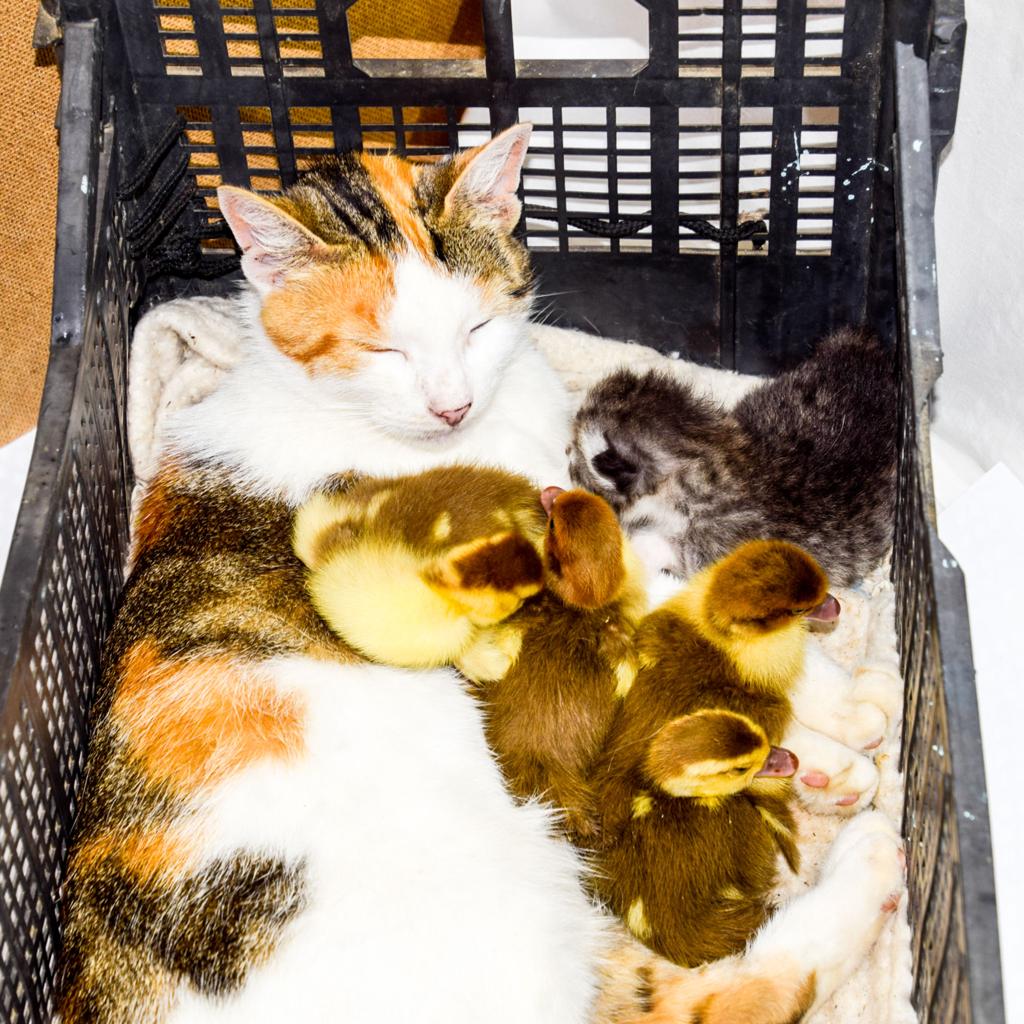
    The Cat That Thought Ducklings Were Kittens

    Domestic cats have produced some of the most surprising adoption stories ever recorded.

    Animal shelters and farms frequently report cases of mother cats caring for ducklings, chicks, rabbits, and squirrels. The adopted babies sleep alongside kittens, receive grooming, and remain under the cat’s protection.

    To human observers, the situation appears unusual because cats are natural predators of small birds and rodents.

    Scientists believe maternal hormones help explain this contradiction. During motherhood, the drive to nurture can become so strong that vulnerable young animals trigger protective responses instead of hunting behavior.

    The result is a family that seems to ignore the normal rules of predator and prey.


    Foster Parenting Among Sea Lions

    Marine mammals are known for complex social behavior, and sea lions provide an intriguing example.

    Researchers studying colonies have observed females nursing pups that were not genetically related to them. In crowded environments where mothers and offspring gather in large numbers, mix-ups can occur.

    Some orphaned pups have survived because unrelated females allowed them to feed alongside their own young.

    While not every sea lion accepts an unrelated pup, these cases demonstrate that caregiving can sometimes extend beyond biological family connections.

    For vulnerable youngsters, such acceptance can mean the difference between life and death.


    The Curious Friendship Between Baboons and Kittens

    Wildlife photographers occasionally capture images that seem almost impossible.

    One of the most remarkable involves baboons interacting gently with kittens or puppies.

    Although not true adoption in every case, some baboons have been observed carrying, grooming, and protecting young domestic animals. Researchers continue studying these interactions to understand their cause.

    Possible explanations include curiosity, social bonding, and nurturing instincts triggered by infant behavior.

    Regardless of the reason, the sight of a powerful primate caring for a tiny kitten remains one of nature’s most unexpected scenes.

    Image
    Image
    Image
    Image
    Image
    Image

    Why Baby Animals Look So Similar

    One reason foster parenting occurs may be surprisingly simple.

    Many baby animals share common physical features:

    • Large eyes
    • Rounded heads
    • Soft facial features
    • Small body size
    • High-pitched sounds

    These characteristics communicate vulnerability.

    Scientists refer to this collection of traits as infantile features, and they appear designed to attract adult attention.

    Because these signals are similar across many species, adults sometimes respond to unrelated youngsters in much the same way they would respond to their own offspring.

    This biological shortcut helps explain why cross-species adoption occasionally occurs.


    Penguins and Their Persistent Parenting Instincts

    Penguins are among the most dedicated parents in the bird world.

    Raising a chick in harsh polar conditions requires tremendous effort. Adults spend weeks protecting eggs, searching for food, and defending young from predators.

    Yet despite these challenges, some penguins care for unrelated chicks.

    Researchers have observed adults attempting to feed orphaned youngsters or adopting chicks after losing their own offspring.

    The behavior demonstrates the strength of parental instincts. Even when a biological connection is absent, the urge to nurture can remain active.


    Foxes That Accept Extra Cubs

    Foxes are generally known as attentive parents, but occasionally their family groups become larger than expected.

    Wildlife biologists have documented cases where female foxes care for cubs that are not their own. Some of these youngsters may have become separated from neighboring dens.

    Because young cubs require constant attention, adoption carries significant costs.

    Nevertheless, the behavior occasionally occurs, adding another example to nature’s growing list of foster families.


    Elephant Calves and Community Protection

    Few species demonstrate cooperative childcare better than elephants.

    Within an elephant herd, calves are surrounded by a network of caregivers. Aunts, sisters, and unrelated females often participate in supervision and protection.

    This support system becomes particularly important when a calf loses its mother.

    Other females frequently help the orphan remain integrated into the herd, reducing the risk of isolation.

    Such cooperation highlights the importance of social bonds in elephant society and provides one of the clearest examples of shared parenting in the wild.


    Birds That Raise Impostors

    Not every foster family forms voluntarily.

    Certain birds have evolved a strategy known as brood parasitism. Species such as cuckoos place their eggs inside the nests of other birds.

    The unsuspecting hosts incubate the eggs and later feed the chicks.

    In many cases, the foster chick grows much larger than the adults caring for it. Despite this obvious difference, the foster parents continue responding to its calls for food.

    This extraordinary deception demonstrates just how powerful parental instincts can be.

    Image
    Image
    Image
    Image
    Image

    The Balance Between Instinct and Choice

    Scientists continue debating how much of foster parenting results from instinct and how much stems from more complex social behavior.

    Hormones clearly play an important role. During periods of motherhood, animals become highly sensitive to signals from young offspring.

    However, social species often display additional flexibility. They form bonds, recognize group members, and cooperate in ways that cannot always be explained by simple instinct alone.

    The truth likely lies somewhere in between.

    Parenting behavior appears to emerge from a combination of biology, environment, and social experience.


    What Foster Families Teach Us About Nature

    Stories of animal adoption are more than charming curiosities.

    They reveal that nature is not governed solely by competition. Cooperation also plays a crucial role in survival.

    By studying foster parenting, researchers gain insight into the evolution of social behavior, communication, and caregiving. These observations help scientists understand how animal societies function and why cooperation can be beneficial.

    Most importantly, they remind us that the natural world is often far more complex than it appears.


    Conclusion

    From cats raising ducklings to sea lions nursing unrelated pups and elephants helping orphaned calves, examples of animals caring for young that are not their own can be found throughout the animal kingdom.

    Some cases arise from powerful maternal instincts. Others result from social cooperation, environmental circumstances, or simple chance. A few remain scientific mysteries.

    Together, these unusual families reveal a remarkable truth: parenting in nature is not always limited by genetics. Sometimes the need to protect and nurture extends beyond bloodlines, creating extraordinary relationships that continue to fascinate researchers and animal lovers alike.

    In a world often defined by survival and competition, these foster families show another side of nature—one built on care, tolerance, and unexpected connections.
  • Nature’s Unexpected Nannies: The Curious Cases of Animals Raising Someone Else’s Young

    Nature’s Unexpected Nannies: The Curious Cases of Animals Raising Someone Else’s Young

    Nature’s Unexpected Nannies: The Curious Cases of Animals Raising Someone Else’s Young

    Image
    Image
    Image
    Image
    Image
    Image

    Nature’s Unexpected Nannies: The Curious Cases of Animals Raising Someone Else’s Young

    Category

    Animals & Nature

    Introduction: Parenting Beyond Bloodlines

    When we think about parenting, we usually imagine mothers and fathers caring for their own offspring. In nature, this assumption seems even stronger. Raising young requires food, energy, protection, and time—valuable resources that wild animals cannot easily spare.

    Yet every year, wildlife researchers encounter stories that seem to break the rules of evolution. Predators nurture prey. Birds feed chicks that are not theirs. Mammals adopt babies from entirely different species. Some animals even risk their own survival to protect youngsters with no genetic connection to them.

    These unusual relationships challenge our understanding of animal behavior and reveal that nature is often far more complicated than the simple “survival of the fittest” narrative suggests.

    Let’s explore some of the most surprising examples of animals acting as foster parents and discover why these extraordinary relationships happen.


    The Hidden Side of Animal Parenthood

    Biologists once believed that animals primarily invested energy in offspring carrying their own genes. While this is generally true, research has shown that caregiving behavior is much more flexible than previously thought.

    Young animals share several characteristics regardless of species. They are small, vulnerable, dependent, and often produce distress calls. These signals can trigger caregiving instincts in adults, sometimes overriding normal behaviors such as competition or predation.

    The result is a collection of remarkable stories that seem almost unbelievable.


    A Predator That Refused to Hunt

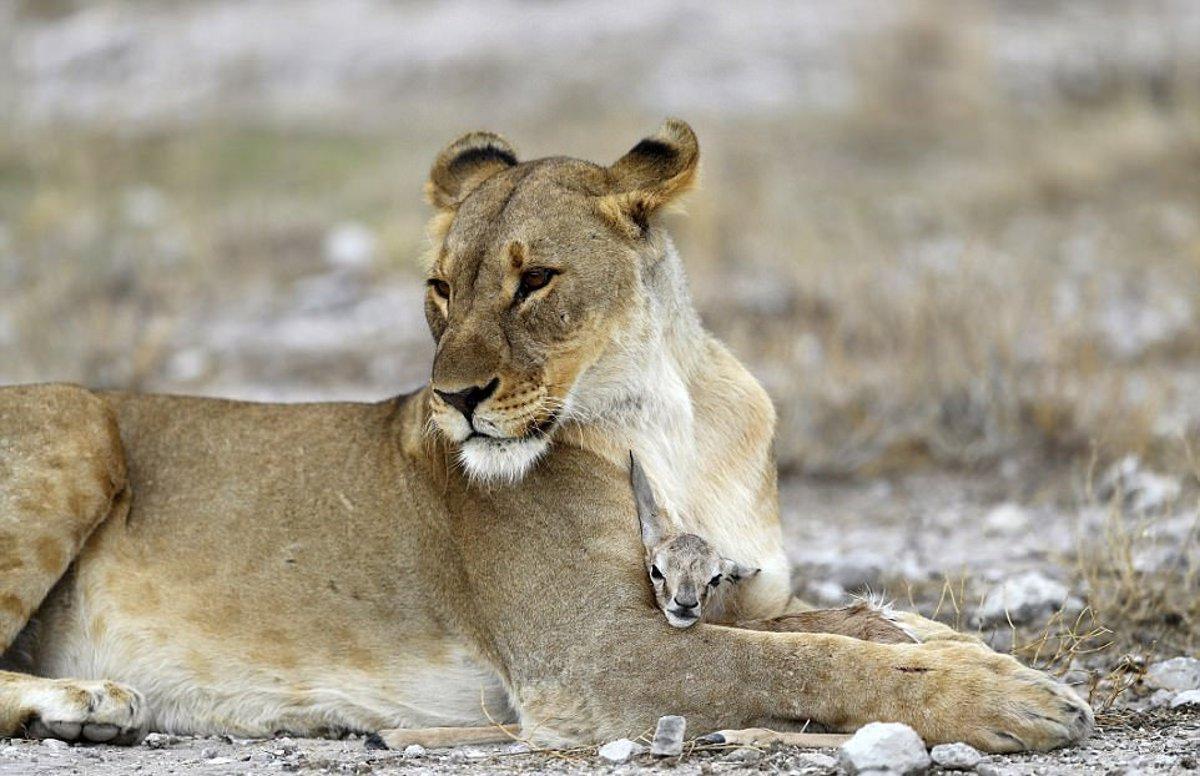
    One of the most famous wildlife mysteries involves lionesses and antelope calves.

    In several documented cases across Africa, lionesses have been observed protecting baby antelopes instead of hunting them. Some have guarded the calves from hyenas and other predators while allowing them to remain nearby.

    Scientists remain fascinated by this behavior because it directly contradicts the lion’s role as a predator. Some researchers believe maternal hormones temporarily override hunting instincts, especially when the lioness has recently given birth or lost her own cubs.

    Although these unusual partnerships rarely last forever, they provide one of the most dramatic examples of cross-species caregiving ever observed.


    The Dogs That Adopt Everyone

    Domestic dogs may be among the most accepting foster parents in the animal kingdom.

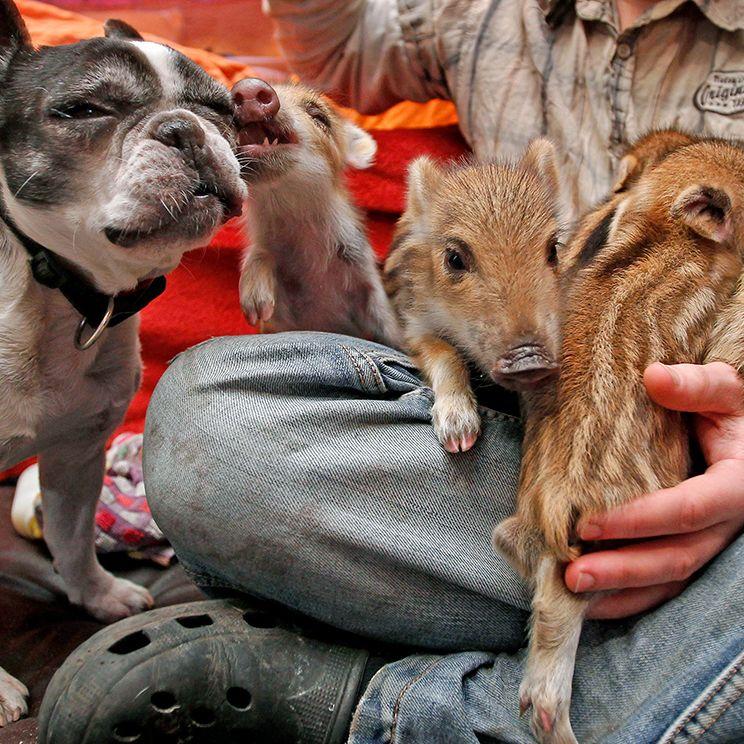
    Animal shelters regularly report mother dogs caring for orphaned kittens, rabbits, piglets, and even wild animals brought into rehabilitation centers.

    Unlike many species, dogs often form strong social bonds with animals outside their own species. Once a puppy-like cry or vulnerable behavior triggers maternal instincts, some dogs begin treating the newcomer as part of their family.

    In rescue facilities, dogs have saved countless orphaned animals by providing warmth, milk, companionship, and protection.

    For many caretakers, these dogs become heroes without ever realizing it.


    The Curious Case of the Babysitting Capybara

    Capybaras are famous for their calm personalities and extraordinary tolerance toward other animals.

    These giant rodents often share space peacefully with birds, monkeys, rabbits, ducks, and numerous other species. Female capybaras commonly participate in group childcare, where multiple mothers help supervise and nurse young members of the group.

    Observers frequently joke that capybaras appear willing to babysit almost anyone.

    While most of these relationships occur within their own species, the capybara’s relaxed social nature often creates opportunities for unusual interspecies friendships that seem impossible among less tolerant animals.

    Image
    Image
    Image
    Image
    Image

    Birds That Become Victims of Parenthood

    Not all unusual parenting stories are voluntary.

    Certain bird species have evolved strategies that trick others into raising their young.

    The common cuckoo lays eggs inside the nests of unsuspecting host birds. When the chick hatches, foster parents feed and protect it as though it were their own offspring.

    In many cases, the foster birds work tirelessly for weeks without realizing they are caring for a completely unrelated chick.

    This strange arrangement represents one of nature’s most successful reproductive shortcuts.


    Penguins and the Power of Instinct

    Life in a penguin colony can be chaotic. Thousands of birds gather together, creating a noisy environment where chicks occasionally become separated from their parents.

    Researchers have documented cases where adult penguins adopt abandoned chicks and continue caring for them despite lacking any biological relationship.

    Some adults whose eggs failed to hatch appear especially likely to accept orphaned chicks.

    The behavior highlights the strength of parental instincts and demonstrates how caregiving can continue even when biological connections are absent.


    Orangutans and Their Gentle Nature

    Orangutans are among the most patient and nurturing primates on Earth.

    In wildlife rehabilitation centers, caretakers have observed orangutans displaying protective behavior toward smaller animals, including birds and mammals.

    Young orangutans are naturally curious and often interact gently with vulnerable creatures. Adult females spend years raising their offspring, developing parenting skills that may contribute to their nurturing tendencies.

    Although true adoption across species is rare, these interactions reveal a compassionate side of great apes that continues to intrigue scientists.


    When Gorillas Become Guardians

    Gorillas possess immense strength, yet they are often remarkably gentle.

    Several zoos and wildlife centers have reported cases of gorillas showing concern for injured animals sharing their environment. Some individuals have been observed watching over small creatures and allowing them to remain nearby without aggression.

    Because gorillas maintain strong family bonds, researchers believe their social intelligence may influence how they respond to vulnerable animals.

    These moments remind us that physical power and nurturing behavior are not mutually exclusive.


    The Ocean’s Unexpected Caregivers

    Marine mammals provide some of the most fascinating examples of adoption.

    Dolphins have been seen assisting calves that are not their own and helping injured animals stay afloat. Female whales occasionally care for orphaned calves, allowing them to remain close to the group.

    In the vastness of the ocean, survival often depends on cooperation. Social species benefit from maintaining strong group relationships, which may encourage caregiving behaviors toward unrelated young.

    These underwater acts of assistance reveal that foster parenting is not limited to land animals.

    Image
    Image
    Image
    Image
    Image

    Why Evolution Allows Such Behavior

    At first glance, raising unrelated offspring appears disadvantageous. Caring for another animal requires energy that could be spent on one’s own survival or reproduction.

    However, biology is rarely simple.

    Scientists have proposed several explanations:

    Strong Maternal Hormones

    Hormones associated with parenting can encourage nurturing behavior toward any vulnerable infant.

    Social Cooperation

    Helping young individuals may strengthen communities and improve overall group survival.

    Practice and Experience

    Young animals sometimes gain valuable parenting skills through caregiving.

    Recognition Errors

    Some species struggle to distinguish their own offspring from others.

    Emotional Complexity

    Many researchers now believe animals possess richer emotional lives than previously assumed.


    Lessons from Foster Families in Nature

    These extraordinary stories reveal something important about life on Earth.

    Nature is not governed solely by competition. Cooperation, tolerance, and caregiving also play crucial roles.

    Animals are often portrayed as creatures driven only by instinct, but countless observations suggest their behavior is more nuanced. Social bonds can cross family lines, species boundaries, and even predator-prey relationships.

    While scientists continue debating the exact motivations behind these behaviors, the outcomes remain remarkable.

    A lion protects a calf.

    A dog raises kittens.

    A penguin feeds an orphan.

    A dolphin helps a struggling youngster.

    Each story reminds us that nature is full of surprises.


    Conclusion

    The phenomenon of animals raising children that are not their own remains one of the most captivating subjects in wildlife science. Across forests, grasslands, oceans, and even urban environments, examples of foster parenting continue to emerge.

    Whether driven by hormones, instinct, empathy, or social cooperation, these acts reveal an often-overlooked side of the natural world. They challenge simplistic views of animal behavior and demonstrate that caregiving can appear in the most unexpected places.

    As research continues, we may discover that cross-species parenting is not merely a rare curiosity but a window into the deeper social and emotional lives of animals. These remarkable foster families remind us that survival in nature is sometimes about more than competition—it can also be about care, protection, and connection.

  • Strange Things About Animals Raising Children That Are Not Their Own

    Strange Things About Animals Raising Children That Are Not Their Own

    Strange Things About Animals Raising Children That Are Not Their Own

    Image
    Image
    Image
    Image
    Image

    Strange Things About Animals Raising Children That Are Not Their Own

    Introduction

    The animal kingdom is often portrayed as a ruthless world where only the strongest survive. Predators hunt prey, competition is fierce, and survival instincts dominate daily life. Yet nature occasionally surprises us with remarkable acts of compassion that seem almost impossible. Across the globe, scientists and wildlife observers have documented extraordinary cases of animals caring for babies that are not their own—and sometimes not even their own species.

    From lionesses adopting antelope calves to dogs nursing orphaned kittens, these unusual relationships challenge what we think we know about animal behavior. While some of these actions can be explained by biology and instinct, others remain mysterious. Why would a predator protect an animal it would normally hunt? Why would a mother risk her own resources to care for unrelated offspring?

    Let’s explore some of the strangest and most fascinating examples of animals raising children that are not their own.

    1. Lionesses Adopting Antelope Babies

    One of the most astonishing examples comes from the African savanna. Lions are among the world’s most feared predators, yet several documented cases show lionesses adopting young antelope calves.

    In some instances, lionesses have been observed protecting orphaned antelope babies from other predators and allowing them to remain nearby for days or even weeks. Scientists believe that strong maternal instincts may temporarily override hunting behavior, especially when the lioness has recently lost her own cubs or is experiencing hormonal changes related to motherhood.

    Unfortunately, these unusual adoptions rarely last forever. Eventually, the calf may wander away or become vulnerable to other predators. Nevertheless, the fact that a lion can switch from hunter to protector remains one of nature’s greatest mysteries.

    Why It Happens

    • Strong maternal hormones
    • Loss of the lioness’s own offspring
    • Confusion triggered by infant behaviors
    • Temporary suppression of predatory instincts

    2. Dogs Nursing Kittens

    Domestic dogs are famous for their loyalty and affection, but some take caregiving to extraordinary levels. Around the world, there have been countless reports of mother dogs nursing orphaned kittens alongside their own puppies.

    The relationship often develops naturally. Newborn kittens produce cries and behaviors similar to puppies, triggering the dog’s maternal instincts. Once accepted, the kittens receive warmth, protection, and nourishment just like biological offspring.

    Veterinarians note that dogs and cats can form strong social bonds, especially when introduced at a young age. In these situations, species differences become less important than the instinct to care for vulnerable young animals.

    3. Cats Raising Ducklings and Chicks

    Equally surprising are stories of mother cats adopting ducklings, chicks, and even baby squirrels. Despite being natural hunters, many cats have demonstrated remarkable nurturing behavior toward animals they would normally consider prey.

    Farmers have reported seeing hens and ducklings sleeping safely beside mother cats, who groom and protect them as if they were kittens. Researchers believe that once maternal instincts are activated, some cats respond to the babies’ helplessness rather than their species.

    These unusual families often attract widespread attention because they appear to contradict everything people expect from predator-prey relationships.

    Image
    Image
    Image
    Image
    Image
    Image

    4. Monkeys Adopting Puppies

    In parts of Asia, wildlife photographers have documented monkeys adopting stray puppies. These relationships can be incredibly touching.

    Adult monkeys have been seen carrying puppies through trees, sharing food, grooming them, and defending them from threats. In some cases, entire monkey groups accepted the puppy as part of their social community.

    Scientists suggest that monkeys possess highly developed social instincts. Young animals often trigger caregiving responses, regardless of species. The puppy’s dependence and vulnerability may encourage protective behavior similar to that directed toward infant monkeys.

    These unusual friendships demonstrate how complex and flexible animal emotions can be.

    5. Dolphins Caring for Other Species

    Dolphins are known for their intelligence and social behavior. They have repeatedly been observed helping injured animals, including whales, seals, and even humans.

    In several documented cases, dolphins have protected young animals by surrounding them in defensive formations and guiding them away from danger. Some researchers believe dolphins possess advanced social awareness that allows them to recognize distress in other creatures.

    Although dolphins may not formally “adopt” young animals, their willingness to assist unrelated species highlights a remarkable capacity for cooperative behavior.

    6. Gorillas Caring for Orphaned Animals

    Gorillas are among humanity’s closest relatives, and their nurturing behavior can be astonishingly human-like.

    Wildlife caretakers have recorded gorillas showing curiosity, gentleness, and protective behavior toward birds, kittens, and other small animals. In captivity, gorillas have occasionally been observed watching over injured creatures and allowing them to remain nearby without aggression.

    These behaviors provide insight into the emotional complexity of great apes and suggest that empathy may not be unique to humans.

    7. Penguins Raising Unrelated Chicks

    Penguin colonies often contain thousands of birds living close together. In such crowded environments, chicks sometimes become separated from their biological parents.

    Researchers have observed adult penguins caring for abandoned chicks that are not their own. Foster parents may provide warmth, protection, and sometimes food.

    This behavior increases the survival chances of orphaned chicks and demonstrates how cooperation can benefit entire colonies. While not all adoptions succeed, the willingness to care for unrelated young is remarkable.

    Image
    Image
    Image
    Image
    Image

    Why Do Animals Adopt Unrelated Young?

    Scientists have proposed several explanations for these surprising behaviors.

    Maternal Instincts

    Many female animals experience powerful hormonal changes after giving birth. These hormones can trigger nurturing responses toward any infant displaying the right signals, such as crying, small size, or helpless behavior.

    Social Bonding

    Highly social animals often form strong emotional connections. In some species, cooperation improves survival for the entire group.

    Practice for Parenthood

    Young or inexperienced animals may gain valuable parenting experience by caring for unrelated offspring.

    Mistaken Identity

    Sometimes animals simply cannot distinguish their own young from others, especially when infants share similar appearances or behaviors.

    Empathy and Emotional Responses

    Although controversial, some researchers believe certain animals experience forms of empathy that motivate them to help vulnerable individuals.

    The Science Behind Cross-Species Parenting

    Animal adoption challenges traditional ideas about evolution and survival. From a purely biological perspective, raising unrelated offspring appears costly because it requires time, energy, and resources.

    However, evolution often favors behaviors that strengthen social groups and improve overall survival. In many species, helping others can indirectly benefit the community, increasing the chances that related individuals survive and reproduce.

    Recent studies suggest that animal emotions may be more sophisticated than previously believed. While scientists remain cautious about attributing human emotions to animals, evidence increasingly shows that many species experience complex social and emotional lives.

    Lessons Humans Can Learn

    These extraordinary stories remind us that nature is not always governed by competition and conflict. Compassion, cooperation, and caregiving also play important roles in the animal kingdom.

    When a lioness protects an antelope calf or a dog nurses orphaned kittens, we witness behaviors that blur the line between instinct and empathy. Such moments reveal that animals are capable of far more complexity than many people realize.

    These examples also encourage us to view wildlife with greater respect. Every species possesses unique behaviors, relationships, and social structures that scientists are still working to understand.

    Conclusion

    The natural world is filled with surprises, and few are more heartwarming than animals raising young that are not their own. Whether driven by maternal instincts, social bonds, empathy, or biological confusion, these acts of caregiving challenge our assumptions about animal behavior.

    From lionesses adopting antelope calves to monkeys caring for puppies, cross-species parenting demonstrates the remarkable flexibility of nature. These stories remind us that kindness and protection can appear in the most unexpected places—even among creatures separated by species, habitat, and instinct.

    As researchers continue studying animal behavior, we may discover that the bonds connecting living creatures are far stronger and more complex than we ever imagined.