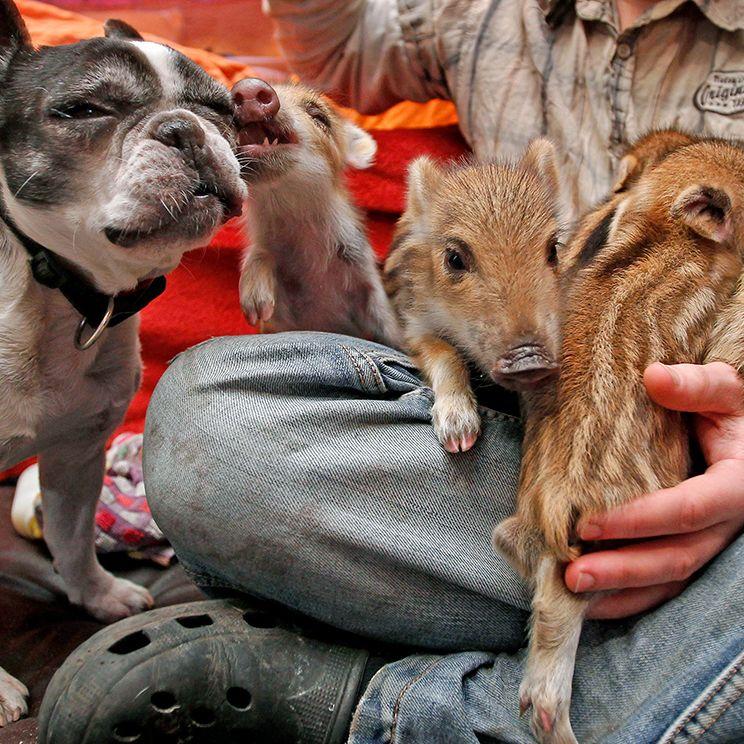
Nature’s Unexpected Nannies: The Curious Cases of Animals Raising Someone Else’s Young


Nature’s Unexpected Nannies: The Curious Cases of Animals Raising Someone Else’s Young
Category
Animals & Nature
Introduction: Parenting Beyond Bloodlines
When we think about parenting, we usually imagine mothers and fathers caring for their own offspring. In nature, this assumption seems even stronger. Raising young requires food, energy, protection, and time—valuable resources that wild animals cannot easily spare.
Yet every year, wildlife researchers encounter stories that seem to break the rules of evolution. Predators nurture prey. Birds feed chicks that are not theirs. Mammals adopt babies from entirely different species. Some animals even risk their own survival to protect youngsters with no genetic connection to them.
These unusual relationships challenge our understanding of animal behavior and reveal that nature is often far more complicated than the simple “survival of the fittest” narrative suggests.
Let’s explore some of the most surprising examples of animals acting as foster parents and discover why these extraordinary relationships happen.
The Hidden Side of Animal Parenthood
Biologists once believed that animals primarily invested energy in offspring carrying their own genes. While this is generally true, research has shown that caregiving behavior is much more flexible than previously thought.
Young animals share several characteristics regardless of species. They are small, vulnerable, dependent, and often produce distress calls. These signals can trigger caregiving instincts in adults, sometimes overriding normal behaviors such as competition or predation.
The result is a collection of remarkable stories that seem almost unbelievable.
A Predator That Refused to Hunt
One of the most famous wildlife mysteries involves lionesses and antelope calves.
In several documented cases across Africa, lionesses have been observed protecting baby antelopes instead of hunting them. Some have guarded the calves from hyenas and other predators while allowing them to remain nearby.
Scientists remain fascinated by this behavior because it directly contradicts the lion’s role as a predator. Some researchers believe maternal hormones temporarily override hunting instincts, especially when the lioness has recently given birth or lost her own cubs.
Although these unusual partnerships rarely last forever, they provide one of the most dramatic examples of cross-species caregiving ever observed.
The Dogs That Adopt Everyone
Domestic dogs may be among the most accepting foster parents in the animal kingdom.
Animal shelters regularly report mother dogs caring for orphaned kittens, rabbits, piglets, and even wild animals brought into rehabilitation centers.
Unlike many species, dogs often form strong social bonds with animals outside their own species. Once a puppy-like cry or vulnerable behavior triggers maternal instincts, some dogs begin treating the newcomer as part of their family.
In rescue facilities, dogs have saved countless orphaned animals by providing warmth, milk, companionship, and protection.
For many caretakers, these dogs become heroes without ever realizing it.
The Curious Case of the Babysitting Capybara
Capybaras are famous for their calm personalities and extraordinary tolerance toward other animals.
These giant rodents often share space peacefully with birds, monkeys, rabbits, ducks, and numerous other species. Female capybaras commonly participate in group childcare, where multiple mothers help supervise and nurse young members of the group.
Observers frequently joke that capybaras appear willing to babysit almost anyone.
While most of these relationships occur within their own species, the capybara’s relaxed social nature often creates opportunities for unusual interspecies friendships that seem impossible among less tolerant animals.


Birds That Become Victims of Parenthood
Not all unusual parenting stories are voluntary.
Certain bird species have evolved strategies that trick others into raising their young.
The common cuckoo lays eggs inside the nests of unsuspecting host birds. When the chick hatches, foster parents feed and protect it as though it were their own offspring.
In many cases, the foster birds work tirelessly for weeks without realizing they are caring for a completely unrelated chick.
This strange arrangement represents one of nature’s most successful reproductive shortcuts.
Penguins and the Power of Instinct
Life in a penguin colony can be chaotic. Thousands of birds gather together, creating a noisy environment where chicks occasionally become separated from their parents.
Researchers have documented cases where adult penguins adopt abandoned chicks and continue caring for them despite lacking any biological relationship.
Some adults whose eggs failed to hatch appear especially likely to accept orphaned chicks.
The behavior highlights the strength of parental instincts and demonstrates how caregiving can continue even when biological connections are absent.
Orangutans and Their Gentle Nature
Orangutans are among the most patient and nurturing primates on Earth.
In wildlife rehabilitation centers, caretakers have observed orangutans displaying protective behavior toward smaller animals, including birds and mammals.
Young orangutans are naturally curious and often interact gently with vulnerable creatures. Adult females spend years raising their offspring, developing parenting skills that may contribute to their nurturing tendencies.
Although true adoption across species is rare, these interactions reveal a compassionate side of great apes that continues to intrigue scientists.
When Gorillas Become Guardians
Gorillas possess immense strength, yet they are often remarkably gentle.
Several zoos and wildlife centers have reported cases of gorillas showing concern for injured animals sharing their environment. Some individuals have been observed watching over small creatures and allowing them to remain nearby without aggression.
Because gorillas maintain strong family bonds, researchers believe their social intelligence may influence how they respond to vulnerable animals.
These moments remind us that physical power and nurturing behavior are not mutually exclusive.
The Ocean’s Unexpected Caregivers
Marine mammals provide some of the most fascinating examples of adoption.
Dolphins have been seen assisting calves that are not their own and helping injured animals stay afloat. Female whales occasionally care for orphaned calves, allowing them to remain close to the group.
In the vastness of the ocean, survival often depends on cooperation. Social species benefit from maintaining strong group relationships, which may encourage caregiving behaviors toward unrelated young.
These underwater acts of assistance reveal that foster parenting is not limited to land animals.


Why Evolution Allows Such Behavior
At first glance, raising unrelated offspring appears disadvantageous. Caring for another animal requires energy that could be spent on one’s own survival or reproduction.
However, biology is rarely simple.
Scientists have proposed several explanations:
Strong Maternal Hormones
Hormones associated with parenting can encourage nurturing behavior toward any vulnerable infant.
Social Cooperation
Helping young individuals may strengthen communities and improve overall group survival.
Practice and Experience
Young animals sometimes gain valuable parenting skills through caregiving.
Recognition Errors
Some species struggle to distinguish their own offspring from others.
Emotional Complexity
Many researchers now believe animals possess richer emotional lives than previously assumed.
Lessons from Foster Families in Nature
These extraordinary stories reveal something important about life on Earth.
Nature is not governed solely by competition. Cooperation, tolerance, and caregiving also play crucial roles.
Animals are often portrayed as creatures driven only by instinct, but countless observations suggest their behavior is more nuanced. Social bonds can cross family lines, species boundaries, and even predator-prey relationships.
While scientists continue debating the exact motivations behind these behaviors, the outcomes remain remarkable.
A lion protects a calf.
A dog raises kittens.
A penguin feeds an orphan.
A dolphin helps a struggling youngster.
Each story reminds us that nature is full of surprises.
Conclusion
The phenomenon of animals raising children that are not their own remains one of the most captivating subjects in wildlife science. Across forests, grasslands, oceans, and even urban environments, examples of foster parenting continue to emerge.
Whether driven by hormones, instinct, empathy, or social cooperation, these acts reveal an often-overlooked side of the natural world. They challenge simplistic views of animal behavior and demonstrate that caregiving can appear in the most unexpected places.
As research continues, we may discover that cross-species parenting is not merely a rare curiosity but a window into the deeper social and emotional lives of animals. These remarkable foster families remind us that survival in nature is sometimes about more than competition—it can also be about care, protection, and connection.
Leave a Reply