Tag: Wildlife

  • Unusual Families in the Wild: Animals That End Up Raising Someone Else’s Young

    Unusual Families in the Wild: Animals That End Up Raising Someone Else’s Young

    Image
    Image
    Image
    Image

    Unusual Families in the Wild: Animals That End Up Raising Someone Else’s Young

    Category

    Wildlife & Nature

    Introduction: When Nature Breaks Its Own Rules

    In the animal kingdom, parenthood is usually a straightforward affair. Mothers and fathers invest enormous effort into raising offspring that carry their genes, ensuring the survival of their family line. This basic principle is one of the foundations of evolution.

    Yet nature is rarely as simple as the textbooks suggest.

    Across the globe, scientists, wildlife photographers, and animal rescuers have documented astonishing cases in which animals raise babies that are not their own. Sometimes the adopted youngster belongs to the same species. In other situations, the foster child comes from an entirely different branch of the animal kingdom.

    These strange relationships challenge traditional ideas about animal behavior. Why would a fox care for an unrelated cub? Why would a cat protect ducklings? Why would a penguin devote energy to feeding a chick that does not belong to it?

    The answers reveal a fascinating world where instinct, circumstance, and social behavior combine to create some of nature’s most unexpected families.


    The Lost and the Found

    Life in the wild is dangerous, especially for newborn animals.

    Storms, predators, accidents, disease, and environmental changes can leave young animals orphaned within days of birth. Under normal circumstances, these youngsters face extremely low chances of survival.

    Occasionally, however, another adult steps into the role of caregiver.

    This substitute parent may provide food, warmth, protection, and guidance. While such arrangements are not common, they occur often enough to attract the attention of researchers.

    In many cases, the foster parent gains no obvious benefit from helping. Yet the behavior persists across numerous species, suggesting that nature’s parenting instincts can be remarkably flexible.


    The Cat That Thought Ducklings Were Kittens

    Domestic cats have produced some of the most surprising adoption stories ever recorded.

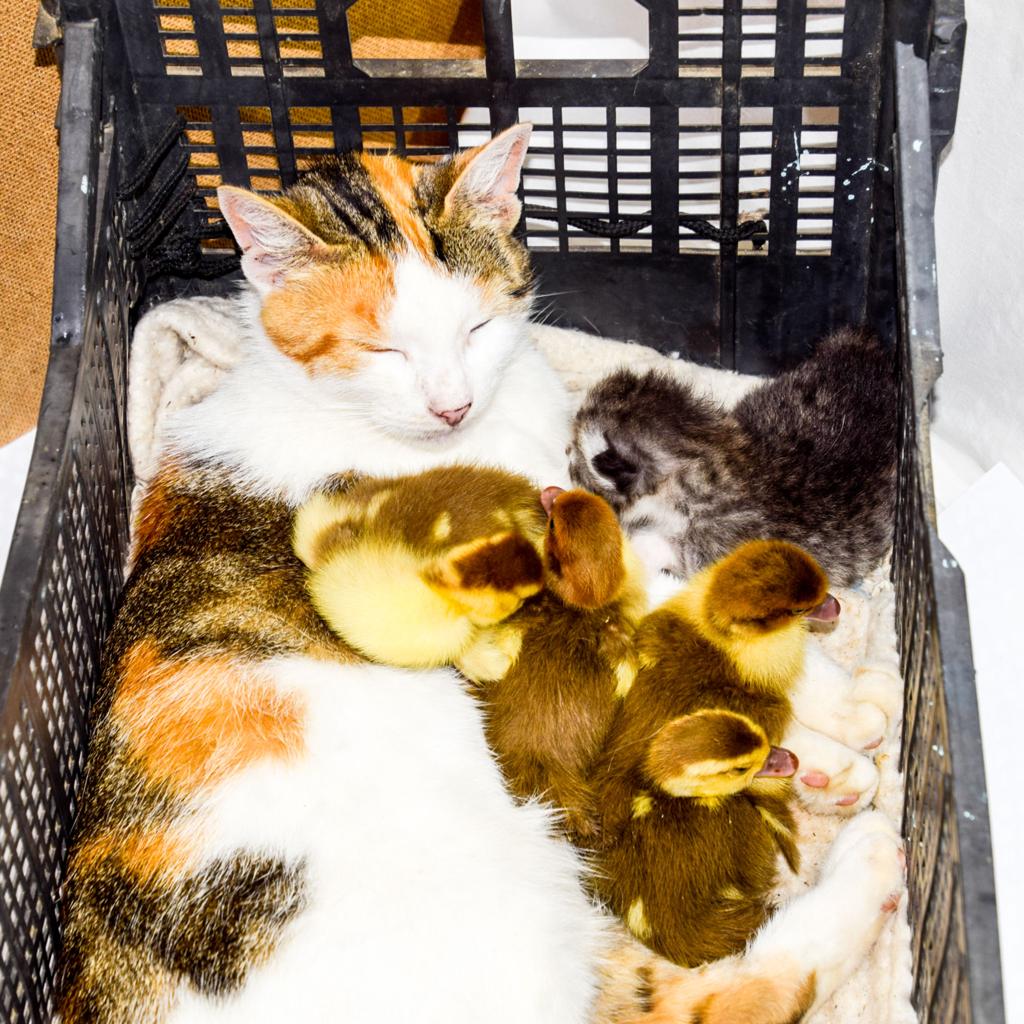
    Animal shelters and farms frequently report cases of mother cats caring for ducklings, chicks, rabbits, and squirrels. The adopted babies sleep alongside kittens, receive grooming, and remain under the cat’s protection.

    To human observers, the situation appears unusual because cats are natural predators of small birds and rodents.

    Scientists believe maternal hormones help explain this contradiction. During motherhood, the drive to nurture can become so strong that vulnerable young animals trigger protective responses instead of hunting behavior.

    The result is a family that seems to ignore the normal rules of predator and prey.


    Foster Parenting Among Sea Lions

    Marine mammals are known for complex social behavior, and sea lions provide an intriguing example.

    Researchers studying colonies have observed females nursing pups that were not genetically related to them. In crowded environments where mothers and offspring gather in large numbers, mix-ups can occur.

    Some orphaned pups have survived because unrelated females allowed them to feed alongside their own young.

    While not every sea lion accepts an unrelated pup, these cases demonstrate that caregiving can sometimes extend beyond biological family connections.

    For vulnerable youngsters, such acceptance can mean the difference between life and death.


    The Curious Friendship Between Baboons and Kittens

    Wildlife photographers occasionally capture images that seem almost impossible.

    One of the most remarkable involves baboons interacting gently with kittens or puppies.

    Although not true adoption in every case, some baboons have been observed carrying, grooming, and protecting young domestic animals. Researchers continue studying these interactions to understand their cause.

    Possible explanations include curiosity, social bonding, and nurturing instincts triggered by infant behavior.

    Regardless of the reason, the sight of a powerful primate caring for a tiny kitten remains one of nature’s most unexpected scenes.

    Image
    Image
    Image
    Image
    Image
    Image

    Why Baby Animals Look So Similar

    One reason foster parenting occurs may be surprisingly simple.

    Many baby animals share common physical features:

    • Large eyes
    • Rounded heads
    • Soft facial features
    • Small body size
    • High-pitched sounds

    These characteristics communicate vulnerability.

    Scientists refer to this collection of traits as infantile features, and they appear designed to attract adult attention.

    Because these signals are similar across many species, adults sometimes respond to unrelated youngsters in much the same way they would respond to their own offspring.

    This biological shortcut helps explain why cross-species adoption occasionally occurs.


    Penguins and Their Persistent Parenting Instincts

    Penguins are among the most dedicated parents in the bird world.

    Raising a chick in harsh polar conditions requires tremendous effort. Adults spend weeks protecting eggs, searching for food, and defending young from predators.

    Yet despite these challenges, some penguins care for unrelated chicks.

    Researchers have observed adults attempting to feed orphaned youngsters or adopting chicks after losing their own offspring.

    The behavior demonstrates the strength of parental instincts. Even when a biological connection is absent, the urge to nurture can remain active.


    Foxes That Accept Extra Cubs

    Foxes are generally known as attentive parents, but occasionally their family groups become larger than expected.

    Wildlife biologists have documented cases where female foxes care for cubs that are not their own. Some of these youngsters may have become separated from neighboring dens.

    Because young cubs require constant attention, adoption carries significant costs.

    Nevertheless, the behavior occasionally occurs, adding another example to nature’s growing list of foster families.


    Elephant Calves and Community Protection

    Few species demonstrate cooperative childcare better than elephants.

    Within an elephant herd, calves are surrounded by a network of caregivers. Aunts, sisters, and unrelated females often participate in supervision and protection.

    This support system becomes particularly important when a calf loses its mother.

    Other females frequently help the orphan remain integrated into the herd, reducing the risk of isolation.

    Such cooperation highlights the importance of social bonds in elephant society and provides one of the clearest examples of shared parenting in the wild.


    Birds That Raise Impostors

    Not every foster family forms voluntarily.

    Certain birds have evolved a strategy known as brood parasitism. Species such as cuckoos place their eggs inside the nests of other birds.

    The unsuspecting hosts incubate the eggs and later feed the chicks.

    In many cases, the foster chick grows much larger than the adults caring for it. Despite this obvious difference, the foster parents continue responding to its calls for food.

    This extraordinary deception demonstrates just how powerful parental instincts can be.

    Image
    Image
    Image
    Image
    Image

    The Balance Between Instinct and Choice

    Scientists continue debating how much of foster parenting results from instinct and how much stems from more complex social behavior.

    Hormones clearly play an important role. During periods of motherhood, animals become highly sensitive to signals from young offspring.

    However, social species often display additional flexibility. They form bonds, recognize group members, and cooperate in ways that cannot always be explained by simple instinct alone.

    The truth likely lies somewhere in between.

    Parenting behavior appears to emerge from a combination of biology, environment, and social experience.


    What Foster Families Teach Us About Nature

    Stories of animal adoption are more than charming curiosities.

    They reveal that nature is not governed solely by competition. Cooperation also plays a crucial role in survival.

    By studying foster parenting, researchers gain insight into the evolution of social behavior, communication, and caregiving. These observations help scientists understand how animal societies function and why cooperation can be beneficial.

    Most importantly, they remind us that the natural world is often far more complex than it appears.


    Conclusion

    From cats raising ducklings to sea lions nursing unrelated pups and elephants helping orphaned calves, examples of animals caring for young that are not their own can be found throughout the animal kingdom.

    Some cases arise from powerful maternal instincts. Others result from social cooperation, environmental circumstances, or simple chance. A few remain scientific mysteries.

    Together, these unusual families reveal a remarkable truth: parenting in nature is not always limited by genetics. Sometimes the need to protect and nurture extends beyond bloodlines, creating extraordinary relationships that continue to fascinate researchers and animal lovers alike.

    In a world often defined by survival and competition, these foster families show another side of nature—one built on care, tolerance, and unexpected connections.

  • The Foster Instinct: Amazing Animals That Raise Babies They Never Had

    The Foster Instinct: Amazing Animals That Raise Babies They Never Had

    Image
    Image
    Image
    Image
    Image
    Image
    Image

    The Foster Instinct: Why Some Animals Raise Babies That Aren’t Theirs

    Category

    Wildlife Behavior & Nature

    Introduction: A Mystery Hidden in the Animal World

    Every day in nature, millions of parents devote their lives to protecting and feeding their young. From tiny songbirds gathering insects to elephant mothers guarding calves, parental care is one of the most important behaviors in the animal kingdom.

    Yet scientists have discovered something puzzling.

    Some animals willingly care for babies that do not belong to them.

    Even more surprising, these adopted youngsters are sometimes members of entirely different species. A dog nurses kittens. A monkey protects a puppy. A bird spends months feeding a chick that was secretly placed in its nest by another species.

    These unusual cases challenge one of biology’s most basic assumptions: that parents should focus their efforts on their own offspring.

    Why does this happen? What causes an animal to become responsible for a youngster that carries none of its genes?

    The answers reveal a fascinating side of nature that is often overlooked.


    Parenting Without a Family Connection

    For many years, scientists assumed that animals raised their own offspring because doing so increased the chances of passing genes to future generations.

    While this explanation remains true in most situations, researchers now know that animal parenting is far more flexible than once believed.

    In some species, adults regularly care for unrelated youngsters. In others, unusual circumstances can trigger temporary adoption.

    Sometimes a young animal loses its biological parents. Sometimes a caregiver simply mistakes another baby for its own. In rare situations, powerful nurturing instincts appear to override normal behavior entirely.

    The result is a surprising collection of foster families found throughout the natural world.


    The Gorilla That Became a Guardian

    Gorillas are often remembered for their size and strength, but researchers who study them frequently describe a very different side.

    Gorillas live in highly social groups and form strong bonds with one another. Adults often show remarkable patience toward infants and juveniles.

    In wildlife parks and rehabilitation centers, gorillas have occasionally displayed protective behavior toward smaller animals, including birds and orphaned mammals. Some have allowed vulnerable creatures to remain nearby without showing aggression.

    Although true adoption across species is uncommon, these interactions suggest that caregiving responses can extend beyond immediate family members.

    The image of a powerful gorilla acting as a guardian demonstrates how complex animal behavior can be.


    Dogs: The Champions of Cross-Species Adoption

    If there is one animal famous for accepting unrelated babies, it is the domestic dog.

    Around the world, rescue centers have documented dogs raising kittens, piglets, squirrels, rabbits, and even fox cubs.

    Once maternal instincts are activated, many dogs appear willing to care for almost any helpless newborn.

    The adopted babies receive milk, warmth, protection, and companionship. Some grow up alongside puppies without any sign of conflict.

    Animal behavior experts believe dogs’ social flexibility plays a major role. Thousands of years of domestication may have strengthened their ability to form bonds beyond normal species boundaries.

    Few animals demonstrate the foster instinct as clearly as dogs.


    A Life Saved by the Herd

    For elephant calves, survival depends heavily on family support.

    Unlike many species, elephants raise young within a close-knit social network. Mothers receive assistance from sisters, cousins, and unrelated females.

    When a calf becomes orphaned, these relationships can become lifesaving.

    Researchers have observed herds surrounding vulnerable calves and providing ongoing protection. Older females may guide the youngster, defend it from threats, and help it remain connected to the group.

    This cooperative behavior helps explain why elephants have some of the strongest social structures in the animal kingdom.

    Rather than relying on a single caregiver, the entire herd contributes.

    Image
    Image
    Image
    Image

    The Strange Success of Nest Invaders

    Not every foster family forms by choice.

    Some birds have evolved a strategy that depends entirely on tricking other species into becoming parents.

    Cuckoos are perhaps the best-known example.

    Instead of building nests and raising chicks themselves, female cuckoos place their eggs inside the nests of other birds. The unsuspecting hosts incubate the eggs and later provide food for the chick.

    In many cases, the foster chick grows much larger than the adults caring for it.

    Yet the adoptive parents continue feeding it because its begging calls trigger powerful nurturing responses.

    This strange relationship represents one of nature’s most successful examples of deception.


    Monkeys and Their Unexpected Companions

    Across parts of Asia, wildlife photographers have captured remarkable images of monkeys carrying puppies.

    The behavior has been documented multiple times and continues to intrigue researchers.

    The monkeys groom the puppies, protect them from danger, and sometimes share food.

    Several explanations have been proposed. Puppies may resemble infant monkeys in important ways. Alternatively, young monkeys may simply enjoy social interaction with other animals.

    Whatever the reason, these unusual partnerships demonstrate how flexible social behavior can become.

    They also show that friendship and caregiving are not always restricted by species.


    Penguins in Search of Someone to Protect

    Penguins are known for their dedication to family life.

    However, breeding colonies can be chaotic places. Thousands of birds gather together, creating opportunities for confusion.

    Occasionally, chicks become separated from their parents.

    Researchers have observed adult penguins attempting to care for orphaned chicks or adopting youngsters after losing their own eggs.

    The behavior appears especially common when adults are already experiencing strong parental instincts.

    Even without a biological connection, the desire to protect and nurture remains.


    Capybaras: The Social Specialists

    Capybaras are often called the friendliest animals in the world.

    These large rodents live in social groups and tolerate a remarkable variety of other species. Birds, ducks, monkeys, and small mammals frequently gather around them.

    Female capybaras sometimes participate in communal nursing, allowing multiple youngsters access to care.

    Although not every young animal belongs to them, adults may contribute to group childcare.

    This cooperative approach creates a safer environment for vulnerable offspring and highlights the advantages of social living.


    Why Baby Animals Trigger Protective Responses

    Scientists have identified several features that make babies difficult to ignore.

    Young animals often share:

    • Large eyes
    • Rounded faces
    • Small body size
    • Soft vocalizations
    • Clumsy movement

    These traits communicate vulnerability.

    When adults detect these signals, caregiving instincts may activate automatically.

    Because many species share similar infant characteristics, unrelated babies can sometimes trigger the same response as biological offspring.

    This helps explain why cross-species adoption occasionally occurs.

    Image
    Image
    Image
    Image

    Beyond Instinct: Do Emotions Matter?

    One of the most debated topics in animal science concerns emotions.

    Are animals capable of empathy?

    While researchers avoid making assumptions without evidence, studies increasingly suggest that many species possess sophisticated social awareness.

    Elephants respond to distressed companions. Dolphins assist injured group members. Primates maintain long-term friendships.

    These observations indicate that caregiving may involve more than simple instinct.

    Social relationships and emotional responses could influence how animals treat vulnerable youngsters.

    Although much remains unknown, evidence continues to challenge older views of animal behavior.


    The Evolutionary Value of Helping

    At first glance, caring for unrelated offspring appears costly.

    Food, energy, and protection all require effort.

    However, helping behavior can provide indirect benefits. Social groups become stronger. Young caregivers gain experience. Communities improve their overall survival chances.

    In cooperative species, assisting another youngster may ultimately benefit everyone.

    Evolution often rewards collaboration just as much as competition.


    Conclusion

    The stories of animals raising children that are not their own reveal one of nature’s most fascinating mysteries. From dogs nursing kittens to elephants protecting orphaned calves and penguins adopting lost chicks, foster parenting appears in many forms across the animal kingdom.

    Some cases result from powerful parental instincts. Others emerge through social cooperation or unusual circumstances. A few remain difficult for scientists to explain.

    Together, these remarkable examples show that family in nature is not always defined by genetics. Sometimes it is created through protection, care, and the willingness to help a vulnerable life survive.

    The foster instinct reminds us that the natural world is often far more compassionate—and far more surprising—than we expect.

    SEO Title

    The Foster Instinct: Amazing Animals That Raise Babies They Never Had

    Meta Description

    Discover incredible stories of animals raising babies that are not their own. Learn how dogs, elephants, gorillas, monkeys, penguins, and other species become foster parents.

    Tags

    Animals, Wildlife, Animal Behavior, Nature Facts, Foster Parenting, Animal Adoption, Cross Species Adoption, Wildlife Stories, Amazing Animals, Animal Kingdom, Parenting in Nature, Wildlife Education, Nature Wonders, Rare Animal Behavior

    Featured Image Alt Text

    Gorilla gently watching over a small orphaned animal in a wildlife sanctuary

    Additional Image Alt Texts

    1. Mother dog nursing adopted kittens beside her puppies
    2. Elephant herd protecting a young orphan calf in the savanna
    3. Monkey carrying an adopted puppy through a forest environment
    4. Penguin feeding a foster chick in a crowded colony
    5. Capybara resting among young animals in a social group
    6. Foster bird feeding a cuckoo chick inside a nest
    7. Mixed-species animal family showing unusual parenting behavior
  • Not My Baby, Still My Responsibility: Strange Animal Foster Parents in Nature

    Not My Baby, Still My Responsibility: Strange Animal Foster Parents in Nature

    Image
    Image
    Image
    Image
    Image

    Here’s a completely new article with a fresh angle, new structure, and different examples from previous versions.

    Not My Baby, Still My Responsibility: The Surprising World of Animal Foster Parents

    Category

    Wildlife & Animal Science

    Introduction: The Family Tree with Missing Branches

    When biologists discuss survival in nature, the conversation usually revolves around competition. Animals search for food, defend territory, avoid predators, and invest resources in passing their genes to the next generation.

    That last point seems especially important. From an evolutionary perspective, raising offspring is expensive. It requires energy, time, and constant vigilance. Because of these costs, most scientists once assumed that parental care would be directed almost exclusively toward biological descendants.

    Yet the natural world repeatedly challenges this assumption.

    Across continents and ecosystems, researchers have documented extraordinary cases of animals raising, protecting, feeding, or adopting youngsters that are not their own. Some foster parents belong to the same species as the adopted child. Others belong to completely different species, creating family relationships that appear almost impossible.

    These unusual stories reveal that animal parenting is far more flexible than we once believed. In many situations, the need to nurture can become stronger than the boundaries of genetics.


    The World’s Most Unexpected Babysitters

    Not every foster parent in nature becomes a full-time adoptive mother or father. Some animals simply help care for youngsters temporarily.

    Among many social species, babysitting is surprisingly common.

    Meerkats provide a well-known example. While dominant adults produce most of the offspring, other members of the group often guard, feed, and supervise pups. Youngsters may spend time with several caregivers throughout the day.

    This system allows parents to search for food while knowing their babies remain protected.

    Although the helpers are often relatives, the arrangement demonstrates that childcare in nature is not always limited to biological parents.


    The Lioness That Ignored Her Instincts

    Predators and prey are supposed to remain on opposite sides of nature’s relationship chart.

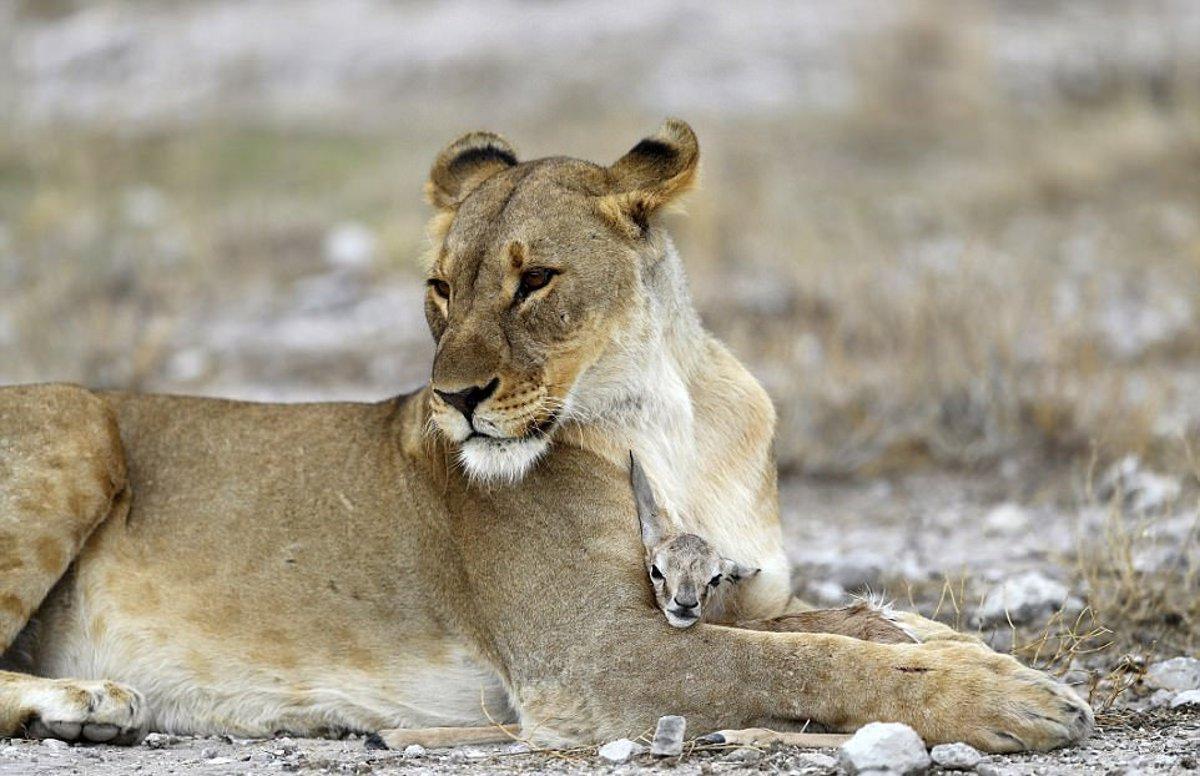
    Yet wildlife researchers in Africa have occasionally observed lionesses behaving in astonishing ways around antelope calves.

    Instead of hunting them, some lionesses have tolerated their presence, protected them from danger, and allowed them to remain nearby for extended periods.

    These incidents remain rare, but they have fascinated scientists for years.

    One possible explanation involves maternal hormones. A lioness that recently gave birth or lost her cubs may experience nurturing impulses so strong that they temporarily suppress predatory behavior.

    For a brief moment, instinct and biology appear to collide.


    Why Puppies Become Universal Adoptees

    If there were an award for the animal most frequently adopted by other species, puppies would be strong contenders.

    Monkeys, cats, goats, and even birds have been observed interacting with abandoned puppies in unusually protective ways.

    Researchers believe puppies possess a combination of traits that encourage caregiving:

    • Soft vocalizations
    • Large eyes
    • Playful behavior
    • Dependence on adults

    These characteristics resemble those found in many mammal infants.

    As a result, puppies can trigger parental responses in animals that would normally have little reason to interact with them.

    This may explain why stories involving adopted puppies appear in wildlife observations from several countries.


    The Gentle Giants and Their Community Nursery

    Elephants do not rely on a single parent to raise a calf.

    Instead, an entire network of females often contributes to childcare. These helpers assist with protection, guidance, and supervision.

    Young calves benefit from constant attention, while inexperienced females gain valuable parenting practice.

    Researchers have observed orphaned calves receiving support from multiple members of the herd. In some cases, the loss of a mother does not mean complete abandonment because other females step in to help.

    This collective system creates one of the most sophisticated childcare networks in the animal kingdom.

    Image
    Image
    Image
    Image
    Image
    Image

    Penguins That Adopt by Accident

    Penguin colonies are crowded places filled with thousands of adults and chicks.

    In such chaotic environments, mistakes are inevitable.

    A wandering chick may become separated from its parents and approach another adult seeking food or warmth. Surprisingly, some adults respond positively.

    Researchers studying penguins have documented cases where unrelated chicks received care from foster parents.

    Adults that lose their own eggs or chicks may be particularly likely to accept newcomers.

    Although not every adoption succeeds, these incidents reveal how powerful parenting instincts can become.


    The Curious Friendship Between Cats and Birds

    Domestic cats are famous hunters, making certain adoption stories particularly remarkable.

    Animal shelters and farms occasionally report mother cats caring for ducklings, chicks, or small birds. The babies rest beside the cat, follow her movements, and receive protection normally reserved for kittens.

    Scientists believe maternal hormones play an important role in these situations.

    Once a cat enters a caregiving state, vulnerable youngsters may be treated as dependents rather than prey.

    These unusual families often attract widespread attention because they seem to violate the expected relationship between predator and prey.


    Ocean Mothers and Lost Calves

    The oceans contain their own examples of foster care.

    Dolphins and whales live in complex social groups where cooperation is essential. Researchers have documented instances of females assisting calves that are not their biological offspring.

    Some adults help guide young animals through the water, protect them from threats, or allow them to remain close to the group.

    Because studying marine animals is difficult, scientists suspect many examples go unnoticed.

    Nevertheless, available evidence suggests that cooperative caregiving may be more common in the ocean than previously believed.


    Birds That Are Tricked Into Parenthood

    Not every foster relationship develops naturally.

    Some species exploit parental instincts through deception.

    Cuckoos and cowbirds lay eggs in the nests of other birds, leaving foster parents to handle all childcare responsibilities.

    The unsuspecting hosts incubate the eggs, feed the chicks, and protect them from predators.

    Remarkably, the adopted chick often becomes larger than the adults raising it.

    Even so, instinctive feeding responses continue to drive parental care.

    This unusual strategy demonstrates how powerful caregiving instincts can be—and how easily they can be manipulated.


    Capybaras: Nature’s Peacekeepers

    Capybaras have become famous for their ability to coexist peacefully with other animals.

    Birds perch on them. Ducks swim nearby. Small mammals often share their space without conflict.

    Female capybaras frequently participate in communal childcare, helping supervise groups of young animals.

    Their calm social behavior has earned them a reputation as one of the most tolerant species on Earth.

    While true cross-species adoption remains uncommon, capybaras demonstrate how social flexibility can create opportunities for unusual relationships.

    Image
    Image
    Image
    Image
    Image

    What Makes a Baby Look Like a Baby?

    One fascinating reason foster parenting occurs involves the appearance of young animals.

    Many species share features that automatically attract adult attention:

    • Large eyes relative to body size
    • Rounded heads
    • Small noses
    • Soft sounds
    • Clumsy movements

    These characteristics act as biological signals indicating vulnerability.

    Scientists believe they help trigger protective behavior in adults.

    Because these signals appear across many species, they occasionally encourage caregiving toward unrelated youngsters.


    The Evolutionary Advantage of Helping

    At first glance, raising another animal’s offspring seems wasteful.

    Why spend valuable energy on a youngster that does not share your genes?

    The answer depends on the species.

    In social animals, helping others can strengthen group stability. Young helpers gain experience. Communities become more resilient. Orphaned youngsters may eventually contribute to the survival of the group.

    Evolution is not solely about individual success.

    In many cases, cooperation can provide significant long-term benefits.


    A Different View of the Animal Kingdom

    Stories about foster parenting challenge many common assumptions about wildlife.

    Nature is often portrayed as a place of relentless competition. While competition certainly exists, cooperation plays an equally important role.

    Animals form partnerships, share responsibilities, and sometimes care for unrelated young.

    These behaviors reveal a side of the natural world that is often overlooked.

    Rather than viewing animals as simple creatures driven only by instinct, researchers increasingly recognize the complexity of their social lives.


    Conclusion

    The phenomenon of animals raising children that are not their own remains one of the most fascinating subjects in behavioral science. From lionesses protecting antelope calves to dolphins assisting orphaned youngsters and penguins feeding unrelated chicks, examples of foster parenting appear across the natural world.

    Some relationships arise from hormonal instincts. Others develop through social cooperation or unusual circumstances. A few remain difficult to explain.

    Together, they reveal an important truth: family in nature is not always defined by genetics.

    Sometimes, it is defined by care, protection, and the willingness to help a vulnerable young life survive.

  • Nature’s Unexpected Nannies: The Curious Cases of Animals Raising Someone Else’s Young

    Nature’s Unexpected Nannies: The Curious Cases of Animals Raising Someone Else’s Young

    Nature’s Unexpected Nannies: The Curious Cases of Animals Raising Someone Else’s Young

    Image
    Image
    Image
    Image
    Image
    Image

    Nature’s Unexpected Nannies: The Curious Cases of Animals Raising Someone Else’s Young

    Category

    Animals & Nature

    Introduction: Parenting Beyond Bloodlines

    When we think about parenting, we usually imagine mothers and fathers caring for their own offspring. In nature, this assumption seems even stronger. Raising young requires food, energy, protection, and time—valuable resources that wild animals cannot easily spare.

    Yet every year, wildlife researchers encounter stories that seem to break the rules of evolution. Predators nurture prey. Birds feed chicks that are not theirs. Mammals adopt babies from entirely different species. Some animals even risk their own survival to protect youngsters with no genetic connection to them.

    These unusual relationships challenge our understanding of animal behavior and reveal that nature is often far more complicated than the simple “survival of the fittest” narrative suggests.

    Let’s explore some of the most surprising examples of animals acting as foster parents and discover why these extraordinary relationships happen.


    The Hidden Side of Animal Parenthood

    Biologists once believed that animals primarily invested energy in offspring carrying their own genes. While this is generally true, research has shown that caregiving behavior is much more flexible than previously thought.

    Young animals share several characteristics regardless of species. They are small, vulnerable, dependent, and often produce distress calls. These signals can trigger caregiving instincts in adults, sometimes overriding normal behaviors such as competition or predation.

    The result is a collection of remarkable stories that seem almost unbelievable.


    A Predator That Refused to Hunt

    One of the most famous wildlife mysteries involves lionesses and antelope calves.

    In several documented cases across Africa, lionesses have been observed protecting baby antelopes instead of hunting them. Some have guarded the calves from hyenas and other predators while allowing them to remain nearby.

    Scientists remain fascinated by this behavior because it directly contradicts the lion’s role as a predator. Some researchers believe maternal hormones temporarily override hunting instincts, especially when the lioness has recently given birth or lost her own cubs.

    Although these unusual partnerships rarely last forever, they provide one of the most dramatic examples of cross-species caregiving ever observed.


    The Dogs That Adopt Everyone

    Domestic dogs may be among the most accepting foster parents in the animal kingdom.

    Animal shelters regularly report mother dogs caring for orphaned kittens, rabbits, piglets, and even wild animals brought into rehabilitation centers.

    Unlike many species, dogs often form strong social bonds with animals outside their own species. Once a puppy-like cry or vulnerable behavior triggers maternal instincts, some dogs begin treating the newcomer as part of their family.

    In rescue facilities, dogs have saved countless orphaned animals by providing warmth, milk, companionship, and protection.

    For many caretakers, these dogs become heroes without ever realizing it.


    The Curious Case of the Babysitting Capybara

    Capybaras are famous for their calm personalities and extraordinary tolerance toward other animals.

    These giant rodents often share space peacefully with birds, monkeys, rabbits, ducks, and numerous other species. Female capybaras commonly participate in group childcare, where multiple mothers help supervise and nurse young members of the group.

    Observers frequently joke that capybaras appear willing to babysit almost anyone.

    While most of these relationships occur within their own species, the capybara’s relaxed social nature often creates opportunities for unusual interspecies friendships that seem impossible among less tolerant animals.

    Image
    Image
    Image
    Image
    Image

    Birds That Become Victims of Parenthood

    Not all unusual parenting stories are voluntary.

    Certain bird species have evolved strategies that trick others into raising their young.

    The common cuckoo lays eggs inside the nests of unsuspecting host birds. When the chick hatches, foster parents feed and protect it as though it were their own offspring.

    In many cases, the foster birds work tirelessly for weeks without realizing they are caring for a completely unrelated chick.

    This strange arrangement represents one of nature’s most successful reproductive shortcuts.


    Penguins and the Power of Instinct

    Life in a penguin colony can be chaotic. Thousands of birds gather together, creating a noisy environment where chicks occasionally become separated from their parents.

    Researchers have documented cases where adult penguins adopt abandoned chicks and continue caring for them despite lacking any biological relationship.

    Some adults whose eggs failed to hatch appear especially likely to accept orphaned chicks.

    The behavior highlights the strength of parental instincts and demonstrates how caregiving can continue even when biological connections are absent.


    Orangutans and Their Gentle Nature

    Orangutans are among the most patient and nurturing primates on Earth.

    In wildlife rehabilitation centers, caretakers have observed orangutans displaying protective behavior toward smaller animals, including birds and mammals.

    Young orangutans are naturally curious and often interact gently with vulnerable creatures. Adult females spend years raising their offspring, developing parenting skills that may contribute to their nurturing tendencies.

    Although true adoption across species is rare, these interactions reveal a compassionate side of great apes that continues to intrigue scientists.


    When Gorillas Become Guardians

    Gorillas possess immense strength, yet they are often remarkably gentle.

    Several zoos and wildlife centers have reported cases of gorillas showing concern for injured animals sharing their environment. Some individuals have been observed watching over small creatures and allowing them to remain nearby without aggression.

    Because gorillas maintain strong family bonds, researchers believe their social intelligence may influence how they respond to vulnerable animals.

    These moments remind us that physical power and nurturing behavior are not mutually exclusive.


    The Ocean’s Unexpected Caregivers

    Marine mammals provide some of the most fascinating examples of adoption.

    Dolphins have been seen assisting calves that are not their own and helping injured animals stay afloat. Female whales occasionally care for orphaned calves, allowing them to remain close to the group.

    In the vastness of the ocean, survival often depends on cooperation. Social species benefit from maintaining strong group relationships, which may encourage caregiving behaviors toward unrelated young.

    These underwater acts of assistance reveal that foster parenting is not limited to land animals.

    Image
    Image
    Image
    Image
    Image

    Why Evolution Allows Such Behavior

    At first glance, raising unrelated offspring appears disadvantageous. Caring for another animal requires energy that could be spent on one’s own survival or reproduction.

    However, biology is rarely simple.

    Scientists have proposed several explanations:

    Strong Maternal Hormones

    Hormones associated with parenting can encourage nurturing behavior toward any vulnerable infant.

    Social Cooperation

    Helping young individuals may strengthen communities and improve overall group survival.

    Practice and Experience

    Young animals sometimes gain valuable parenting skills through caregiving.

    Recognition Errors

    Some species struggle to distinguish their own offspring from others.

    Emotional Complexity

    Many researchers now believe animals possess richer emotional lives than previously assumed.


    Lessons from Foster Families in Nature

    These extraordinary stories reveal something important about life on Earth.

    Nature is not governed solely by competition. Cooperation, tolerance, and caregiving also play crucial roles.

    Animals are often portrayed as creatures driven only by instinct, but countless observations suggest their behavior is more nuanced. Social bonds can cross family lines, species boundaries, and even predator-prey relationships.

    While scientists continue debating the exact motivations behind these behaviors, the outcomes remain remarkable.

    A lion protects a calf.

    A dog raises kittens.

    A penguin feeds an orphan.

    A dolphin helps a struggling youngster.

    Each story reminds us that nature is full of surprises.


    Conclusion

    The phenomenon of animals raising children that are not their own remains one of the most captivating subjects in wildlife science. Across forests, grasslands, oceans, and even urban environments, examples of foster parenting continue to emerge.

    Whether driven by hormones, instinct, empathy, or social cooperation, these acts reveal an often-overlooked side of the natural world. They challenge simplistic views of animal behavior and demonstrate that caregiving can appear in the most unexpected places.

    As research continues, we may discover that cross-species parenting is not merely a rare curiosity but a window into the deeper social and emotional lives of animals. These remarkable foster families remind us that survival in nature is sometimes about more than competition—it can also be about care, protection, and connection.

  • When Nature Becomes a Babysitter: The Strange World of Animals Raising Young That Aren’t Their Own

    When Nature Becomes a Babysitter: The Strange World of Animals Raising Young That Aren’t Their Own

    When Nature Becomes a Babysitter: The Strange World of Animals Raising Young That Aren’t Their Own

    Image
    Image
    Image
    Image
    Image

    When Nature Becomes a Babysitter: The Strange World of Animals Raising Young That Aren’t Their Own

    Category

    Animals & Wildlife

    Introduction

    In the wild, survival is often described as a constant struggle. Animals compete for food, territory, and mates while avoiding predators and harsh environmental conditions. Because raising offspring requires enormous energy and resources, biologists have long assumed that most animals focus exclusively on their own young.

    Yet nature repeatedly breaks its own rules.

    Around the world, researchers, wildlife photographers, and animal caretakers have witnessed astonishing cases of animals caring for babies that do not belong to them. Some adopt orphaned youngsters from the same species. Others go a step further, nurturing completely different animals that they would normally ignore—or even hunt.

    These unusual relationships reveal a side of the animal kingdom that many people rarely see. Instead of competition, we find cooperation. Instead of aggression, we see protection. And instead of strict biological boundaries, we discover surprising examples of cross-species caregiving.

    Let’s explore some of the strangest and most fascinating cases of animals becoming parents to children that are not their own.


    The Mystery of Adoption in the Wild

    For humans, adoption is often a conscious decision. Animals, however, do not think about adoption in the same way. Their behavior is driven by instincts, hormones, social bonds, and environmental circumstances.

    Scientists generally use the term “alloparenting” to describe situations where an animal cares for offspring that are not its own. This behavior appears in birds, mammals, fish, and even insects.

    Sometimes the relationship develops because a baby loses its biological parents. In other cases, an adult animal simply responds to the cries and vulnerability of a young creature.

    What makes these stories remarkable is that many of them seem to provide no obvious benefit to the caregiver.


    Capybaras: The Babysitters of South America

    Capybaras, the world’s largest rodents, have earned a reputation as some of the friendliest animals on Earth.

    In South America, wildlife observers often report seeing ducklings, birds, rabbits, and even monkeys resting near capybaras without fear. Female capybaras frequently care for young that are not biologically theirs, creating what researchers call communal nurseries.

    Several mothers may share responsibilities, allowing babies to move freely among the group. Any nursing female may allow another youngster to feed alongside her own offspring.

    This cooperative system increases survival rates and creates one of nature’s most peaceful parenting communities.


    Dogs That Become Foster Mothers

    Domestic dogs have repeatedly demonstrated an incredible willingness to raise orphaned animals from other species.

    Animal shelters around the world have documented mother dogs nursing kittens, piglets, fox cubs, and even baby squirrels. In many cases, the dog treats these newcomers exactly like her own puppies.

    One reason is that newborn mammals often produce similar sounds and scents. These signals can activate maternal instincts regardless of species.

    Once the bond forms, the foster mother may groom, protect, and comfort the adopted babies for months.

    For animal rescue organizations, dogs sometimes become lifesaving surrogate parents when biological mothers are unavailable.


    Monkeys and Their Unexpected Friendships

    Among primates, caregiving behavior can be surprisingly flexible.

    In several parts of Asia, monkeys have been observed adopting abandoned puppies. Photographs showing monkeys carrying puppies through villages have fascinated scientists and animal lovers alike.

    The monkeys often share food, protect the puppies from danger, and keep them close throughout the day.

    Researchers believe that infant-like features trigger nurturing responses in many primates. Large eyes, small bodies, and helpless behavior may encourage caregiving even when the young animal belongs to a different species.

    These unusual friendships can sometimes last for months or even years.

    Image
    Image
    Image
    Image
    Image

    Penguins That Accidentally Become Parents

    Penguin colonies are crowded environments filled with thousands of birds.

    During breeding season, confusion is common. Chicks sometimes wander away from their parents and become lost among neighboring families.

    Scientists studying penguin colonies have observed adults feeding and protecting unrelated chicks. In some cases, adults whose own eggs failed to hatch have attempted to adopt abandoned youngsters.

    These accidental adoptions may not always succeed, but they highlight how powerful parental instincts can be.

    For penguins, the urge to care for a vulnerable chick may occasionally outweigh the ability to recognize biological relationships.


    Elephant Compassion Beyond Family Lines

    Elephants are famous for their intelligence and emotional complexity.

    Wildlife researchers have documented elephants helping calves that are not part of their immediate family. Entire herds often work together to protect young members, regardless of direct parentage.

    More surprising are reports of elephants showing protective behavior toward animals of different species.

    In rare cases, elephants have been seen assisting injured animals or guarding vulnerable youngsters from predators.

    Although these situations do not always involve long-term adoption, they reveal a remarkable willingness to care for creatures outside their closest social circles.


    The Bird Species That Outsource Parenting

    Not all strange parenting stories involve generosity.

    Some birds have evolved a completely different strategy: convincing other species to raise their young.

    The cuckoo is perhaps the most famous example. Female cuckoos secretly lay eggs inside another bird’s nest. When the cuckoo chick hatches, it often receives food and care from foster parents who never realize they are raising an impostor.

    The foster birds invest weeks or months caring for a chick that is not genetically related to them.

    This unusual reproductive strategy is one of nature’s most successful forms of deception.


    Cats That Adopt Their Natural Prey

    Cats are skilled hunters, which makes certain adoption stories especially surprising.

    Animal shelters and farms occasionally report mother cats raising ducklings, chicks, rabbits, and squirrels.

    Once maternal instincts are activated, some cats appear to view vulnerable babies as dependents rather than prey.

    The adopted youngsters often sleep beside the cat, follow her movements, and receive the same grooming behavior given to kittens.

    These cases demonstrate how caregiving instincts can temporarily override hunting behavior.


    Why Do Animals Care for Unrelated Young?

    Scientists continue investigating this question, but several explanations have emerged.

    1. Hormonal Influences

    After giving birth, hormones can create strong nurturing responses. These biological changes may cause an adult to respond positively to almost any infant.

    2. Social Cooperation

    In highly social species, helping young animals can strengthen group survival.

    3. Learning Opportunities

    Young females sometimes gain parenting experience by helping care for babies before having offspring of their own.

    4. Mistaken Recognition

    Animals do not always correctly identify which offspring belong to them.

    5. Emotional Responses

    Increasing evidence suggests some animals experience forms of empathy and social attachment more complex than previously believed.

    Image
    Image
    Image
    Image
    Image

    Insects Have Foster Parents Too

    Strange parenting is not limited to mammals and birds.

    Certain ant species care for larvae that are not their own. Some even unknowingly raise the young of parasitic species that infiltrate their colonies.

    Worker ants devote enormous effort to feeding and protecting these larvae, often without recognizing the difference.

    This behavior demonstrates that caregiving can emerge in highly organized insect societies as well.


    What These Stories Tell Us About Nature

    For many years, people viewed animal behavior through a simple lens: survival and reproduction.

    Modern research paints a more complicated picture.

    Animals form friendships, cooperate with unrelated individuals, mourn losses, and sometimes care for young that offer no direct genetic benefit.

    While scientists remain cautious about comparing animal emotions to human emotions, evidence increasingly suggests that social bonds play a major role in the lives of many species.

    The stories of foster parenting and cross-species adoption challenge traditional assumptions about what motivates animal behavior.


    The Most Surprising Lesson

    Perhaps the most surprising lesson is that compassion—or at least behaviors resembling compassion—appears more widespread in nature than once believed.

    A dog nursing abandoned kittens.

    A monkey carrying a puppy.

    A capybara surrounded by unrelated youngsters.

    A penguin feeding an orphaned chick.

    Each example reminds us that the animal kingdom cannot be reduced to simple rules.

    Nature is filled with exceptions, and some of its most extraordinary moments occur when creatures choose care over conflict.


    Conclusion

    Animals raising young that are not their own remains one of the most fascinating behaviors in wildlife science. Whether driven by instinct, social cooperation, hormones, or emotional bonds, these acts reveal a surprisingly nurturing side of nature.

    From mammals and birds to insects and marine animals, examples of foster parenting appear across the animal kingdom. Some relationships last only a few days, while others continue for months or years.

    As researchers continue studying these remarkable behaviors, one thing becomes increasingly clear: the bonds between living creatures are often more flexible, complex, and extraordinary than we imagine.

    The next time you think of nature as a world defined only by competition, remember the animals that became parents to babies that were never their own.

  • Strange Things About Animals Raising Children That Are Not Their Own

    Strange Things About Animals Raising Children That Are Not Their Own

    Strange Things About Animals Raising Children That Are Not Their Own

    Image
    Image
    Image
    Image
    Image

    Strange Things About Animals Raising Children That Are Not Their Own

    Introduction

    The animal kingdom is often portrayed as a ruthless world where only the strongest survive. Predators hunt prey, competition is fierce, and survival instincts dominate daily life. Yet nature occasionally surprises us with remarkable acts of compassion that seem almost impossible. Across the globe, scientists and wildlife observers have documented extraordinary cases of animals caring for babies that are not their own—and sometimes not even their own species.

    From lionesses adopting antelope calves to dogs nursing orphaned kittens, these unusual relationships challenge what we think we know about animal behavior. While some of these actions can be explained by biology and instinct, others remain mysterious. Why would a predator protect an animal it would normally hunt? Why would a mother risk her own resources to care for unrelated offspring?

    Let’s explore some of the strangest and most fascinating examples of animals raising children that are not their own.

    1. Lionesses Adopting Antelope Babies

    One of the most astonishing examples comes from the African savanna. Lions are among the world’s most feared predators, yet several documented cases show lionesses adopting young antelope calves.

    In some instances, lionesses have been observed protecting orphaned antelope babies from other predators and allowing them to remain nearby for days or even weeks. Scientists believe that strong maternal instincts may temporarily override hunting behavior, especially when the lioness has recently lost her own cubs or is experiencing hormonal changes related to motherhood.

    Unfortunately, these unusual adoptions rarely last forever. Eventually, the calf may wander away or become vulnerable to other predators. Nevertheless, the fact that a lion can switch from hunter to protector remains one of nature’s greatest mysteries.

    Why It Happens

    • Strong maternal hormones
    • Loss of the lioness’s own offspring
    • Confusion triggered by infant behaviors
    • Temporary suppression of predatory instincts

    2. Dogs Nursing Kittens

    Domestic dogs are famous for their loyalty and affection, but some take caregiving to extraordinary levels. Around the world, there have been countless reports of mother dogs nursing orphaned kittens alongside their own puppies.

    The relationship often develops naturally. Newborn kittens produce cries and behaviors similar to puppies, triggering the dog’s maternal instincts. Once accepted, the kittens receive warmth, protection, and nourishment just like biological offspring.

    Veterinarians note that dogs and cats can form strong social bonds, especially when introduced at a young age. In these situations, species differences become less important than the instinct to care for vulnerable young animals.

    3. Cats Raising Ducklings and Chicks

    Equally surprising are stories of mother cats adopting ducklings, chicks, and even baby squirrels. Despite being natural hunters, many cats have demonstrated remarkable nurturing behavior toward animals they would normally consider prey.

    Farmers have reported seeing hens and ducklings sleeping safely beside mother cats, who groom and protect them as if they were kittens. Researchers believe that once maternal instincts are activated, some cats respond to the babies’ helplessness rather than their species.

    These unusual families often attract widespread attention because they appear to contradict everything people expect from predator-prey relationships.

    Image
    Image
    Image
    Image
    Image
    Image

    4. Monkeys Adopting Puppies

    In parts of Asia, wildlife photographers have documented monkeys adopting stray puppies. These relationships can be incredibly touching.

    Adult monkeys have been seen carrying puppies through trees, sharing food, grooming them, and defending them from threats. In some cases, entire monkey groups accepted the puppy as part of their social community.

    Scientists suggest that monkeys possess highly developed social instincts. Young animals often trigger caregiving responses, regardless of species. The puppy’s dependence and vulnerability may encourage protective behavior similar to that directed toward infant monkeys.

    These unusual friendships demonstrate how complex and flexible animal emotions can be.

    5. Dolphins Caring for Other Species

    Dolphins are known for their intelligence and social behavior. They have repeatedly been observed helping injured animals, including whales, seals, and even humans.

    In several documented cases, dolphins have protected young animals by surrounding them in defensive formations and guiding them away from danger. Some researchers believe dolphins possess advanced social awareness that allows them to recognize distress in other creatures.

    Although dolphins may not formally “adopt” young animals, their willingness to assist unrelated species highlights a remarkable capacity for cooperative behavior.

    6. Gorillas Caring for Orphaned Animals

    Gorillas are among humanity’s closest relatives, and their nurturing behavior can be astonishingly human-like.

    Wildlife caretakers have recorded gorillas showing curiosity, gentleness, and protective behavior toward birds, kittens, and other small animals. In captivity, gorillas have occasionally been observed watching over injured creatures and allowing them to remain nearby without aggression.

    These behaviors provide insight into the emotional complexity of great apes and suggest that empathy may not be unique to humans.

    7. Penguins Raising Unrelated Chicks

    Penguin colonies often contain thousands of birds living close together. In such crowded environments, chicks sometimes become separated from their biological parents.

    Researchers have observed adult penguins caring for abandoned chicks that are not their own. Foster parents may provide warmth, protection, and sometimes food.

    This behavior increases the survival chances of orphaned chicks and demonstrates how cooperation can benefit entire colonies. While not all adoptions succeed, the willingness to care for unrelated young is remarkable.

    Image
    Image
    Image
    Image
    Image

    Why Do Animals Adopt Unrelated Young?

    Scientists have proposed several explanations for these surprising behaviors.

    Maternal Instincts

    Many female animals experience powerful hormonal changes after giving birth. These hormones can trigger nurturing responses toward any infant displaying the right signals, such as crying, small size, or helpless behavior.

    Social Bonding

    Highly social animals often form strong emotional connections. In some species, cooperation improves survival for the entire group.

    Practice for Parenthood

    Young or inexperienced animals may gain valuable parenting experience by caring for unrelated offspring.

    Mistaken Identity

    Sometimes animals simply cannot distinguish their own young from others, especially when infants share similar appearances or behaviors.

    Empathy and Emotional Responses

    Although controversial, some researchers believe certain animals experience forms of empathy that motivate them to help vulnerable individuals.

    The Science Behind Cross-Species Parenting

    Animal adoption challenges traditional ideas about evolution and survival. From a purely biological perspective, raising unrelated offspring appears costly because it requires time, energy, and resources.

    However, evolution often favors behaviors that strengthen social groups and improve overall survival. In many species, helping others can indirectly benefit the community, increasing the chances that related individuals survive and reproduce.

    Recent studies suggest that animal emotions may be more sophisticated than previously believed. While scientists remain cautious about attributing human emotions to animals, evidence increasingly shows that many species experience complex social and emotional lives.

    Lessons Humans Can Learn

    These extraordinary stories remind us that nature is not always governed by competition and conflict. Compassion, cooperation, and caregiving also play important roles in the animal kingdom.

    When a lioness protects an antelope calf or a dog nurses orphaned kittens, we witness behaviors that blur the line between instinct and empathy. Such moments reveal that animals are capable of far more complexity than many people realize.

    These examples also encourage us to view wildlife with greater respect. Every species possesses unique behaviors, relationships, and social structures that scientists are still working to understand.

    Conclusion

    The natural world is filled with surprises, and few are more heartwarming than animals raising young that are not their own. Whether driven by maternal instincts, social bonds, empathy, or biological confusion, these acts of caregiving challenge our assumptions about animal behavior.

    From lionesses adopting antelope calves to monkeys caring for puppies, cross-species parenting demonstrates the remarkable flexibility of nature. These stories remind us that kindness and protection can appear in the most unexpected places—even among creatures separated by species, habitat, and instinct.

    As researchers continue studying animal behavior, we may discover that the bonds connecting living creatures are far stronger and more complex than we ever imagined.

  • The Wildest Parenting Experiments in Nature: Animal Families That Rewrite the Rules

    The Wildest Parenting Experiments in Nature: Animal Families That Rewrite the Rules

    Image
    Image
    Image
    Image

    The Wildest Parenting Experiments in Nature: Animal Families That Rewrite the Rules

    Parenting in the natural world is far more diverse than most people imagine. While some species follow familiar patterns of nurturing and protection, others have evolved astonishing methods that seem to defy common sense. In many cases, survival depends not on strength or speed, but on creative solutions to the challenges of raising young.

    Some parents carry babies in unusual places. Others construct giant structures before a single egg is laid. Certain animals teach escape tactics, while others form lifelong support networks that extend far beyond childhood.

    These behaviors are not random oddities. They are the result of millions of years of adaptation, each one fine-tuned to help offspring survive in a particular environment.

    The following stories showcase some of the most remarkable child-rearing strategies found anywhere in the animal kingdom.


    The Fish Fathers Who Stop Eating for Their Children

    Figure 1

    Alt Text: Male sea catfish carrying developing eggs safely inside its mouth underwater.

    In the warm coastal waters of tropical regions, some sea catfish fathers make an extraordinary sacrifice.

    After spawning, the male collects a large cluster of fertilized eggs and stores them inside his mouth. The eggs are often surprisingly large, taking up most of the available space.

    For weeks, the father protects them from predators, strong currents, and environmental hazards.

    The challenge is that eating becomes nearly impossible.

    Many mouthbrooding sea catfish lose significant body weight because they spend so much time safeguarding their offspring instead of feeding themselves.

    Only when the young fish are fully developed does the father release them into the surrounding water.

    His willingness to endure hunger demonstrates the remarkable lengths some parents will go to ensure their offspring survive.


    The Bird Chicks That Learn to Climb Before They Learn to Fly

    Figure 2

    Alt Text: Young hoatzin chick climbing tree branches near a river in the Amazon rainforest.

    Deep within the wetlands of South America lives one of the world’s strangest birds: the hoatzin.

    Hoatzin chicks possess a surprising feature rarely seen in modern birds—functional claws on their wings.

    When danger threatens, young birds can drop from the nest into the water below. Instead of relying on flight, they use their clawed wings to climb vegetation and return to safety.

    Parents continue feeding and protecting them during this vulnerable period.

    Scientists believe this unusual adaptation offers a valuable escape route from predators such as snakes and monkeys.

    Few young birds in the world possess such a remarkable survival skill.


    Cheetah Mothers Raise Future Hunters Alone

    Figure 3

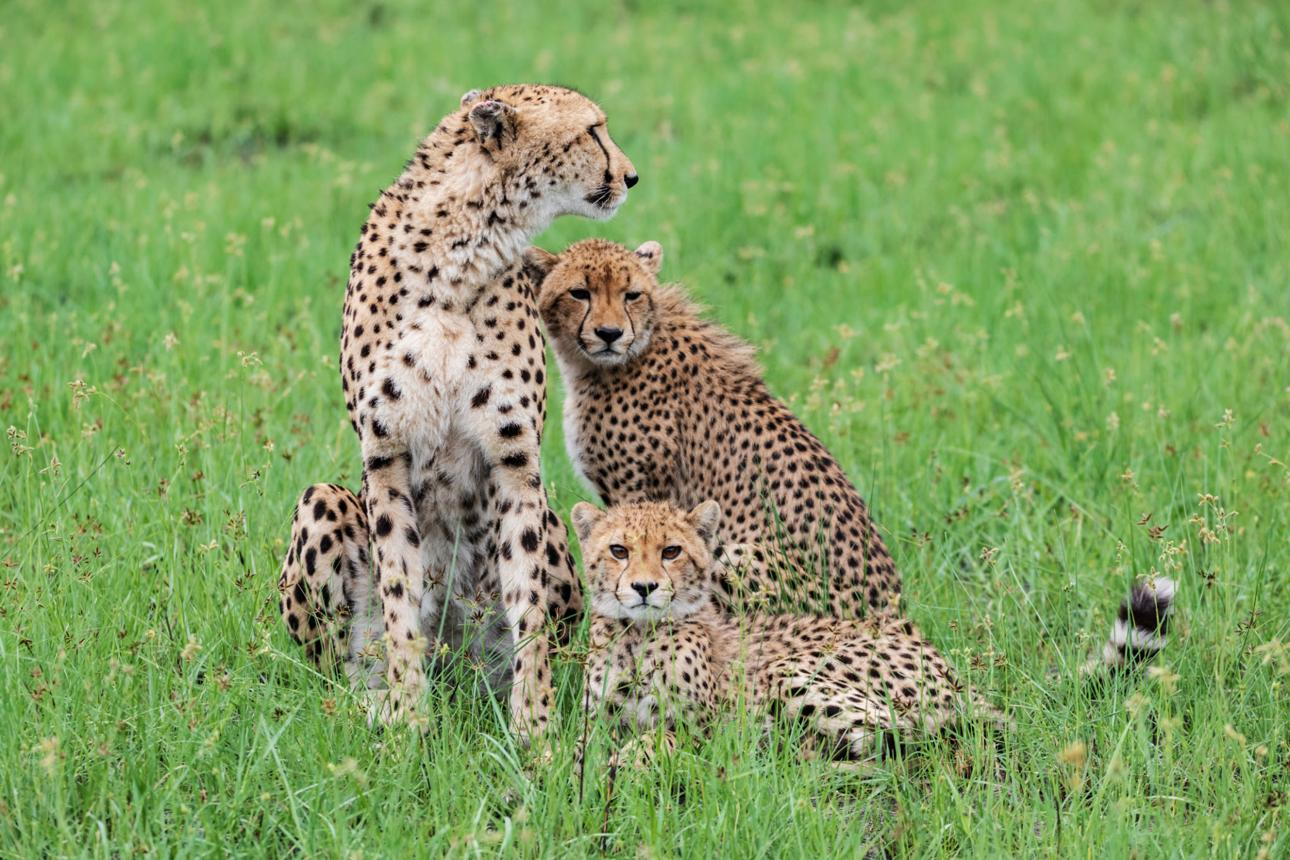
    Alt Text: Cheetah mother leading several cubs across an African grassland.

    Life is especially challenging for cheetah cubs.

    Unlike lions, cheetahs do not benefit from the protection of a pride. A mother must raise her young almost entirely on her own.

    For many months, she teaches stalking techniques, hunting strategies, and predator awareness.

    One of the most fascinating aspects of cheetah parenting involves practical lessons. Mothers sometimes release captured prey so cubs can practice chasing and capturing it themselves.

    These exercises help transform inexperienced youngsters into capable hunters.

    The process resembles a carefully planned training program rather than simple parental protection.


    Building a Nursery the Size of a Small Car

    Figure 4

    Alt Text: Male Australian brush turkey standing beside a massive nesting mound made of leaves and soil.

    Some parents care for young after birth. Australian brush turkeys invest heavily before the eggs even hatch.

    The male spends months constructing a gigantic mound from leaves, soil, and organic material.

    These structures can reach several meters across and weigh several tons.

    As plant matter decomposes, heat is generated naturally. The mound functions as a giant incubator, maintaining temperatures suitable for egg development.

    The father constantly monitors conditions and adjusts the structure by adding or removing material.

    Few animals demonstrate such impressive engineering skills in preparation for parenthood.


    Whale Mothers and the Longest Classroom on Earth

    Figure 5

    Alt Text: Sperm whale mother swimming alongside her calf in the deep ocean.

    The ocean can be a difficult place for a newborn whale.

    For sperm whales, learning begins immediately after birth.

    Young calves remain close to their mothers for years, absorbing information about migration routes, feeding grounds, communication signals, and social behavior.

    Female relatives often participate as well. Groups of related females cooperate to protect calves while mothers dive to great depths in search of food.

    Researchers have compared these family groups to extended learning communities.

    The ocean becomes a classroom where survival knowledge is passed from one generation to the next.


    Tiny Monkeys, Giant Parenting Commitments

    Figure 6

    Alt Text: Emperor tamarin father carrying twin infants through a rainforest canopy.

    Emperor tamarins may be small primates, but their parenting efforts are enormous.

    Twin births are common, creating a significant burden for mothers.

    To address this challenge, fathers become heavily involved from the beginning. Infants spend much of their time riding on the backs of adult males.

    Brothers, sisters, and other relatives frequently assist as well.

    The result is a highly cooperative childcare system in which responsibility is shared among multiple family members.

    This teamwork allows the group to successfully raise offspring in the demanding environment of the tropical forest.


    A Marsupial Childhood Spent Above the Forest Floor

    Figure 7

    Alt Text: Tree kangaroo mother carrying a young joey while resting in a rainforest tree.

    Tree kangaroos represent an unusual blend of familiar and surprising parenting behaviors.

    Like other marsupials, mothers give birth to extremely small young that continue developing inside a pouch.

    What makes tree kangaroos unique is their arboreal lifestyle.

    The mother must navigate branches, leap between trees, and forage in elevated rainforest habitats while carrying a growing joey.

    As the youngster matures, it gradually begins exploring the canopy but remains dependent on maternal guidance.

    Learning to move safely among the treetops is essential for survival, making the mother’s role particularly important during early development.


    Why Extreme Parenting Evolves

    Every environment creates different challenges for offspring.

    Animals living in oceans face threats different from those encountered in forests or deserts. Some species struggle with predators. Others must deal with limited food, harsh weather, or complex social systems.

    Because of these pressures, parenting strategies evolve in countless directions.

    Some parents emphasize teaching. Others prioritize protection, transportation, engineering, or cooperation.

    The incredible variety of solutions found in nature demonstrates the flexibility of evolution when faced with a common problem.


    The Hidden Cost of Raising Young

    Although animal parenting often appears inspiring, it frequently comes at a significant cost.

    Parents may sacrifice energy reserves, increase exposure to predators, or delay future reproduction.

    A mouthbrooding fish may go weeks without eating. A cheetah mother spends months hunting for growing cubs. A brush turkey invests enormous effort constructing a nesting mound.

    These sacrifices highlight the importance of offspring survival in the evolutionary process.

    Without successful child rearing, even the strongest species cannot persist.


    Family Life Beyond Human Society

    One of the most surprising discoveries in modern biology is how widespread complex parenting behaviors are.

    Scientists have documented teaching, cooperation, communication, babysitting, and even cultural learning among various animal groups.

    These behaviors reveal that family life is not exclusive to humans.

    Across the natural world, animals invest tremendous resources in helping the next generation navigate a dangerous and unpredictable environment.

    Their methods may differ dramatically, but the underlying goal remains the same.


    Conclusion

    The animal kingdom is filled with parenting stories that challenge our expectations.

    Sea catfish fathers endure weeks of fasting while protecting eggs. Hoatzin chicks climb trees using wing claws. Cheetah mothers provide hunting lessons, and brush turkeys construct enormous incubators before offspring even hatch.

    Sperm whales transform oceans into classrooms, emperor tamarins rely on cooperative childcare, and tree kangaroos guide young through life high in the rainforest canopy.

    Together, these examples demonstrate that successful parenting is one of nature’s greatest achievements. Through sacrifice, innovation, teamwork, and education, animal families have evolved remarkable strategies that continue to fascinate scientists and wildlife enthusiasts around the world.

    The next time you think of parenting, remember that somewhere in nature, a fish is fasting for its young, a bird is climbing with wing claws, and a whale is teaching lessons beneath the waves.

  • Born to Teach: Animals That Train Their Babies for Survival

    Born to Teach: Animals That Train Their Babies for Survival

    Strange Stories About Animals During Child Rearing: The Most Unusual Parents in Nature

    The animal kingdom is full of surprises, especially when it comes to raising young. While humans often think of parenting as a uniquely complex responsibility, countless animal species display remarkable dedication to their offspring. Some parents make incredible sacrifices, others develop strange feeding techniques, and a few even risk their lives to ensure their babies survive.

    Scientists continue to discover fascinating examples of animal parenting that challenge our understanding of intelligence, cooperation, and family bonds. Across oceans, forests, deserts, and wetlands, animals have evolved extraordinary child-rearing strategies perfectly suited to their environments.

    Here are some of the strangest and most fascinating stories about animals during child rearing.

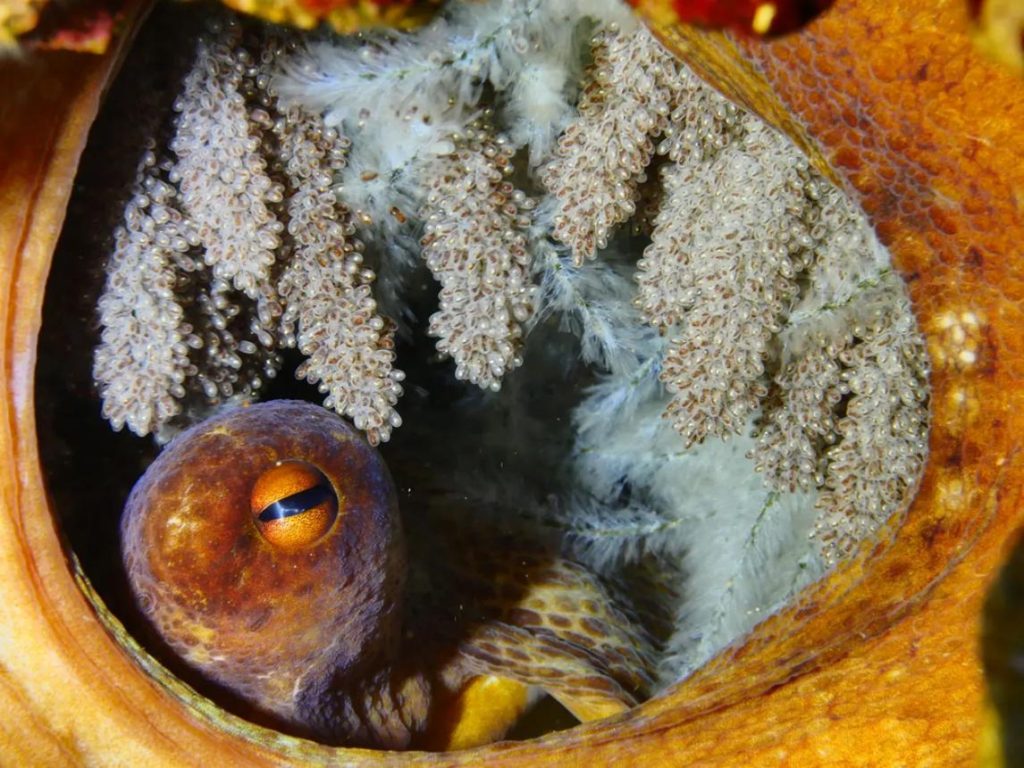
    1. Octopus Mothers Sacrifice Everything for Their Babies

    Figure 1

    Alt Text: Female octopus guarding thousands of eggs attached beneath a rocky ocean cave.

    Among the most dramatic parenting stories in nature belongs to the octopus.

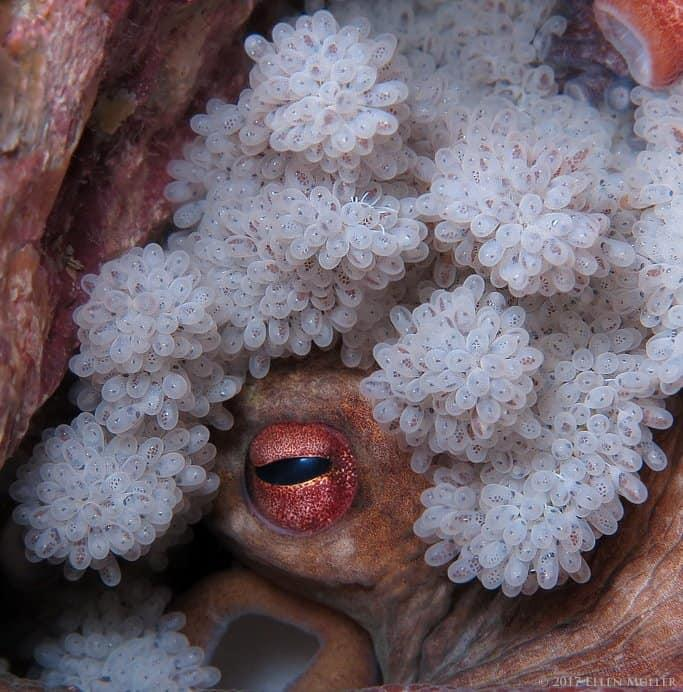
    After mating, a female octopus lays thousands of eggs inside a protected underwater den. Once the eggs are attached to rocks or cave walls, she begins an extraordinary period of care.

    For months, she rarely leaves the nest. Instead, she continuously cleans the eggs, removes harmful debris, and gently fans them with water to provide oxygen. During this time, she often stops eating entirely.

    As the eggs approach hatching, the mother becomes increasingly weak from starvation. In many species, she dies shortly after the young emerge.

    Her final months are devoted entirely to protecting the next generation. This ultimate sacrifice ensures that her offspring have the best possible chance of survival.


    2. African Wild Dogs Raise Puppies as a Team

    Figure 2

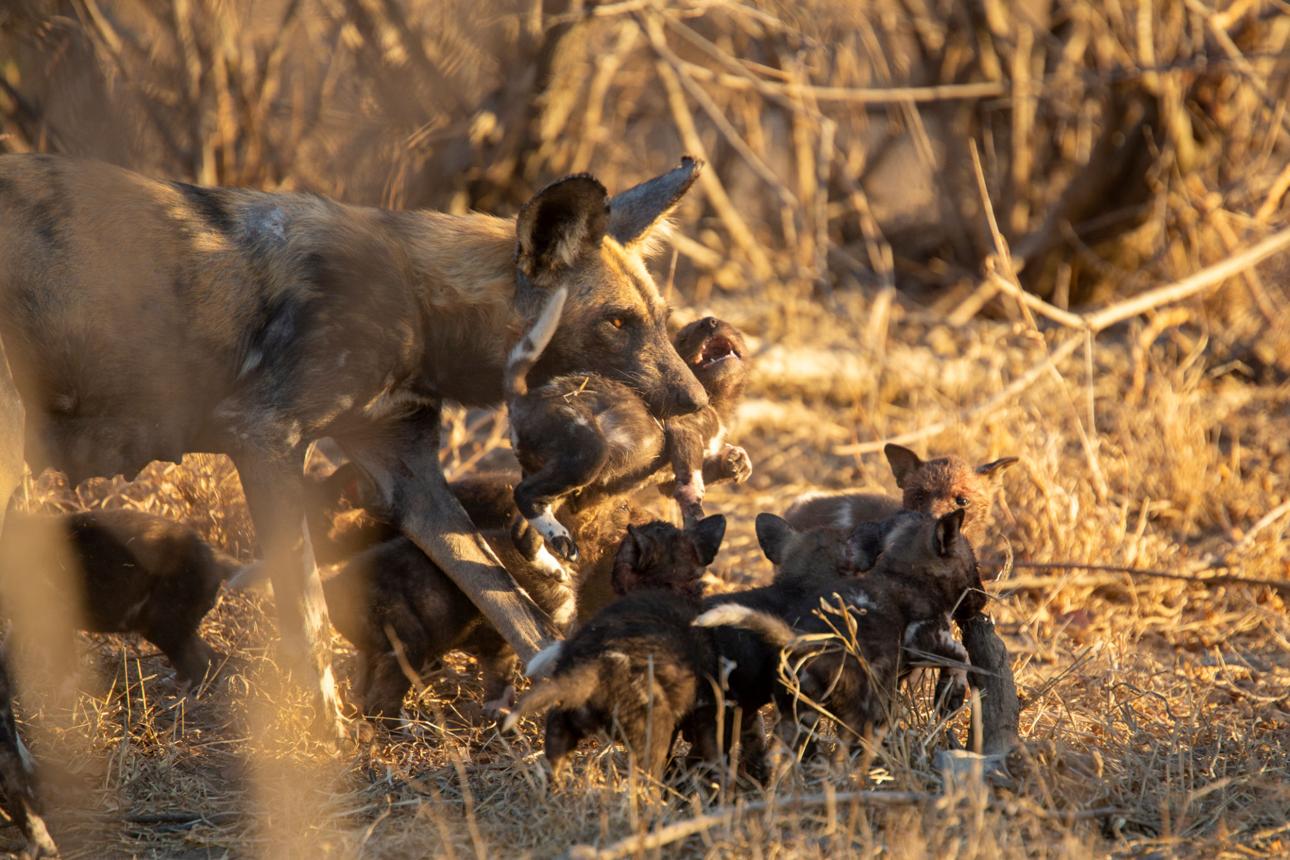
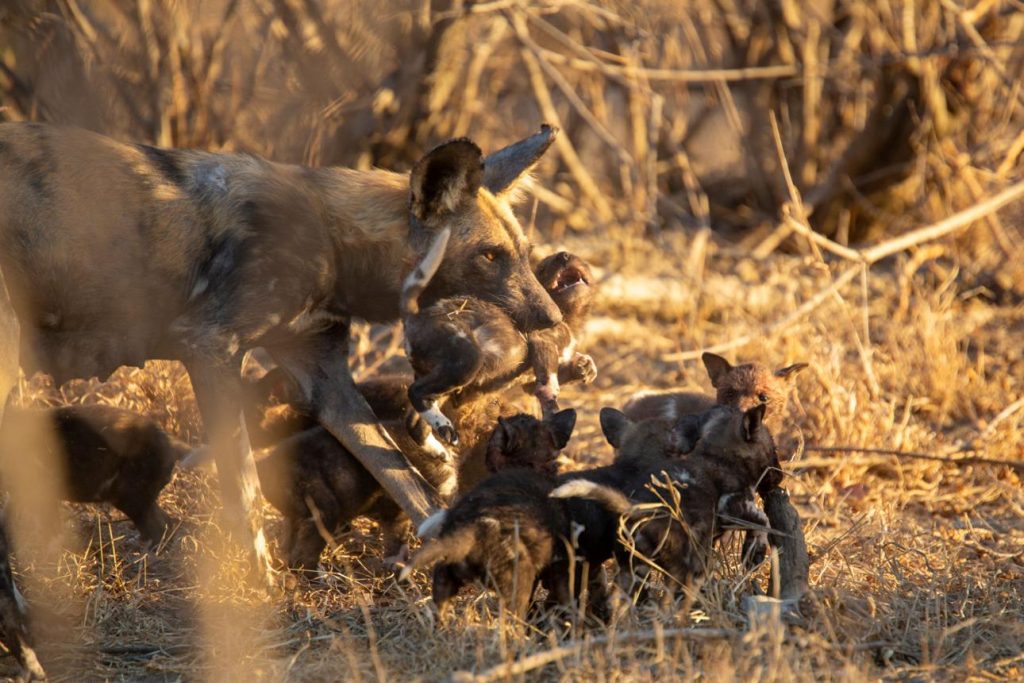
    Alt Text: African wild dog pack gathered around young puppies at a den entrance.

    African wild dogs are among the most cooperative animals on Earth.

    Unlike many predators, these social hunters raise puppies collectively. Every member of the pack contributes to caring for the young.

    When adults return from a hunt, they often regurgitate food specifically for nursing mothers and growing pups. Older siblings help babysit, guard the den, and even entertain younger animals through play.

    This cooperative system allows puppies to grow rapidly and learn important social behaviors.

    Because the entire pack invests in the success of the next generation, wild dog families achieve a level of teamwork rarely seen among mammals.


    3. Flamingos Produce a Special “Milk”

    Figure 3

    Alt Text: Adult flamingo feeding a young chick with nutrient-rich crop milk near a wetland.

    Flamingos are famous for their bright pink feathers, but their parenting behavior is equally remarkable.

    After chicks hatch, both parents feed them a nutrient-rich substance called crop milk. Unlike mammalian milk, this liquid is produced inside the digestive tract.

    The red-colored fluid contains fats, proteins, and immune-supporting compounds that help chicks grow rapidly.

    For several weeks, flamingo parents devote much of their energy to producing this specialized food. The feeding process creates a strong bond between parents and offspring.

    Many people are surprised to learn that birds can produce a milk-like substance, making flamingo parenting one of nature’s strangest childcare strategies.


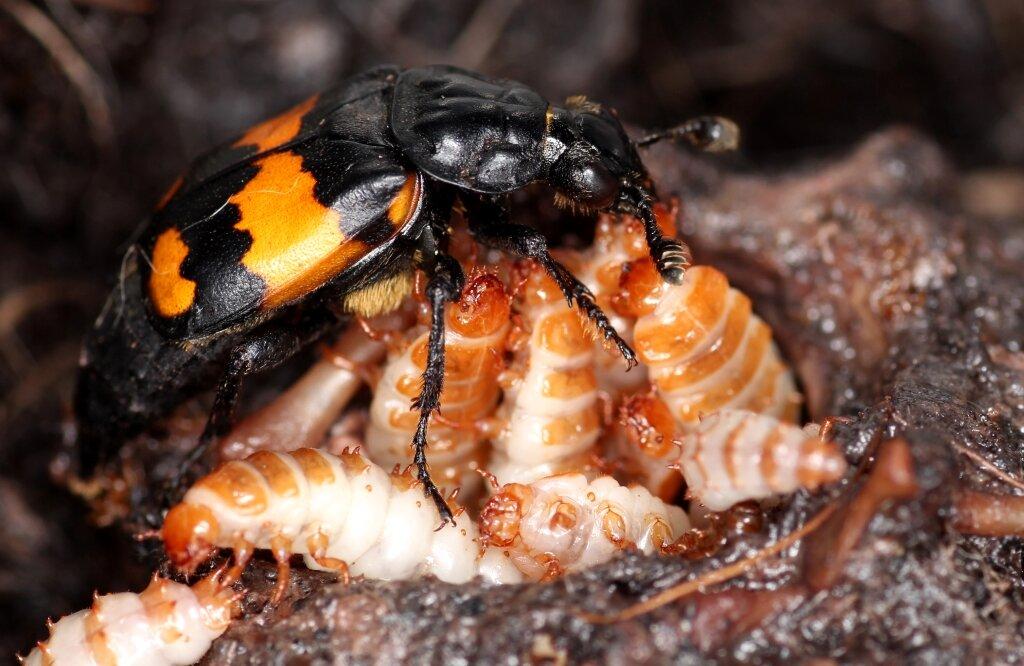
    4. Burying Beetles Create Underground Nurseries

    Figure 4

    Alt Text: Burying beetle parents caring for larvae on a small animal carcass underground.

    Burying beetles may not seem like ideal parents, but they display surprisingly advanced family behavior.

    These insects locate the body of a small dead animal such as a mouse or bird. Working together, the parents bury the carcass underground and prepare it as a nursery.

    After eggs hatch, the adults remain with the larvae and provide food directly to them. They clean the nursery, defend it from intruders, and even remove unhealthy offspring to protect the rest of the brood.

    This level of parental involvement is extremely rare among insects.

    Scientists often study burying beetles because their family interactions resemble parental care behaviors found in much larger animals.


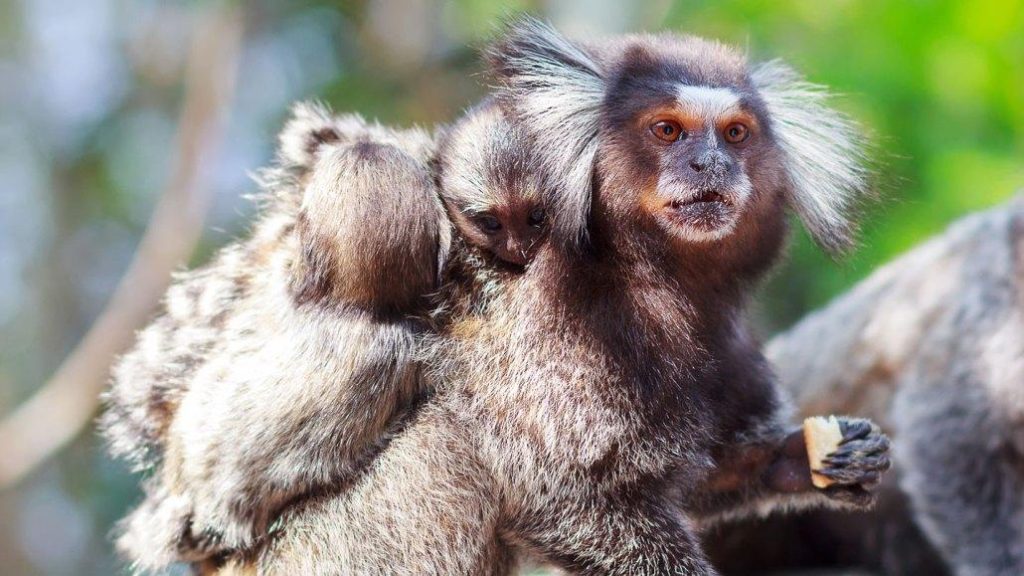
    5. Marmoset Fathers Carry Babies Almost Constantly

    Figure 5

    Alt Text: Common marmoset father carrying twin infants on his back in a tropical forest.

    Many primates rely heavily on maternal care, but marmosets take a different approach.

    These small monkeys often give birth to twins, creating a demanding workload for the family. To help, fathers become the primary carriers of newborns.

    The babies spend much of their time clinging to their father’s back. He transports them through the forest, protects them from danger, and only returns them to the mother when feeding is necessary.

    Other family members frequently assist as well.

    This cooperative childcare system allows mothers to conserve energy while ensuring that infants receive constant protection and attention.


    6. Alligator Mothers Respond to Their Babies’ Calls

    Figure 6

    Alt Text: Mother alligator carrying newly hatched babies safely through shallow water.

    Alligators are often viewed as fierce predators, yet they can be remarkably attentive parents.

    Before hatching, baby alligators begin making sounds from inside their eggs. These vocalizations signal to the mother that the young are ready to emerge.

    The mother carefully opens the nest and may gently transport hatchlings in her mouth to nearby water.

    For weeks afterward, she remains close to the young, protecting them from predators such as birds, fish, and larger reptiles.

    Scientists have documented mothers responding to distress calls from their offspring and rushing to defend them.

    This surprising tenderness demonstrates that even some of nature’s most formidable predators can be devoted parents.


    7. Red Foxes Teach Their Young Through Play

    Figure 7

    Alt Text: Young red fox kits playing near their den while adult foxes supervise.

    Play is often associated with fun, but for young foxes it serves an important educational purpose.

    Red fox kits spend hours wrestling, chasing, pouncing, and exploring their surroundings. Although these activities appear playful, they help develop essential hunting and survival skills.

    Adult foxes actively encourage learning by bringing prey to the den. At first, the prey may be dead. Later, parents introduce live animals, allowing the kits to practice catching and handling them.

    Through repeated experiences, young foxes gradually develop the coordination and instincts needed for independence.

    This teaching process demonstrates that successful parenting often involves education as well as protection.


    Why Animal Parenting Is So Diverse

    Every species faces different environmental challenges.

    Animals living in dangerous habitats may emphasize protection. Species whose young require complex skills may invest heavily in teaching. Others focus on providing food, warmth, or transportation.

    Natural selection favors parenting behaviors that improve survival rates. Over millions of years, these strategies become highly specialized.

    As a result, the animal kingdom contains an incredible variety of child-rearing methods, each perfectly adapted to a particular way of life.


    Lessons From Nature’s Parents

    Studying animal parenting provides valuable insights into behavior, evolution, and social relationships.

    Researchers have discovered that cooperation, communication, teaching, and sacrifice are far more widespread in nature than once believed.

    From octopus mothers guarding eggs until death to wild dog packs working together to raise puppies, animals demonstrate extraordinary commitment to future generations.

    These behaviors remind us that family bonds can take many different forms across the natural world.


    Conclusion

    The stories of animal parents reveal some of nature’s most astonishing adaptations. Octopuses sacrifice their lives for their eggs. Flamingos produce milk-like food for chicks. Burying beetles create underground nurseries, while marmoset fathers carry babies for much of the day.

    African wild dogs rely on teamwork, alligator mothers respond to the calls of hatchlings, and red foxes teach hunting skills through play.

    Together, these remarkable examples show that parenting in nature is often every bit as complex, challenging, and inspiring as it is in human society.

    Whether through protection, teaching, cooperation, or sacrifice, animals continue to amaze scientists with the extraordinary ways they care for their young. Their stories offer a fascinating glimpse into the diversity of life on Earth and remind us that successful parenting comes in many forms.

  • The Animal Babysitters: Wildlife Species That Let Others Raise Their Young

    The Animal Babysitters: Wildlife Species That Let Others Raise Their Young

    Strange Stories About Animals During Child Rearing: Nature’s Most Unusual Parents

    The animal kingdom is filled with remarkable stories of survival, adaptation, and family life. While many people focus on hunting behaviors or migration patterns, some of the most fascinating wildlife stories involve the way animals raise their young. Across the world, different species have evolved unique parenting strategies that can seem strange, surprising, and even unbelievable.

    Some fathers become pregnant. Some mothers carry babies for years. Others rely on entire communities to help raise offspring. These unusual child-rearing methods demonstrate the incredible diversity of life on Earth and highlight the lengths animals will go to ensure the survival of the next generation.

    Here are seven extraordinary stories about animal parenting that reveal nature at its most surprising.

    1. Male Seahorses Are the Ones That Get Pregnant

    Image 1

    Alt Text: Male seahorse carrying developing babies inside a brood pouch underwater.

    One of the strangest parenting stories in nature belongs to seahorses. Unlike almost every other animal species, it is the father—not the mother—who becomes pregnant.

    After an elaborate courtship dance, the female deposits her eggs into a special pouch on the male’s abdomen. The father then fertilizes the eggs and carries them inside his brood pouch for several weeks.

    During this period, the male carefully regulates oxygen levels, salt concentration, and nutrients for the developing embryos. In many ways, the pouch functions similarly to a mammalian placenta.

    When the babies are fully developed, the father experiences powerful contractions and releases dozens or even hundreds of miniature seahorses into the ocean. Although most will not survive, the father’s unique role in reproduction remains one of nature’s most extraordinary examples of parental care.

    2. Giant Panda Mothers Raise Tiny Cubs

    Image 2

    Alt Text: Giant panda mother gently holding a newborn cub in a forest habitat.

    Giant pandas give birth to some of the smallest newborns relative to their body size among mammals. A newborn panda may weigh only about 100 grams, while its mother can weigh more than 100 kilograms.

    This means the cub is roughly 1/900th of its mother’s weight. For comparison, a human baby is much larger relative to its mother.

    When a cub is born, it is pink, nearly hairless, blind, and completely helpless. The mother spends weeks holding, warming, and feeding the tiny newborn almost constantly.

    If twins are born, raising both can be extremely difficult in the wild. Conservation programs often assist panda mothers in caring for twin cubs to improve survival rates.

    The enormous size difference between mother and baby makes panda parenting one of nature’s most unusual family stories.

    3. Jacana Fathers Raise the Entire Family

    Image 3

    Alt Text: Male jacana bird walking across lily pads while guiding young chicks.

    In many bird species, mothers play the primary parenting role. Jacanas, however, turn this pattern upside down.

    These tropical birds live around wetlands and floating vegetation. Females are larger, more aggressive, and may mate with several males. After laying eggs, the female often leaves most parenting responsibilities to the father.

    The male incubates the eggs, protects the nest, and cares for the chicks after they hatch. He constantly watches for predators and helps guide the young through their wetland habitat.

    One of the most amazing behaviors occurs when danger approaches. The father may pick up tiny chicks beneath his wings and run across floating vegetation, carrying them to safety.

    This unusual reversal of traditional parental roles makes jacanas among the most fascinating bird parents in the world.

    4. Meerkats Teach Their Young How to Hunt

    Image 4

    Alt Text: Adult meerkat teaching a young pup how to handle prey in the desert.

    Many animals rely on instinct, but meerkats actively teach their offspring.

    Living in the deserts of southern Africa, meerkats face numerous challenges, including venomous scorpions and dangerous predators. Young pups must quickly learn survival skills.

    Adult meerkats gradually introduce hunting lessons. At first, they bring dead prey to the pups. Later, they provide injured prey that still moves but poses less danger. Eventually, young meerkats learn to capture and handle live prey independently.

    Researchers consider this one of the clearest examples of teaching behavior in non-human animals. Adults modify their actions specifically to help young individuals learn new skills.

    This educational approach helps ensure that meerkat pups become successful hunters as they mature.

    5. Koalas Carry Their Babies Everywhere

    Image 5

    Alt Text: Koala mother carrying a joey on her back while climbing a eucalyptus tree.

    Koalas spend most of their lives in eucalyptus trees, and raising a baby in such an environment presents unique challenges.

    A newborn koala, called a joey, is tiny and underdeveloped at birth. It immediately crawls into its mother’s pouch, where it continues developing for several months.

    After leaving the pouch, the joey rides on its mother’s back almost everywhere she goes. The mother carefully climbs trees while carrying her growing offspring.

    One particularly unusual aspect of koala parenting involves diet. To help the joey digest eucalyptus leaves, the mother provides a specialized substance containing beneficial microbes. These microbes help establish the digestive system needed for processing the toxic compounds found in eucalyptus.

    Without this assistance, young koalas would struggle to survive on their species’ specialized diet.

    6. Polar Bear Mothers Fast for Months

    Image 6

    Alt Text: Polar bear mother emerging from a snow den with two young cubs.

    Polar bears live in one of Earth’s harshest environments. Their parenting strategy is equally extreme.

    Pregnant females dig snow dens before winter arrives. Inside these insulated shelters, they give birth to tiny cubs during the coldest months of the year.

    Throughout this period, the mother rarely eats. Instead, she survives on fat reserves accumulated before entering the den. For several months, she nurses and protects her cubs while enduring prolonged fasting.

    When spring arrives, the mother emerges with her young and begins teaching them how to navigate the Arctic environment. The cubs stay with her for more than two years, learning essential survival skills.

    This remarkable sacrifice highlights the extraordinary commitment required to raise young in such a challenging habitat.

    7. Golden Lion Tamarins Share Parenting Duties

    Image 7

    Alt Text: Golden lion tamarin father carrying infant twins through a tropical forest.

    Golden lion tamarins are small primates native to Brazil’s Atlantic Forest. Unlike many mammals, both parents play active roles in raising offspring.

    These monkeys often give birth to twins, creating a demanding workload for the family. To help the mother conserve energy, the father carries the infants for much of the day.

    The babies cling to his back while he moves through the forest searching for food. The father returns them to the mother primarily for nursing.

    Other family members may also assist with childcare. Older siblings frequently help transport and protect the infants, creating a cooperative parenting system.

    This teamwork increases the chances of survival and demonstrates how social cooperation can benefit young animals.

    Why Strange Parenting Behaviors Evolved

    Animal parenting strategies develop through evolution. Each behavior increases the likelihood that offspring will survive long enough to reproduce.

    In some species, fathers provide most of the care. In others, mothers invest enormous amounts of energy and resources. Some animals rely on teaching, while others depend on community support.

    Environmental conditions also shape parenting methods. Animals living in harsh climates often provide extended protection, while species facing high predation rates may emphasize vigilance and cooperation.

    Although these behaviors may seem unusual from a human perspective, each represents an effective solution to the challenges of raising young in a particular habitat.

    Conclusion

    Nature is full of extraordinary parenting stories. Male seahorses become pregnant, jacana fathers carry chicks beneath their wings, meerkats teach hunting lessons, and polar bear mothers endure months without food to protect their cubs.

    Pandas nurture tiny newborns, koalas provide specialized digestive assistance, and golden lion tamarins rely on teamwork to raise infants successfully.

    These remarkable examples remind us that parenting takes many forms throughout the natural world. Whether through sacrifice, cooperation, teaching, or protection, animals continue to reveal surprising and inspiring ways of caring for the next generation.

    Their stories not only deepen our understanding of wildlife but also highlight the incredible diversity of life on our planet.

  • 7 Remarkable Stories of Animals That Sacrifice Their Lives to Keep Their Young Alive

    7 Remarkable Stories of Animals That Sacrifice Their Lives to Keep Their Young Alive

    7 Remarkable Stories of Animals That Sacrifice Their Lives to Keep Their Young Alive

    Introduction

    Nature is often described as a fierce struggle for survival, where only the strongest endure. Yet beneath this harsh reality lies another powerful force: parental sacrifice. Across oceans, forests, deserts, and even tiny insect colonies, countless animals invest enormous energy—and sometimes their very lives—to ensure the survival of their offspring.

    For humans, the idea of a parent giving everything for a child feels deeply familiar. Surprisingly, similar behaviors appear throughout the animal kingdom. Some mothers stop eating while protecting their eggs. Others exhaust themselves during long migrations. In a few extraordinary cases, parents literally become food for their young.
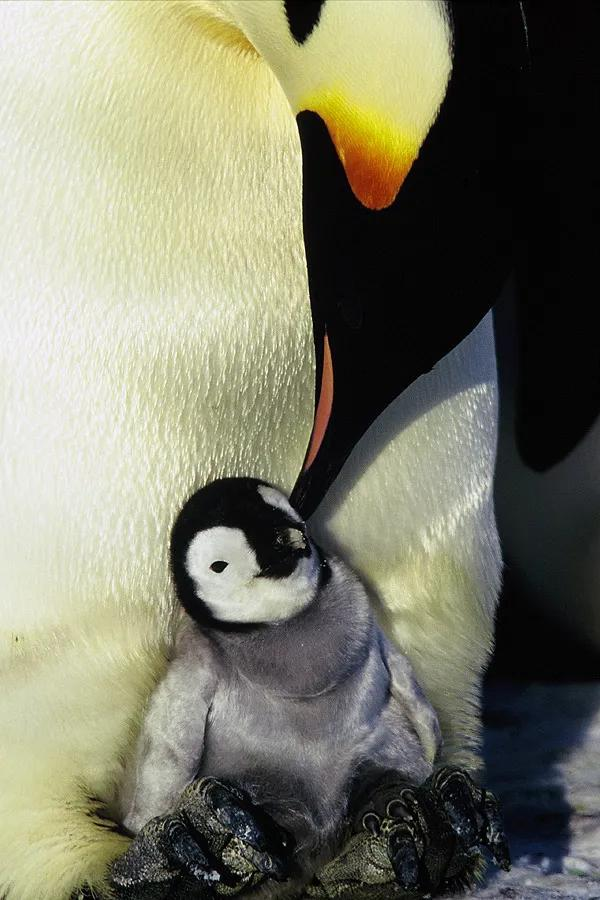
    These stories remind us that survival is not always about individual success. Sometimes it is about ensuring that the next generation has a chance to live, even when the cost is everything.

    Here are seven of the most astonishing examples of animals sacrificing their lives, or risking death, to protect and nurture their young.


    1. The Octopus Mother Who Stops Living So Her Eggs Can Live

    Among the most dramatic examples of parental sacrifice in nature is the story of the female octopus.

    After mating, a mother octopus lays thousands of eggs inside a carefully chosen den. From that moment onward, her entire existence revolves around protecting them. She constantly cleans the eggs with her arms, removes parasites, and gently circulates water around them to provide oxygen.

    What makes this behavior so extraordinary is that she stops hunting and eating.

    For months, sometimes nearly a year depending on the species, the mother remains beside her eggs. She grows weaker and weaker as her body consumes its own reserves. During this time, she fiercely defends the nest against predators despite her deteriorating condition.

    When the eggs finally hatch, the exhausted mother has little strength left. In most octopus species, she dies shortly afterward.

    Scientists believe this self-destructive behavior is triggered by hormonal changes following reproduction. The mother’s final mission is singular: keep the eggs alive until they hatch.

    Her sacrifice ensures that thousands of tiny octopuses enter the world with the best possible chance of survival.


    2. Pacific Salmon: A Journey That Ends in Death

    Every year, one of nature’s greatest migrations unfolds in rivers across North America and Asia.

    Pacific salmon spend much of their lives in the ocean. When the time comes to reproduce, they embark on an incredible journey back to the freshwater streams where they were born.

    The trip is brutal.

    Salmon battle powerful currents, leap over waterfalls, avoid predators, and travel hundreds or even thousands of kilometers upstream. During this migration, many species stop feeding entirely. Their bodies gradually consume stored fat and muscle tissue.

    By the time they reach their spawning grounds, the fish are often physically transformed and severely weakened.

    After laying eggs or fertilizing them, most Pacific salmon die.

    At first glance, this seems like a tragic ending. However, their deaths play an important role in the ecosystem. Their decomposing bodies release nutrients into rivers and surrounding forests, enriching habitats that ultimately benefit the next generation of salmon.

    Their offspring hatch in waters made richer by the sacrifice of their parents.


    3. The Spider Mothers That Become Their Young’s First Meal

    Some spider species take parental sacrifice to an almost unimaginable level.

    In a behavior known as “matriphagy,” the mother literally allows her offspring to eat her.

    Before this happens, the mother spends weeks protecting her egg sac and caring for newly hatched spiderlings. She often regurgitates nutrient-rich food to feed them. Eventually, her body begins changing in preparation for the final stage of motherhood.

    When the young spiders are ready, they consume their mother.

    While this may sound horrifying from a human perspective, it provides the spiderlings with an enormous nutritional advantage during a critical stage of development. The nutrients contained within the mother’s body can dramatically improve the young spiders’ chances of survival.

    For these species, the ultimate act of parental care is complete self-sacrifice.

    The mother transforms her own body into a resource that helps her offspring thrive.


    4. Honey Bees: Defenders Willing to Die

    Not all sacrifices happen during reproduction. Some occur in moments of defense.

    Worker honey bees are female insects that spend their lives supporting the colony. Although they usually do not reproduce themselves, they help raise the queen’s offspring, which are genetically related to them.

    When a predator threatens the hive, worker bees rush to defend it.

    For honey bees, stinging a large mammal often results in death. Their barbed stingers become lodged in the attacker’s skin. As the bee pulls away, vital organs are damaged, leading to her death shortly afterward.

    Their bravery demonstrates that survival in nature is sometimes achieved through cooperation rather than individual preservation.

    Despite this fatal consequence, bees continue to defend the colony.

    From an evolutionary perspective, protecting thousands of developing larvae and the reproductive queen outweighs the loss of individual workers. By sacrificing themselves, the defenders help ensure the survival of the colony’s future generations.
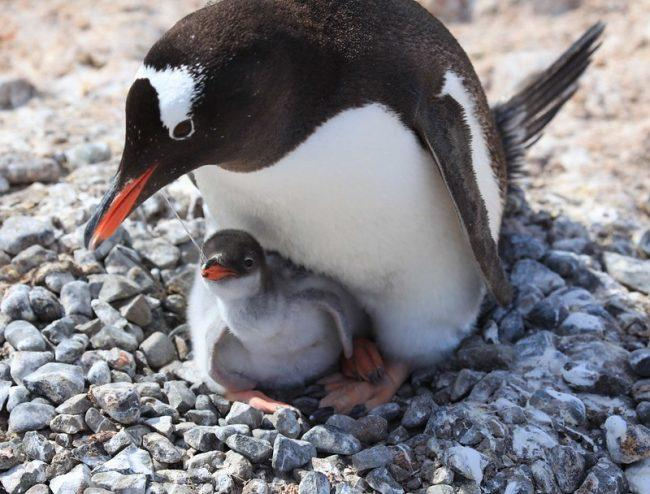

    5. The Antechinus: Males That Reproduce Until They Die

    Australia is home to some of the world’s most unusual wildlife, and the antechinus is no exception.

    This small marsupial follows one of the most extreme reproductive strategies known among mammals.

    During a short breeding season, male antechinuses enter a period of nonstop competition for mating opportunities. For several weeks they devote nearly all their energy to reproduction. Many stop sleeping properly and experience dangerously high levels of stress hormones.

    Their immune systems begin to collapse.

    Internal bleeding, infections, and physical exhaustion become common. By the end of the breeding season, nearly all males die.

    Although the sacrifice comes from the fathers rather than the mothers, the biological outcome is the same: the males invest everything in producing the next generation.

    The species has evolved a strategy in which a single, intense reproductive effort is more advantageous than attempting to survive for another breeding season.

    Few mammals demonstrate such a complete commitment to reproduction.


    6. Parent Penguins Endure Deadly Conditions for Their Chicks

    The frozen landscapes of Antarctica are among the harshest environments on Earth. Yet several penguin species successfully raise young there every year.

    The task requires extraordinary dedication from both parents.

    After an egg is laid, one parent may remain with it while the other travels long distances to find food. During incubation, penguins endure freezing temperatures, violent winds, and extended periods without eating.

    For species such as emperor penguins, fasting can last for months.

    Parents huddle together to conserve heat and protect their eggs or chicks from deadly cold. Many lose a significant portion of their body weight during this period. Some do not survive severe weather events or food shortages.

    Despite these risks, penguin parents continue investing tremendous energy into raising their young.

    Their willingness to endure starvation and exposure demonstrates how powerful parental instincts can be, even in one of the planet’s most unforgiving environments.


    7. Mother Squids That Give Everything to Their Final Brood

    Like octopuses, many squid species reproduce only once during their lives.

    After mating and laying eggs, female squids often experience rapid physical decline. Their bodies divert resources away from growth and survival and toward reproduction.

    As they guard or remain near their developing eggs, they become increasingly weak.

    Many die shortly after the eggs hatch.

    Scientists refer to this pattern as semelparity—a reproductive strategy in which an organism invests all available resources into a single reproductive event.

    While risky, this approach can be highly successful in environments where producing one large brood offers the greatest chance of passing on genes.

    For mother squids, there is no second opportunity. Everything is devoted to ensuring the success of their final offspring.


    Why Does Nature Favor Such Extreme Sacrifice?

    At first glance, sacrificing one’s life for offspring may seem contradictory to the idea of survival. However, evolution is not focused on preserving individual animals forever. Instead, it favors traits that increase the likelihood of genes being passed to future generations.
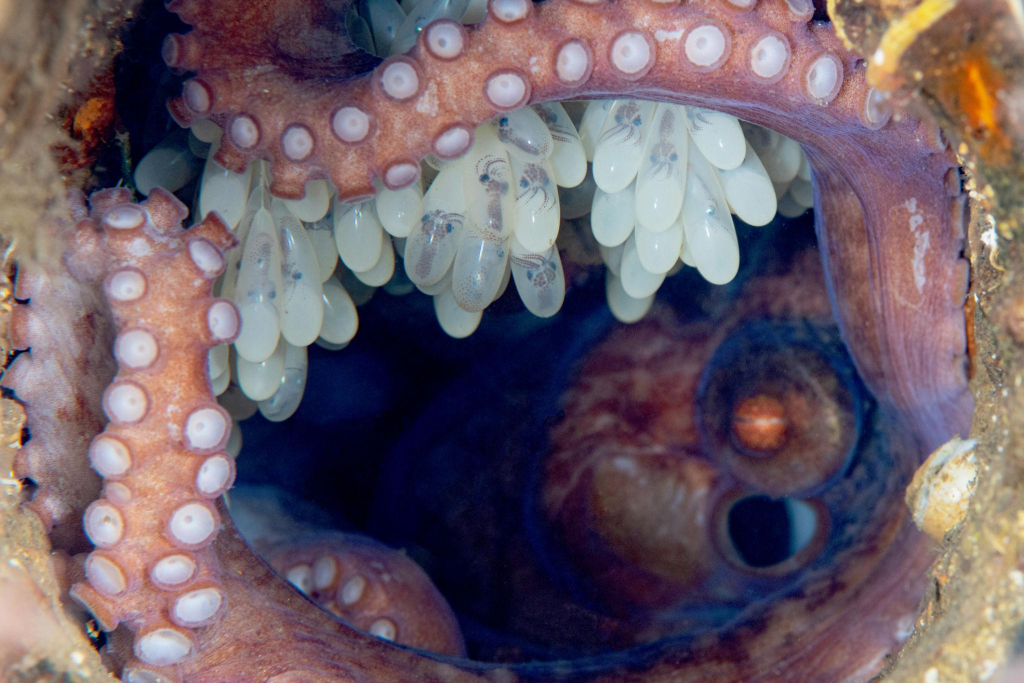
    If a parent can significantly improve the survival chances of its offspring through sacrifice, natural selection may reward that behavior.

    This principle helps explain why such strategies have evolved independently in many different groups of animals, including insects, fish, spiders, mollusks, birds, and mammals.

    The exact form of sacrifice varies:

    • Some parents give up food.
    • Some endure extreme environmental conditions.
    • Some exhaust themselves during migration.
    • Some defend offspring against overwhelming threats.
    • A few even become food for their young.

    Although these behaviors appear very different, they share a common purpose: increasing the survival of the next generation.


    Conclusion

    The natural world is filled with remarkable examples of strength, endurance, and adaptation. Yet some of the most moving stories are not about survival itself but about sacrifice.

    From octopus mothers guarding eggs until starvation claims them, to salmon completing a final migration, to spider mothers literally nourishing their offspring with their own bodies, these animals demonstrate extraordinary dedication to the future of their species.

    Their stories challenge the common perception that nature is driven only by competition and self-interest. In reality, countless species survive because parents invest everything they have in their young.

    While humans and animals differ in many ways, these examples reveal a universal truth that spans the living world: the drive to protect the next generation can be one of nature’s most powerful forces.

    In the end, some of the greatest heroes in the animal kingdom are not the strongest predators or the fastest runners—they are the parents willing to give everything so their young can live.