Strange Stories About Animals During Child Rearing: The Most Unusual Parents in Nature
The animal kingdom is full of surprises, especially when it comes to raising young. While humans often think of parenting as a uniquely complex responsibility, countless animal species display remarkable dedication to their offspring. Some parents make incredible sacrifices, others develop strange feeding techniques, and a few even risk their lives to ensure their babies survive.
Scientists continue to discover fascinating examples of animal parenting that challenge our understanding of intelligence, cooperation, and family bonds. Across oceans, forests, deserts, and wetlands, animals have evolved extraordinary child-rearing strategies perfectly suited to their environments.
Here are some of the strangest and most fascinating stories about animals during child rearing.
1. Octopus Mothers Sacrifice Everything for Their Babies
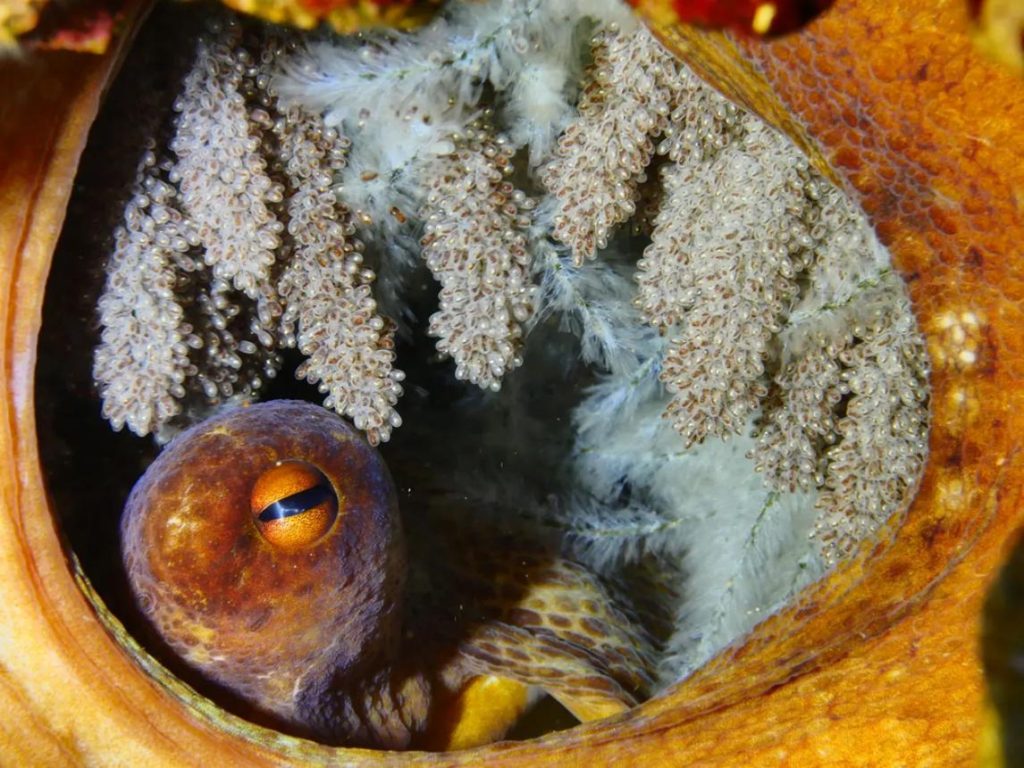
Figure 1
Alt Text: Female octopus guarding thousands of eggs attached beneath a rocky ocean cave.
Among the most dramatic parenting stories in nature belongs to the octopus.
After mating, a female octopus lays thousands of eggs inside a protected underwater den. Once the eggs are attached to rocks or cave walls, she begins an extraordinary period of care.
For months, she rarely leaves the nest. Instead, she continuously cleans the eggs, removes harmful debris, and gently fans them with water to provide oxygen. During this time, she often stops eating entirely.
As the eggs approach hatching, the mother becomes increasingly weak from starvation. In many species, she dies shortly after the young emerge.
Her final months are devoted entirely to protecting the next generation. This ultimate sacrifice ensures that her offspring have the best possible chance of survival.
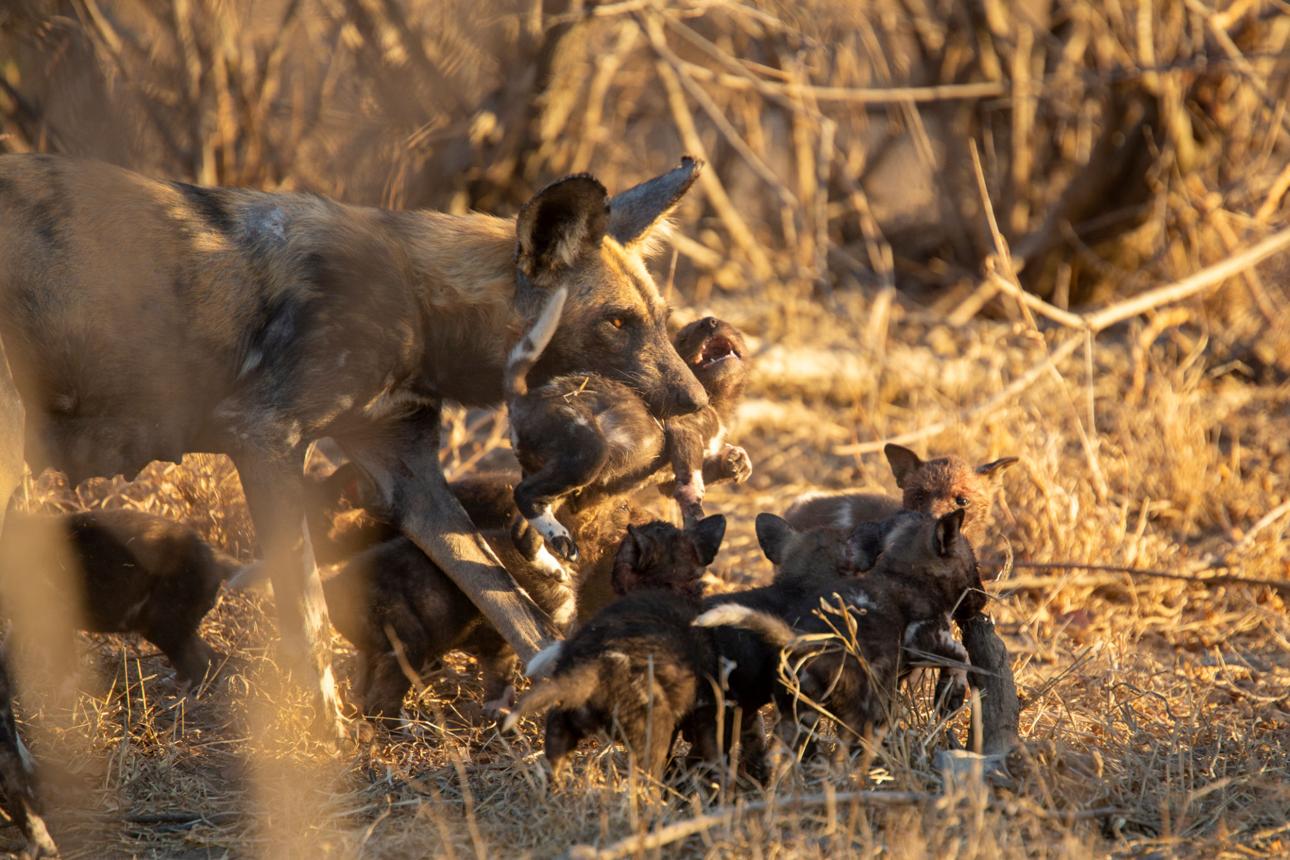
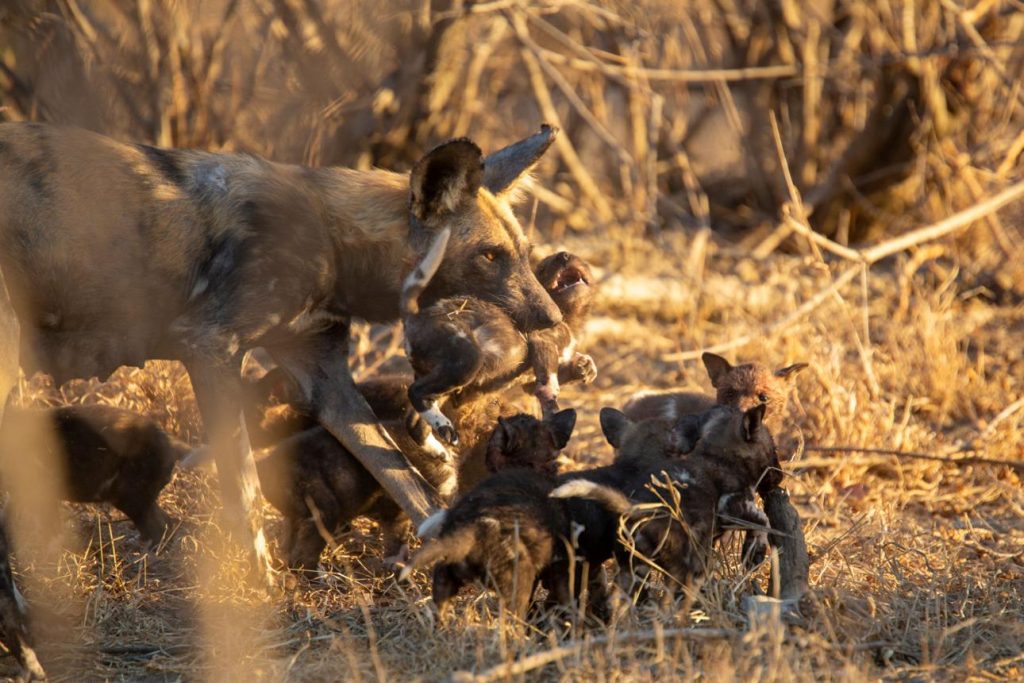
2. African Wild Dogs Raise Puppies as a Team
Figure 2
Alt Text: African wild dog pack gathered around young puppies at a den entrance.
African wild dogs are among the most cooperative animals on Earth.
Unlike many predators, these social hunters raise puppies collectively. Every member of the pack contributes to caring for the young.
When adults return from a hunt, they often regurgitate food specifically for nursing mothers and growing pups. Older siblings help babysit, guard the den, and even entertain younger animals through play.
This cooperative system allows puppies to grow rapidly and learn important social behaviors.
Because the entire pack invests in the success of the next generation, wild dog families achieve a level of teamwork rarely seen among mammals.
3. Flamingos Produce a Special “Milk”
Figure 3
Alt Text: Adult flamingo feeding a young chick with nutrient-rich crop milk near a wetland.
Flamingos are famous for their bright pink feathers, but their parenting behavior is equally remarkable.
After chicks hatch, both parents feed them a nutrient-rich substance called crop milk. Unlike mammalian milk, this liquid is produced inside the digestive tract.
The red-colored fluid contains fats, proteins, and immune-supporting compounds that help chicks grow rapidly.
For several weeks, flamingo parents devote much of their energy to producing this specialized food. The feeding process creates a strong bond between parents and offspring.
Many people are surprised to learn that birds can produce a milk-like substance, making flamingo parenting one of nature’s strangest childcare strategies.
4. Burying Beetles Create Underground Nurseries
Figure 4
Alt Text: Burying beetle parents caring for larvae on a small animal carcass underground.
Burying beetles may not seem like ideal parents, but they display surprisingly advanced family behavior.
These insects locate the body of a small dead animal such as a mouse or bird. Working together, the parents bury the carcass underground and prepare it as a nursery.
After eggs hatch, the adults remain with the larvae and provide food directly to them. They clean the nursery, defend it from intruders, and even remove unhealthy offspring to protect the rest of the brood.
This level of parental involvement is extremely rare among insects.
Scientists often study burying beetles because their family interactions resemble parental care behaviors found in much larger animals.
5. Marmoset Fathers Carry Babies Almost Constantly
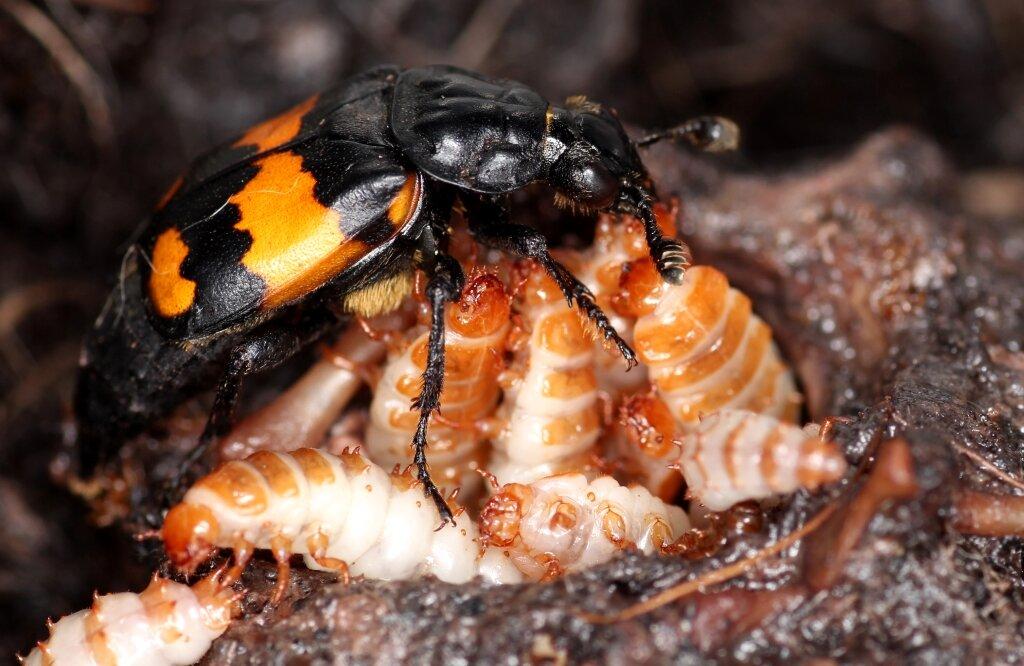
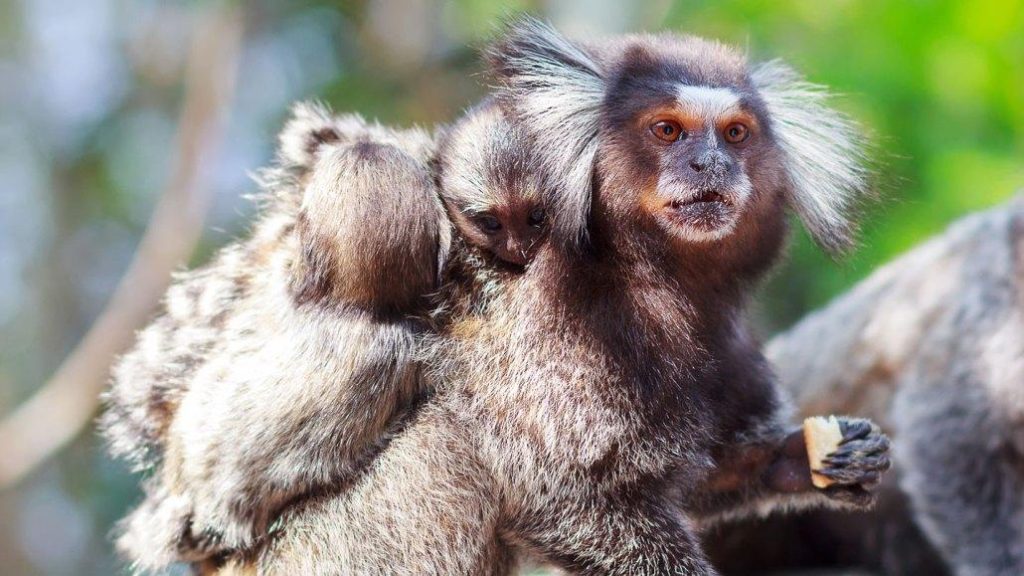
Figure 5
Alt Text: Common marmoset father carrying twin infants on his back in a tropical forest.
Many primates rely heavily on maternal care, but marmosets take a different approach.
These small monkeys often give birth to twins, creating a demanding workload for the family. To help, fathers become the primary carriers of newborns.
The babies spend much of their time clinging to their father’s back. He transports them through the forest, protects them from danger, and only returns them to the mother when feeding is necessary.
Other family members frequently assist as well.
This cooperative childcare system allows mothers to conserve energy while ensuring that infants receive constant protection and attention.
6. Alligator Mothers Respond to Their Babies’ Calls
Figure 6
Alt Text: Mother alligator carrying newly hatched babies safely through shallow water.
Alligators are often viewed as fierce predators, yet they can be remarkably attentive parents.
Before hatching, baby alligators begin making sounds from inside their eggs. These vocalizations signal to the mother that the young are ready to emerge.
The mother carefully opens the nest and may gently transport hatchlings in her mouth to nearby water.
For weeks afterward, she remains close to the young, protecting them from predators such as birds, fish, and larger reptiles.
Scientists have documented mothers responding to distress calls from their offspring and rushing to defend them.
This surprising tenderness demonstrates that even some of nature’s most formidable predators can be devoted parents.
7. Red Foxes Teach Their Young Through Play
Figure 7
Alt Text: Young red fox kits playing near their den while adult foxes supervise.
Play is often associated with fun, but for young foxes it serves an important educational purpose.
Red fox kits spend hours wrestling, chasing, pouncing, and exploring their surroundings. Although these activities appear playful, they help develop essential hunting and survival skills.
Adult foxes actively encourage learning by bringing prey to the den. At first, the prey may be dead. Later, parents introduce live animals, allowing the kits to practice catching and handling them.
Through repeated experiences, young foxes gradually develop the coordination and instincts needed for independence.
This teaching process demonstrates that successful parenting often involves education as well as protection.
Why Animal Parenting Is So Diverse
Every species faces different environmental challenges.
Animals living in dangerous habitats may emphasize protection. Species whose young require complex skills may invest heavily in teaching. Others focus on providing food, warmth, or transportation.
Natural selection favors parenting behaviors that improve survival rates. Over millions of years, these strategies become highly specialized.
As a result, the animal kingdom contains an incredible variety of child-rearing methods, each perfectly adapted to a particular way of life.
Lessons From Nature’s Parents
Studying animal parenting provides valuable insights into behavior, evolution, and social relationships.
Researchers have discovered that cooperation, communication, teaching, and sacrifice are far more widespread in nature than once believed.
From octopus mothers guarding eggs until death to wild dog packs working together to raise puppies, animals demonstrate extraordinary commitment to future generations.
These behaviors remind us that family bonds can take many different forms across the natural world.
Conclusion
The stories of animal parents reveal some of nature’s most astonishing adaptations. Octopuses sacrifice their lives for their eggs. Flamingos produce milk-like food for chicks. Burying beetles create underground nurseries, while marmoset fathers carry babies for much of the day.
African wild dogs rely on teamwork, alligator mothers respond to the calls of hatchlings, and red foxes teach hunting skills through play.
Together, these remarkable examples show that parenting in nature is often every bit as complex, challenging, and inspiring as it is in human society.
Whether through protection, teaching, cooperation, or sacrifice, animals continue to amaze scientists with the extraordinary ways they care for their young. Their stories offer a fascinating glimpse into the diversity of life on Earth and remind us that successful parenting comes in many forms.
Leave a Reply