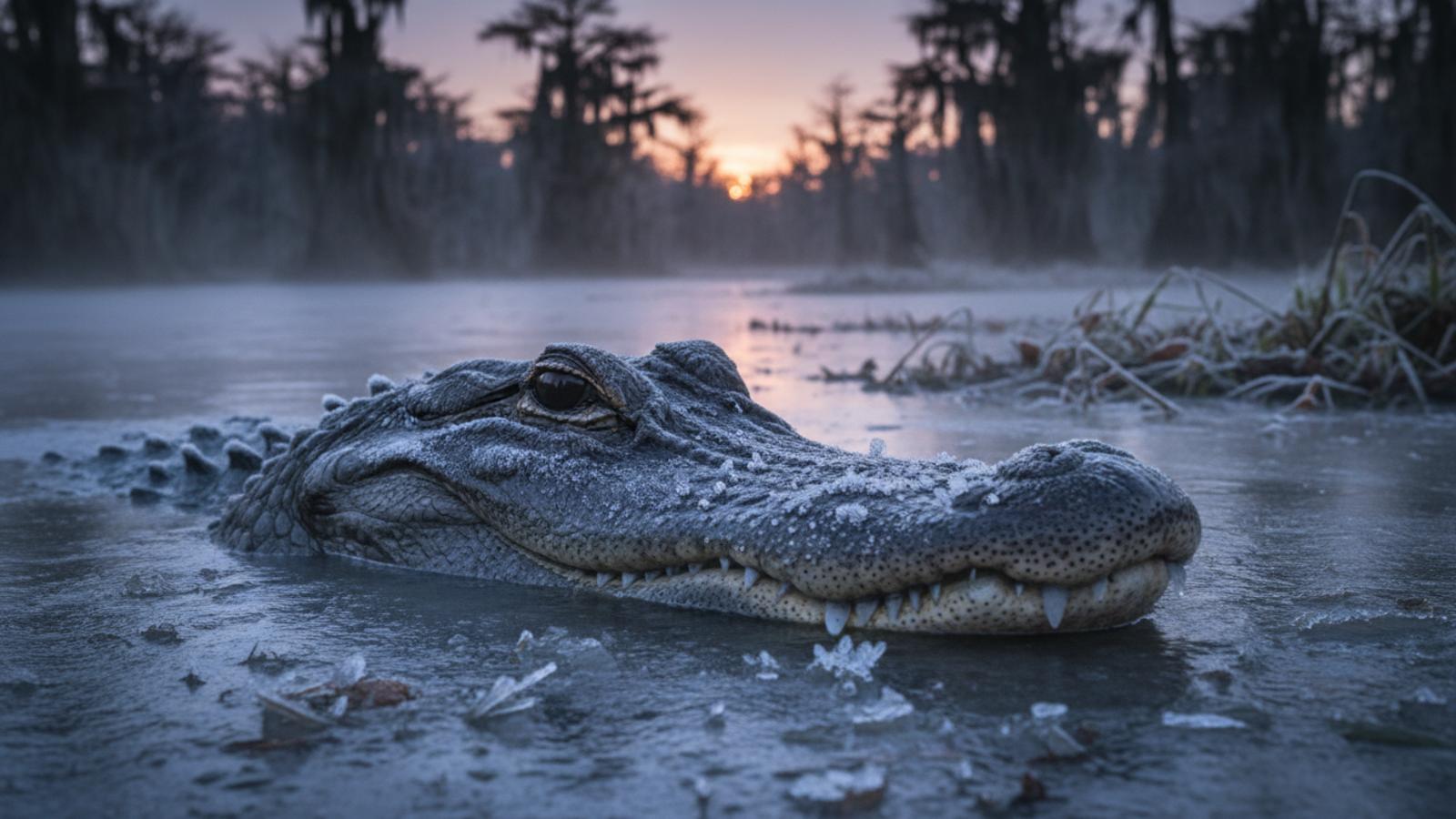
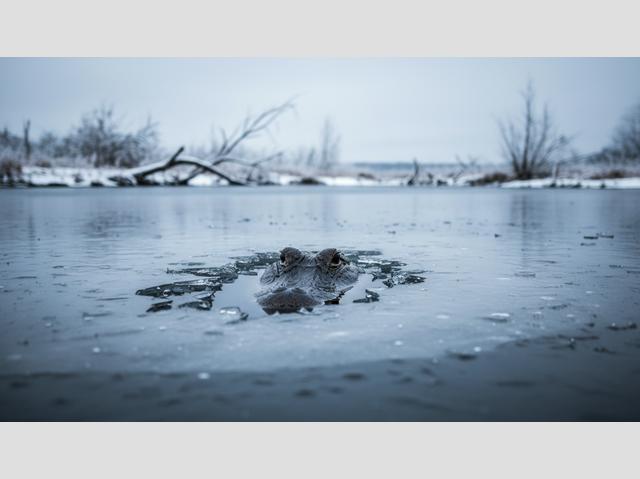
When people think of alligators, they usually imagine powerful reptiles basking in the warm sun of swamps, rivers, and wetlands. These ancient predators are often associated with hot, humid climates, making it difficult to imagine them surviving freezing temperatures. Yet every winter, images and videos emerge showing alligators trapped in ice with only their snouts visible above the frozen surface. To many observers, these animals appear frozen solid and seemingly lifeless.
The reality is even more fascinating than it looks.
Alligators possess one of the most remarkable cold-weather survival strategies in the animal kingdom. Rather than fleeing from winter weather, they have evolved a unique ability to endure periods of extreme cold by dramatically slowing down their bodies and entering a state that helps them survive until temperatures rise again.
This incredible adaptation has fascinated scientists, wildlife experts, and animal lovers around the world. Understanding how alligators survive freezing conditions provides valuable insight into reptile biology, evolution, and the extraordinary ways animals adapt to challenging environments.
The Surprising Relationship Between Alligators and Cold Weather
The American alligator is primarily found throughout the southeastern United States, particularly in wetlands, marshes, rivers, lakes, and swamps. Although these regions are known for warm temperatures, winter cold snaps occasionally occur, especially in northern parts of the alligator’s range.
Unlike mammals and birds, alligators are ectothermic animals, commonly referred to as cold-blooded. This means they cannot internally regulate their body temperature the way humans can. Instead, their body temperature depends largely on the surrounding environment.
Because of this, cold weather presents a significant challenge. As temperatures drop, an alligator’s metabolism slows dramatically. Movement becomes sluggish, digestion slows, and overall activity decreases.
For most of the year, this is not a problem. However, when temperatures fall below freezing and water bodies begin turning to ice, survival becomes much more complicated.
What Happens When the Water Freezes?
As winter temperatures approach freezing levels, alligators begin preparing for the cold. They seek deeper sections of ponds, marshes, and wetlands where water temperatures remain more stable.
However, during particularly severe cold spells, even these waters may freeze at the surface.
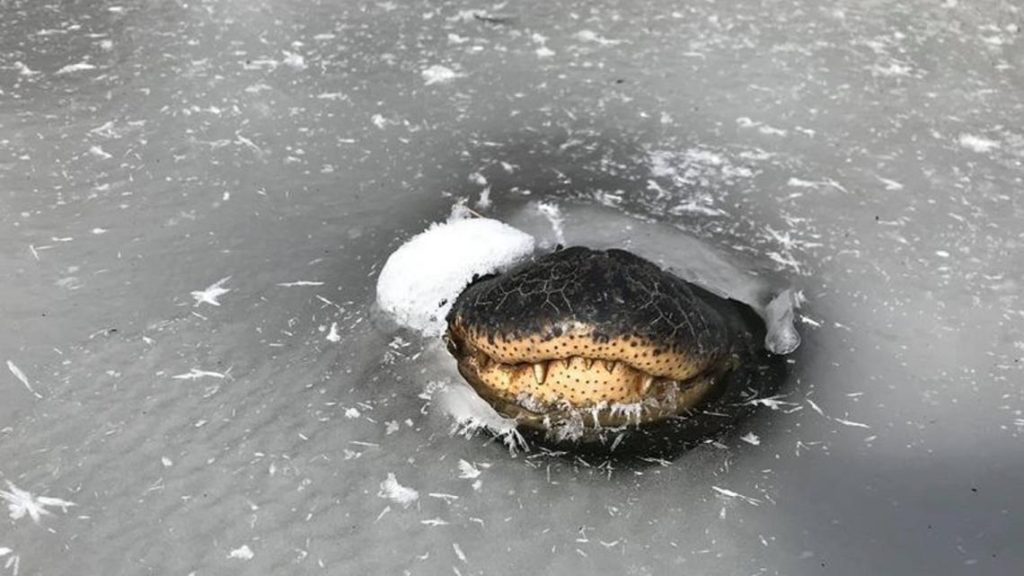
Rather than panicking or attempting to leave, alligators use a strategy that has amazed scientists and wildlife observers alike. Before the surface completely freezes, they position themselves in shallow water with the tip of their snout extending above the surface.
As the ice forms, the snout remains exposed while the rest of the body becomes submerged beneath the frozen layer.
To an observer, it may look as though the alligator has become trapped in ice. In reality, the animal has carefully positioned itself to maintain access to air while entering a low-energy survival state.
This behavior allows the reptile to continue breathing even while surrounded by freezing conditions.
The Science Behind Brumation
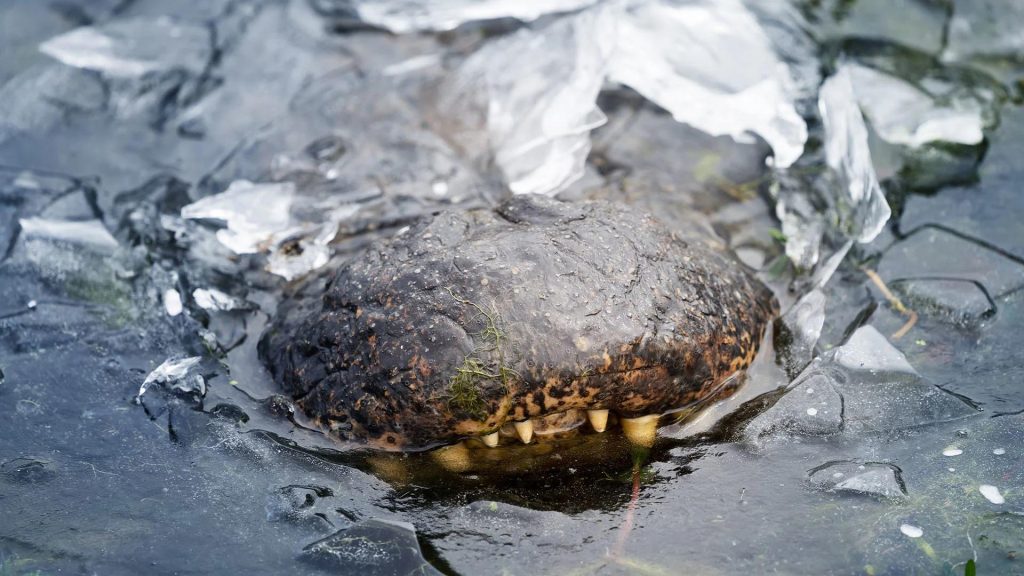
Many people compare this frozen state to hibernation, but reptiles actually undergo a different process known as brumation.
Brumation is a period of dormancy experienced by reptiles during cold weather. While it shares similarities with hibernation, there are important differences.
During brumation, an alligator’s metabolism slows significantly. Heart rate decreases, energy consumption drops, and movement becomes minimal. The animal conserves precious energy reserves while waiting for environmental conditions to improve.
Unlike hibernating mammals, reptiles in brumation may occasionally become active during warmer periods. If temperatures temporarily rise, an alligator might move around before returning to its dormant state when cold weather returns.
This flexibility helps them respond to changing environmental conditions while conserving energy during extended cold periods.
Why the Snout Is So Important
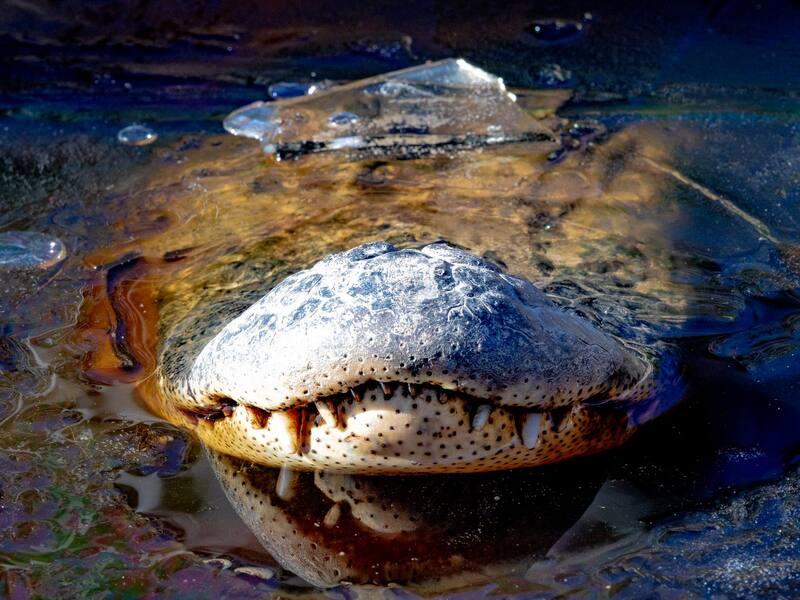
The most recognizable feature of a frozen alligator is its snout sticking out of the ice.
This position serves a critical purpose.
Like all reptiles, alligators require oxygen to survive. By keeping their nostrils above the frozen surface, they maintain access to air even when the surrounding water is covered by ice.
The snout effectively acts as a breathing tube.
Without this adaptation, an alligator trapped beneath a frozen layer could face serious difficulties obtaining oxygen. Positioning the snout before freezing occurs ensures the animal can continue breathing throughout the cold spell.
This behavior demonstrates a remarkable awareness of environmental changes and highlights the evolutionary adaptations that have helped alligators survive for millions of years.
How Long Can Alligators Remain Frozen?
One of the most common questions people ask is how long an alligator can survive in these conditions.
The answer depends on several factors, including temperature, ice thickness, water depth, and the overall health of the animal.
In many cases, alligators can remain in their brumation state for days or even weeks if necessary. Because their metabolism slows dramatically, their energy requirements become extremely low.
Once temperatures rise and ice begins melting, the animals gradually become more active.
Observers have documented alligators appearing almost motionless during freezing weather, only to resume normal behavior once warmer temperatures return.
This remarkable resilience allows them to survive conditions that might seem impossible for a reptile.
An Ancient Survival Strategy
Alligators belong to a lineage that dates back more than 200 million years. Their ancestors lived during the age of dinosaurs and survived multiple environmental changes throughout Earth’s history.
The ability to endure cold temperatures likely played an important role in their long-term survival.
Natural selection favored individuals capable of tolerating occasional cold periods. Over countless generations, behaviors such as brumation and strategic positioning during freezing weather became highly effective survival tools.
Today, modern alligators continue to benefit from these ancient adaptations.
Their success serves as a reminder that survival is not always about strength or aggression. Sometimes, the ability to slow down, conserve energy, and patiently endure difficult conditions is the key to long-term survival.
Where Has This Behavior Been Observed?
Some of the most famous observations have occurred in wildlife parks and wetlands located in North Carolina.
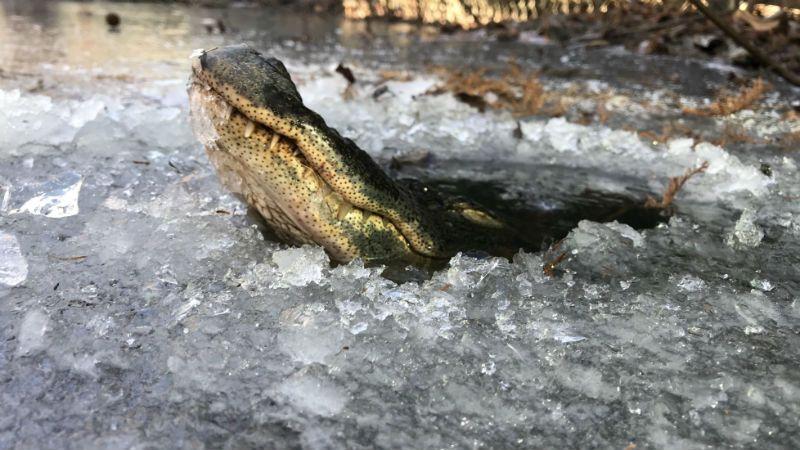
During unusually cold winters, wildlife staff have documented alligators maintaining breathing holes through frozen surfaces by keeping their snouts exposed.
Videos and photographs of these events frequently attract worldwide attention because they appear almost unbelievable.
Many viewers assume the animals are frozen solid or even dead. In reality, the alligators are carefully managing their survival during extreme weather.
Researchers continue studying these behaviors to better understand how reptiles respond to changing climates and environmental challenges.
What Climate Change Could Mean for Alligators
Climate change may influence alligator populations in several ways.
Warmer average temperatures could expand suitable habitats into regions that were previously too cold. At the same time, unpredictable weather patterns may produce unusual cold snaps that challenge local populations.
Scientists are monitoring how alligators adapt to changing environmental conditions. Understanding their responses helps researchers predict how wetland ecosystems may evolve in the future.
Because alligators are considered important apex predators, their health often reflects the overall condition of the ecosystems they inhabit.
Studying their winter survival strategies provides valuable information about environmental resilience and adaptation.
Why This Survival Trick Fascinates Scientists
The image of an alligator frozen in ice captures attention because it challenges common assumptions about reptiles.
Most people associate reptiles with warmth and sunshine. Seeing one survive freezing conditions seems almost contradictory.
Yet this phenomenon demonstrates the incredible adaptability of life on Earth.
Through a combination of behavioral intelligence, physiological adaptation, and evolutionary history, alligators have developed a strategy that allows them to endure harsh winters that might otherwise prove fatal.
Their ability to slow their metabolism, conserve energy, and maintain access to oxygen showcases one of nature’s most effective survival mechanisms.
Conclusion
The sight of an alligator seemingly frozen in ice is one of the most extraordinary wildlife phenomena in North America. Although it may appear alarming, the animal is actually employing a highly effective survival strategy that has evolved over millions of years.
By entering a state of brumation, reducing energy consumption, and positioning its snout above the ice for breathing, the alligator can survive freezing temperatures that would otherwise threaten its survival.
This remarkable adaptation highlights the resilience of one of Earth’s oldest reptile lineages and reminds us that nature often possesses solutions far more ingenious than we might imagine.
The next time you see a photograph of an alligator with its snout sticking through a frozen pond, remember that you are witnessing an ancient survival technique—one that has helped these incredible reptiles endure for millions of years.
Leave a Reply