Whales That Talk Across Oceans: The Incredible Science of Long-Distance Whale Communication

In the deep blue silence of the ocean, whales are carrying on conversations that can travel farther than most people imagine. While humans rely mainly on sight and speech in air, whales evolved in a world where sound is the fastest and most effective way to share information. Some whale calls can travel for hundreds of miles through seawater, allowing animals separated by vast distances to remain connected.

This ability has fascinated scientists for decades. Whale songs are not random noises — they are structured, patterned, and often repeated. Some species produce haunting melodies that can last for hours. Others emit low-frequency pulses powerful enough to cross entire ocean basins under the right conditions.

Understanding how whales communicate reveals not only the physics of sound underwater, but also the social complexity of these giant marine mammals. Their voices help them navigate, find food, maintain family bonds, and possibly even share cultural traditions.
Why Sound Travels So Far Underwater
Sound behaves very differently in water than in air. Seawater is denser and transmits sound waves more efficiently, allowing low-frequency sounds to travel extremely long distances with relatively little loss of energy.
The SOFAR Channel
One important reason is a layer in the ocean called the SOFAR channel (Sound Fixing and Ranging channel). In this zone, changes in temperature and pressure cause sound waves to bend and become trapped, allowing them to travel across enormous distances.
Blue whales, the largest animals on Earth, produce calls at very low frequencies — sometimes below the range of human hearing. These sounds can travel hundreds or even thousands of miles through the ocean under favorable conditions.
Why Low Frequencies Matter
Lower-frequency sounds generally travel farther than higher-frequency ones because they lose less energy over distance. That is why whale calls often sound deep and resonant.
The Famous Songs of Humpback Whales

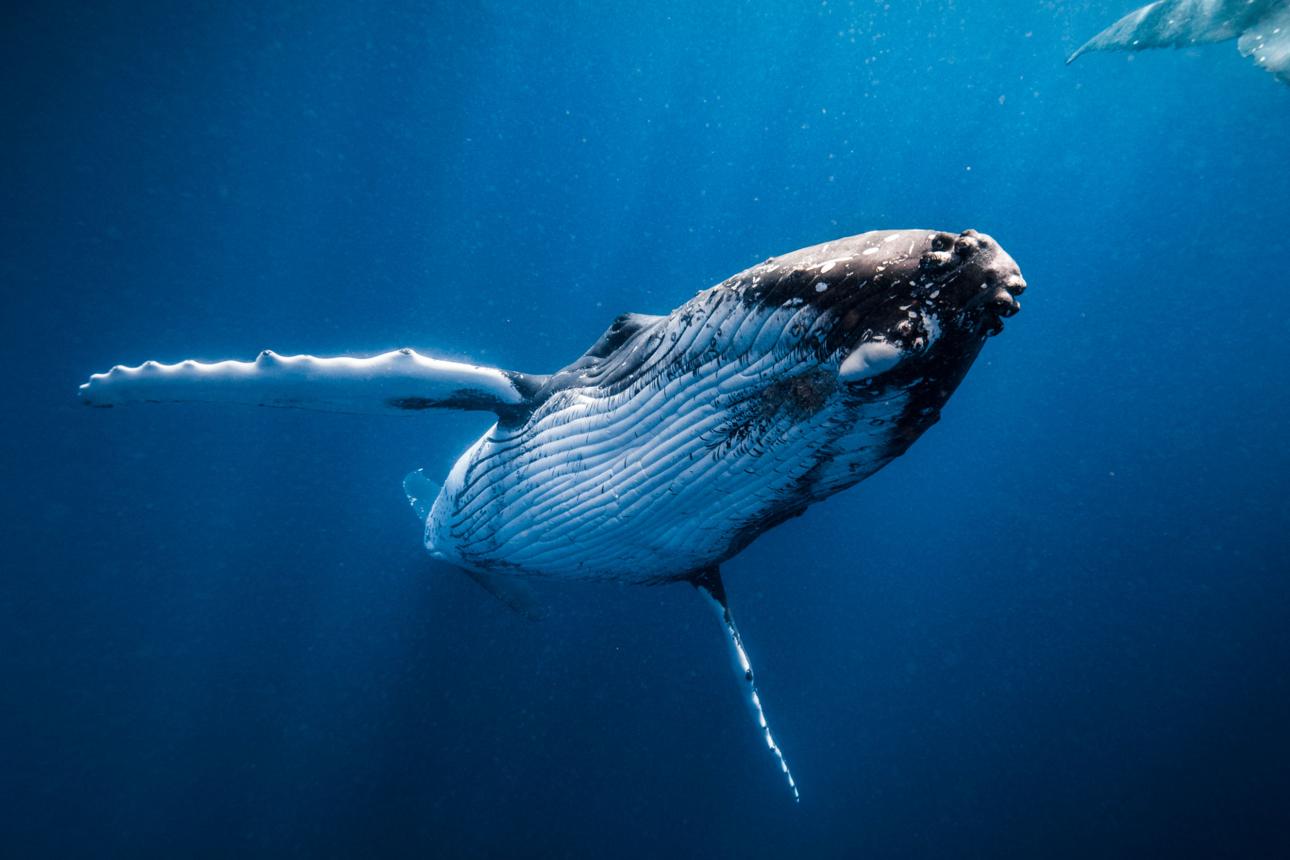
Humpback whales are perhaps the most famous singers in the animal kingdom. Male humpbacks produce elaborate songs that can last from 10 to 20 minutes and are repeated for hours at a time.
Structure and Patterns
These songs are highly organized. They contain themes, phrases, and repeating patterns, almost like musical compositions. Researchers have discovered that whales within the same population often sing very similar versions of a song.
Songs Can Change Over Time
Even more remarkable, humpback songs evolve. New variations spread through populations over months or years, creating what some scientists describe as a form of cultural transmission. In certain regions, entire whale populations have been observed gradually adopting a completely new song pattern introduced by neighboring groups.
Why Do They Sing?
Scientists believe humpback songs are primarily associated with breeding behavior, especially attracting mates or competing with other males. However, the full purpose is still being studied.
Blue Whales: Voices That Span Oceans

Blue whales communicate using some of the lowest-frequency sounds known in the animal kingdom. Their calls are powerful, long-lasting, and capable of traveling extraordinary distances.
Deep, Long-Distance Calls
These calls often consist of deep moans, pulses, and rumbles. Because they are so low in frequency, humans may feel them more than hear them without specialized equipment.
Possible Functions
Researchers believe blue whales use these calls to:
- Maintain contact across vast ocean distances
- Coordinate movement during migration
- Locate potential mates
- Share information about feeding areas
Imagine trying to stay connected with another animal hundreds of miles away in the open ocean. For blue whales, low-frequency sound makes that possible.
Orcas and Complex Social Communication

Orcas, or killer whales, use a very different communication style from humpbacks and blue whales. Instead of long songs, they produce a rich variety of whistles, clicks, and pulsed calls.
Distinct Dialects
Different orca pods often have unique vocal dialects, almost like regional accents. Members of a pod learn these call patterns from one another, reinforcing social identity and group cohesion.
Echolocation
Orcas also use echolocation clicks to navigate and hunt. By listening to the echoes that bounce back from objects and prey, they can build an acoustic picture of their surroundings even in dark or murky water.
This combination of social calls and echolocation makes orcas one of the most acoustically sophisticated marine mammals.
How Scientists Study Whale Communication
Studying whale sounds is challenging because the ocean is vast, deep, and often difficult to access. Researchers use several specialized tools to listen to whales.
Hydrophones
Underwater microphones called hydrophones record whale sounds. These devices can be attached to buoys, ships, autonomous underwater vehicles, or even placed on the seafloor for long-term monitoring.
Tagging and Tracking
Scientists sometimes attach temporary acoustic tags to whales. These tags record sounds produced by the whale as well as surrounding ocean noise, helping researchers connect vocal behavior with movement and social interactions.
Acoustic Mapping
By comparing recordings from multiple hydrophones, researchers can estimate where calls originate and how far they travel. This helps reveal migration routes, population distribution, and communication range.
The Problem of Ocean Noise

Modern oceans are much noisier than they were a century ago. Shipping traffic, industrial activity, naval sonar, and offshore development all contribute to underwater noise pollution.
This noise can interfere with whale communication in several ways:
- Masking: Background noise makes it harder for whales to hear one another.
- Reduced Range: Calls may not travel as far because they are drowned out by human-made sounds.
- Behavioral Changes: Whales may change the timing, pitch, or volume of their calls to compensate.
Some studies suggest whales may call louder in noisy environments, similar to humans raising their voices in a crowded room. However, this adaptation may come with energetic costs and may not fully solve the problem.
Reducing ocean noise is increasingly recognized as an important part of marine conservation.
Whale Communication and Culture
One of the most exciting discoveries in recent decades is that whale communication may reflect forms of culture.
In humpbacks, song changes can spread socially through populations. In orcas, vocal dialects are passed from generation to generation within family groups. These patterns suggest that whales learn from one another rather than relying solely on instinct.
This challenges older assumptions that culture is uniquely human. Instead, whales appear capable of maintaining shared traditions, vocal identities, and socially transmitted behaviors over time.
Migration, Family Bonds, and Navigation
Whale communication is not only about mating or social identity. It also plays practical roles in survival.
Migration
Many whale species migrate thousands of miles between feeding and breeding grounds. Acoustic signals may help individuals maintain contact during these journeys or coordinate movement within groups.
Family Connections
Mothers and calves use calls to stay connected, especially in noisy or low-visibility conditions. Losing contact in the open ocean could be dangerous for a young whale.
Navigation
Some researchers are investigating whether whales use acoustic cues from the environment — such as echoes from seafloor features or distant sounds — as part of navigation. The ocean is not acoustically empty; it contains a complex landscape of natural sounds.
Can Whales Talk to Each Other Across Oceans?

The phrase “whales communicating across oceans” is partly poetic and partly scientific reality.
Under ideal conditions, some low-frequency whale calls can travel enormous distances, potentially across large sections of ocean basins. However, this does not mean whales are having detailed conversations across entire oceans in real time.
Communication range depends on:
- Water temperature and pressure
- Ocean depth
- Background noise
- Call frequency and intensity
- Weather and sea conditions
Even so, the distances involved are extraordinary compared with most terrestrial animals. Few creatures on Earth can project their voices through such immense spaces.
Why This Matters
Whale communication is more than a scientific curiosity. It helps researchers monitor whale populations, understand migration patterns, and identify critical habitats.
Passive acoustic monitoring can detect whales even when they are not visible, making it a powerful tool for conservation. By listening to the ocean, scientists can track endangered species, study population trends, and assess the impact of human activity.
Whale songs also remind us that the ocean is an acoustic world. What seems silent from above is filled with messages, echoes, and long-distance signals exchanged by animals that have adapted to life in the sea over millions of years.
Conclusion
Whales communicate across astonishing distances using sound perfectly adapted for underwater life. Humpback whales sing evolving songs, blue whales send deep calls across vast stretches of ocean, and orcas maintain complex social dialects and echolocation systems.
Their communication depends on the unique physics of seawater, especially the ability of low-frequency sounds to travel far through the ocean. At the same time, increasing human-made noise threatens to disrupt these ancient acoustic networks.
Studying whale communication has transformed our understanding of marine mammals. It reveals animals with sophisticated social lives, learned traditions, and voices powerful enough to connect across the open sea.
Leave a Reply